Security Agencies Crack Pakistan Linked Spy Network in Navy
Source:The Hindu ↗
Why It Matters
This case study provides vital insights into modern espionage, honey-trapping via social media, and the security vulnerabilities of critical defense installations, directly aligning with UPSC syllabus requirements on internal security, counter-intelligence, and cyber threats.
Summary
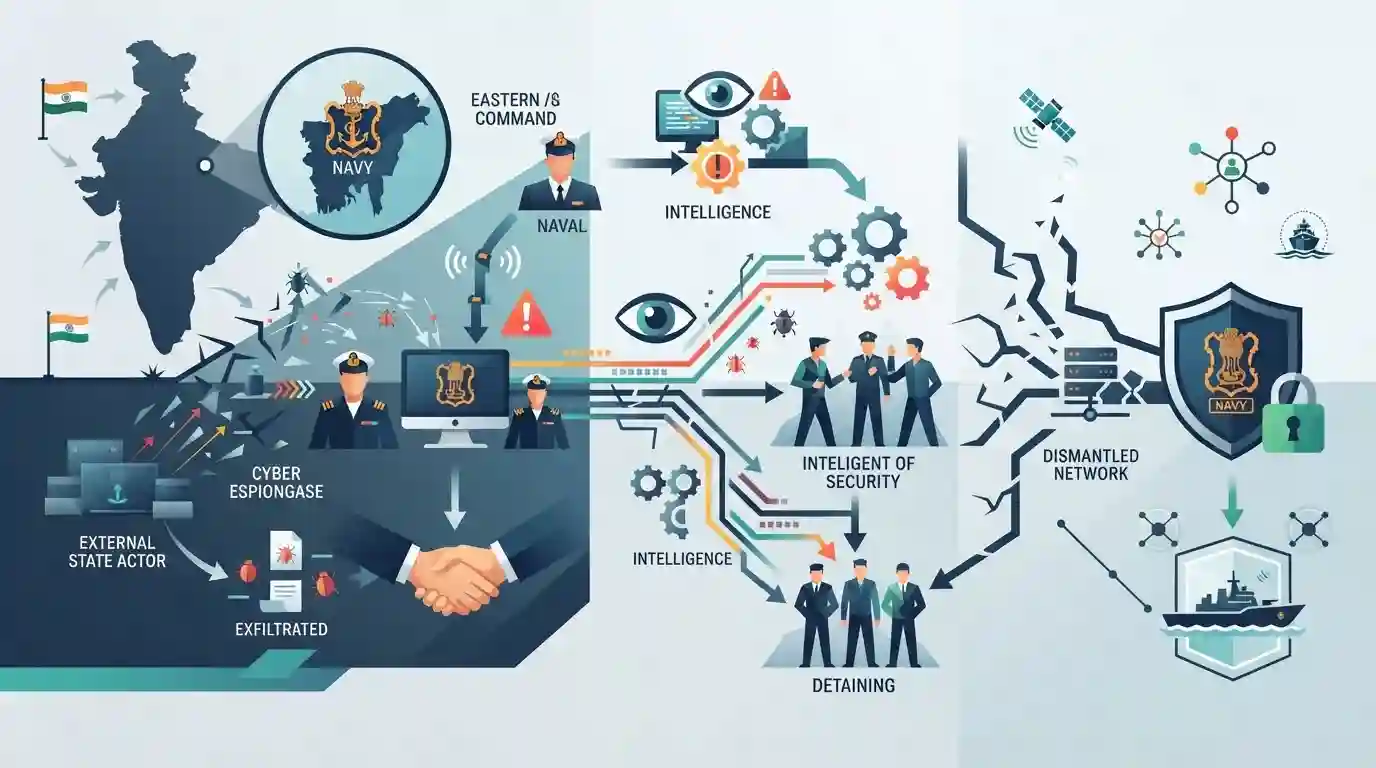
The article explains how a Pakistan-linked espionage network attempted to infiltrate and target the Indian Navy's Eastern Command, and how security and intelligence agencies successfully dismantled the network, highlighting key concerns around cyber espionage, human intelligence vulnerabilities, and internal security.
Key Points
- A Pakistan-linked spy network targeted the Indian Navy's Eastern Command in Visakhapatnam to leak sensitive defence information.
- The espionage ring highlighted vulnerabilities related to honey-trapping, social media profiling, and digital communication compromises targeting service personnel.
- Indian intelligence and security agencies successfully cracked the network, underscoring the critical role of counter-intelligence operations in safeguarding strategic military assets.
- Emphasizes the growing threat of cyber espionage and cross-border intelligence-gathering targeting vital military infrastructure and personnel.
Important Terms
Navy's Eastern Command

The operational formation of the Indian Navy headquartered in Visakhapatnam, responsible for safeguarding maritime interests in the Bay of Eastern region and frequently targeted by cross-border espionage networks.
UPSC context
UPSC Mains Paper III: Internal Security - Security challenges in critical maritime infrastructure and strategic military installations.
Pakistan-linked spy network
A clandestine intelligence-gathering apparatus leveraging digital platforms, honey-trapping, and compromised insiders to extract classified operational details about Indian defense establishments.
UPSC context
UPSC Mains Paper III: Role of external state and non-state actors in creating internal security challenges.
Prelims Trap
Cyber espionage targeting military installations is exclusively handled by civilian cyber security agencies like CERT-In.
Aspirants often assume cyber espionage is solely countered by CERT-In or IT Ministry agencies, overlooking the specialized mandate of military intelligence and state ATS units.
Static Concepts Connected
What are the primary institutional mechanisms for counter-intelligence and internal security in India?
- IB Mandate: Intelligence Bureau handles domestic intelligence and counter-intelligence within the country.
- Military Intelligence: Military Intelligence operates within the armed forces to plug security leaks and vet personnel.
- State ATS Role: State ATS units coordinate with central agencies during cross-border terror and espionage busts.
Cross-Topic Patterns
Cyber espionage meets national security frameworks
Espionage operations increasingly leverage commercial social platforms, bridging traditional counter-intelligence with national cyber security and data protection frameworks under CERT-In guidelines.
Naval security and coastal intelligence integration
Defense infrastructure protection in coastal cities like Visakhapatnam links internal security challenges with maritime domain awareness and coastal policing vulnerabilities.

Expect a statement-based question combining digital honey-trapping vulnerabilities with institutional counter-intelligence mandates.
Linked PYQs · 3
Linked PYQs · 3
- 2023MainsGS3
What are the internal security challenges being faced by India? Give out the role of Central Intelligence and Investigative Agencies tasked to counter such threats.
- 2021MainsGS3
Keeping in view India's internal security, analyse the impact of cross-border cyber attacks. Also discuss defensive measures against these sophisticated attacks.
- 2022MainsGS3
What are the different elements of cyber security ? Keeping in view the challenges in cyber security, examine the extent to which India has successfully developed a comprehensive National Cyber Security Strategy.
