Evolution of Durga Puja Celebrations in West Bengal
Source:Indian Express ↗
Why It Matters
Crucial for understanding West Bengal's socio-cultural evolution, heritage politics, and the transformation of traditional festivals into modern mega-events.
Summary
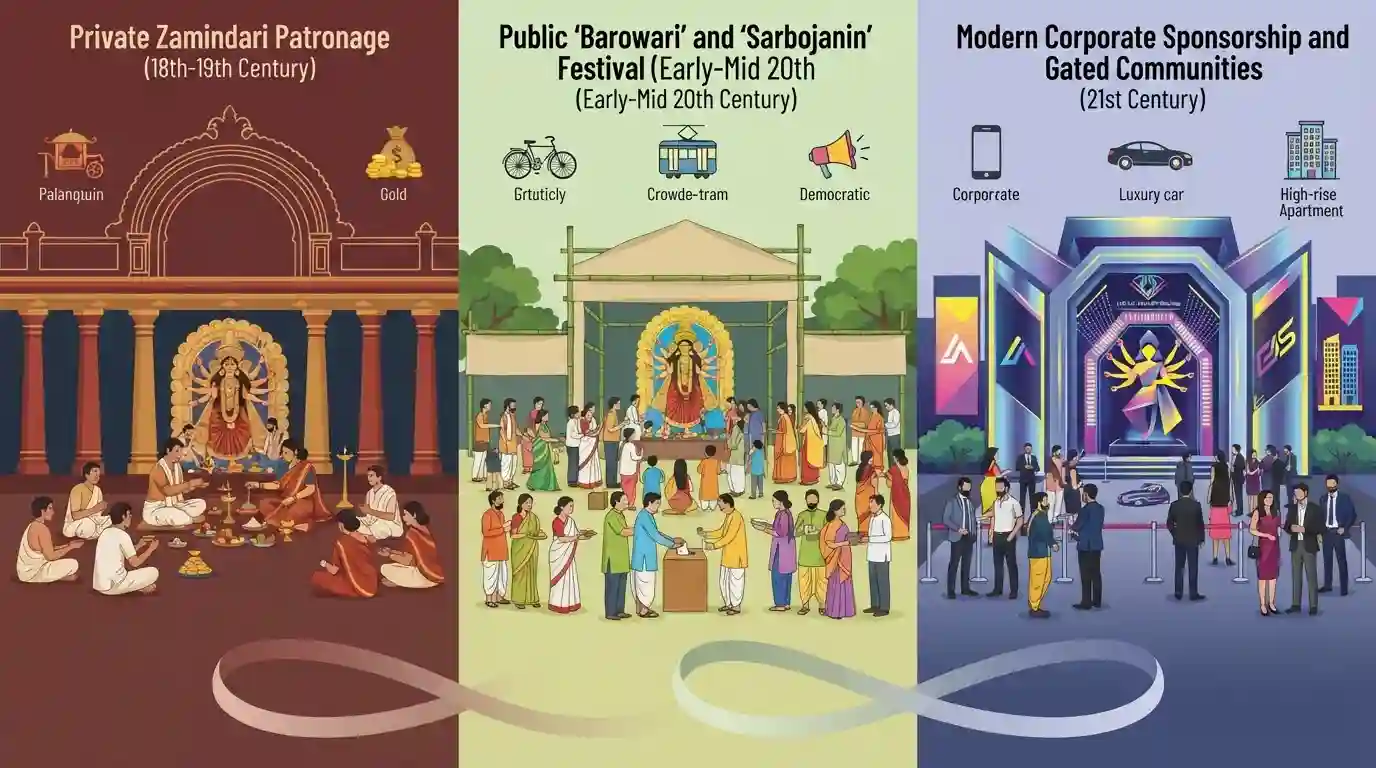
The article traces the sociological and economic evolution of Bengal's Durga Puja, exploring its shift from private zamindari patronage to public 'barowari' and 'sarbojanin' festivals, and how modern corporate sponsorship and gated community celebrations have brought it full circle back to forms of private exclusivity.
Key Points
- Durga Puja in Bengal transitioned from private elite household patronage (Barowari / Zamindar Bari Pujas) to public community celebrations (Sarbojanin).
- In recent years, the trend has increasingly come full circle with modern corporate sponsorships, private gated community celebrations, and high-end art installations reminiscent of exclusive patronage.
- Durga Puja was inscribed on the UNESCO Representative List of the Intangible Cultural Heritage of Humanity in 2021.
Important Terms
UNESCO Intangible Cultural Heritage

The United Nations Educational, Scientific and Cultural Organization's designation recognizing cultural traditions, oral expressions, and social practices that need preservation; notably awarded to Kolkata's Durga Puja in 2021.
UPSC context
WBCS Paper I (Indian Culture and Heritage) and West Bengal specific heritage conservation topics.
Prelims Trap
Barowari pujas were synonymous with private zamindari elite patronage.
Aspirants often confuse 'Barowari' (started by 12 friends/community) with 'Zamindar Bari' (private elite household pujas), though both historically preceded modern corporate sarbojanin pujas.
Static Concepts Connected
What are the key milestones of West Bengal's Intangible Cultural Heritage and historical festivals?
- UNESCO ICH Recognition: UNESCO status awarded in Dec 2021, making it the first festival in Asia on the ICH list.
- Barowari Evolution: Originating from 12 (baro) friends (yar) in Hooghly in the late 18th century, transitioning to community-funded Sarbojanin celebrations.
- Zamindar Bari Pujas: Notable historical household pujas include Sovabazar Rajbari and Shorisha Rajbari, representing traditional zamindari patronage.
Cross-Topic Patterns
Intangible Heritage & Cultural Economy
Durga Puja's UNESCO inscription highlights the intersection of cultural heritage preservation with state tourism economies and intellectual property rights over traditional arts.
Colonial Society & Bengal Renaissance
The shift from elite zamindari patronage to public barowari festivals reflects broader socio-economic transitions in colonial and post-colonial Bengal history.

UNESCO ICH inscription details + sociological evolution from Zamindar Bari to Sarbojanin likely to feature in WBCS culture section.
Linked PYQs · 2
Linked PYQs · 2
- 2024WBCS_PRELIMSGS1
East Kolkata Wetland has been declared as
- 2020WBCS_PRELIMSGS1
Which tribal language has been given official status in West Bengal and regarded endangered by UNESCO?
