Deemed distribution licenses for data centers in Andhra Pradesh
Source:Indian Express ↗
Why It Matters
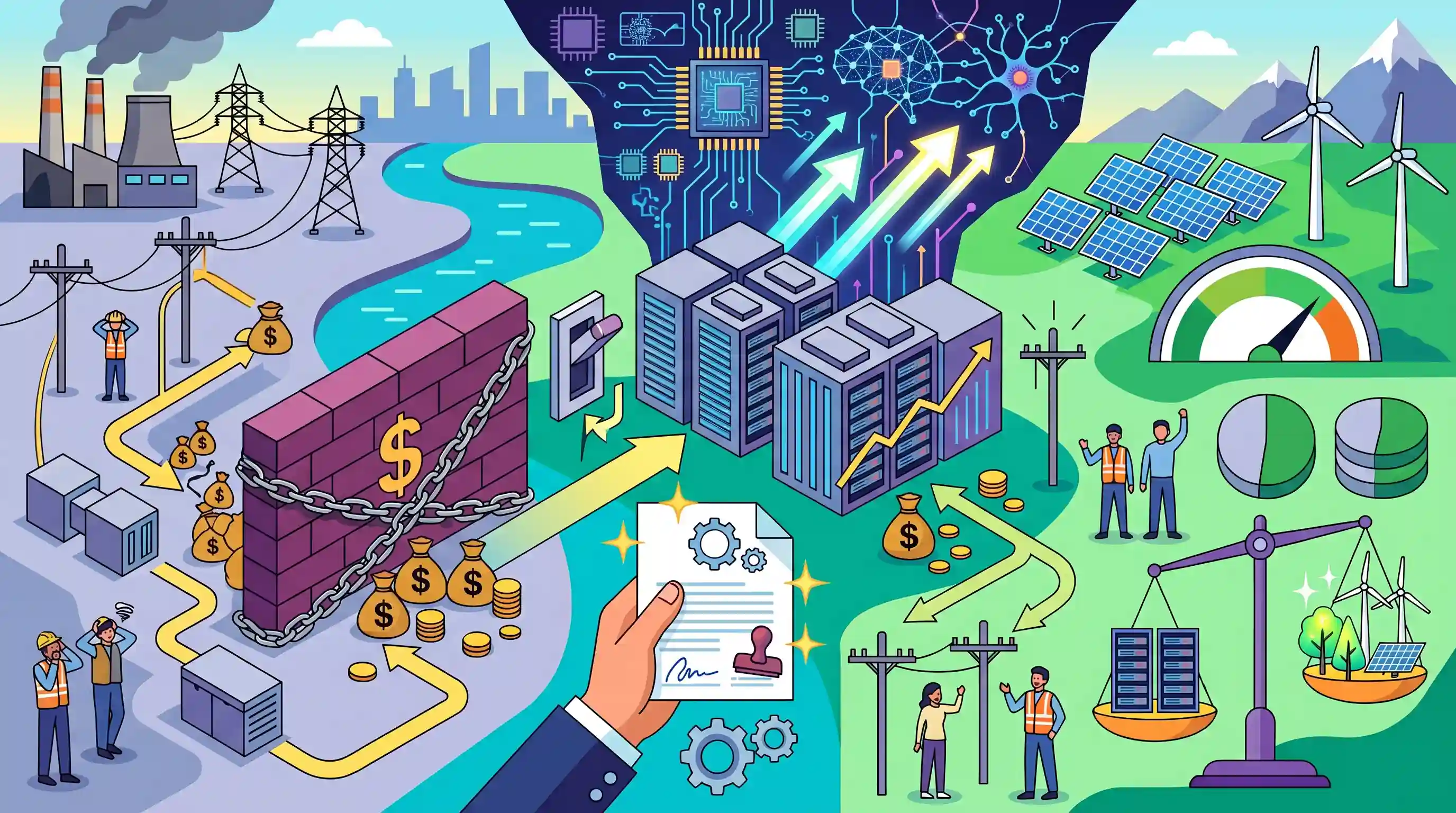
The intersection of digital infrastructure (AI data centres) and traditional energy regulation is a key governance challenge. This policy demonstrates a novel solution to power sector woes (cross-subsidies, discom health) while promoting renewable energy and attracting high-tech investment.
Summary
Andhra Pradesh has introduced a first-of-its-kind policy allowing large data centres to obtain Deemed Distribution Licences (DDL). This enables them to procure electricity directly via open-access, bypassing the hefty cross-subsidy surcharges that usually make commercial power expensive in India. Driven by the massive computing power required for artificial intelligence, the move cuts operational costs for data centres while sparing local discoms from heavy infrastructure investments. Crucially, the policy mandates that these centres meet a 51% renewable energy obligation, balancing technological growth with energy transition goals.
Key Points
- The AI boom has dramatically increased data centre energy demands, pushing governments to rethink electricity procurement.
- Andhra Pradesh's new policy grants Deemed Distribution Licences (DDL) to large data centres (300 MW+ load), allowing them to operate as their own power distributors.
- DDL status permits data centres to procure electricity via open access and bypass the cross-subsidy surcharges typically levied on industrial consumers to subsidize agricultural/residential users.
- The policy relieves local discoms from making heavy investments in generation and network infrastructure exclusively for data centres.
- The licences are ring-fenced to greenfield projects, include a mandate to source at least 51% of electricity from renewable energy, and require the licensee to bear grid connectivity costs.
Important Terms
Deemed Distribution License (DDL)

A regulatory status under the Electricity Act 2003 where specific entities are recognized as power distributors without needing a separate license; recently extended to strategic data centers in Andhra Pradesh.
UPSC context
GS-3: Infrastructure/Economy. Tests understanding of regulatory exemptions to promote high-tech investment and 'Ease of Doing Business' in energy-intensive sectors.
Cross-subsidy Surcharge (CSS)
A fee levied on 'Open Access' consumers to compensate local Discoms for the revenue loss used to cross-subsidize cheaper power for agricultural and domestic users.
UPSC context
GS-3: Economy/Energy. Vital for understanding Discom financial health and the pricing distortions caused by India's social-subsidy model.
Open Access (Power)
A policy framework allowing large electricity consumers (typically >1MW) to procure power directly from third-party generators or power exchanges instead of relying solely on local Discoms.
UPSC context
GS-3: Infrastructure. Central to power sector liberalization, promoting competition among generators and reducing costs for industrial growth.
Renewable Purchase Obligation (RPO)
A statutory mandate requiring distribution companies and large consumers to procure a minimum percentage of their total electricity consumption from renewable energy sources.
UPSC context
GS-3: Environment/Energy Transition. Key mechanism for meeting India's climate targets and driving the shift to green energy.
Discom (Distribution Company)
Utilities responsible for the final stage of electricity delivery to end-consumers and the collection of revenue; their financial health is central to India's energy reforms.
UPSC context
GS-3: Economy. Their viability is a frequent topic regarding power sector debt, structural reforms, and the UDAY scheme.
State Electricity Regulatory Commission (SERC)
Statutory bodies at the state level (e.g., APERC in Andhra Pradesh) responsible for determining electricity tariffs, regulating licensees, and implementing the Electricity Act.
UPSC context
GS-2: Statutory Bodies. Essential for understanding federalism in the power sector and the quasi-judicial role of state-level regulators.
Prelims Trap
Deemed Distribution Licensees are completely exempt from grid connectivity costs and cross-subsidy surcharges.
While DDLs bypass cross-subsidy surcharges to procure cheaper open-access power, licensees must still bear their own grid connectivity costs and infrastructure investments.
Static Concepts Connected
What is the Cross-Subsidy Surcharge (CSS) under the Electricity Act, 2003?
- Core Mechanism: An extra charge levied on industrial/commercial consumers who use Open Access to buy power directly from private generators rather than local utilities.
- Purpose: It compensates local Discoms for the revenue loss incurred by subsidizing electricity for farmers and low-income households.
- Tariff Policy: The National Tariff Policy aims to progressively reduce CSS to encourage competition, though cash-strapped states often resist lowering it.
What are the key features of the Green Energy Open Access Rules, 2022?
- Lowered Threshold: Reduced the Open Access threshold for green energy from 1 MW to 100 kW, enabling smaller industries to procure renewable power directly.
- RPO Compliance: Consumers can claim Green Certificates and use the procured power to fulfill their statutory Renewable Purchase Obligations (RPO).
- Deemed Approval: Nodal agencies must grant approvals for Green Open Access within 15 days, failing which it is considered deemed approved.
Cross-Topic Patterns
AI Boom vs. Net Zero Commitments
The massive, 24x7 baseload demands of AI data centres challenge India's Panchamrit targets. Bridging this via mandatory RE quotas for tech firms merges digital policy with climate goals.
Bypassing Discoms for Industrial Growth
By granting DDLs, states offload heavy Capex requirements from debt-ridden Discoms to private data players. This shifts industrial power consumption away from traditional, loss-making utility models.

Expect a Prelims question interlinking the Electricity Act's Open Access provisions with Cross-Subsidy Surcharges and Green Energy rules.
Linked PYQs · 4
Linked PYQs · 4
- 2020PrelimsGS1
With the present state of development, Artificial Intelligence can effectively do which of the following? 1. Bring down electricity consumption in industrial units 2. Create meaningful short stories and songs 3. Disease diagnosis 4. Text-to-Speech Conversion 5. Wireless transmission of electrical energy Select the correct answer using the code given below:
- 2023MainsGS3
Introduce the concept of Artificial Intelligence (AI). How does Al help clinical diagnosis? Do you perceive any threat to privacy of the individual in the use of Al in healthcare?
- 2022MainsGS3
Do you think India will meet 50 percent of its energy needs from renewable energy by 2030 ? Justify your answer. How will the shift of subsidies from fossil fuels to renewables help achieve the above objective ? Explain.
- 2020MainsGS3
Describe the benefits of deriving electric energy from sunlight in contrast to the conventional energy generation. What are the initiatives offered by our Government for this purpose?
