Commercial LPG Shortage Hits Rural Hospitality Sector in Shivamogga
Source:The Hindu ↗
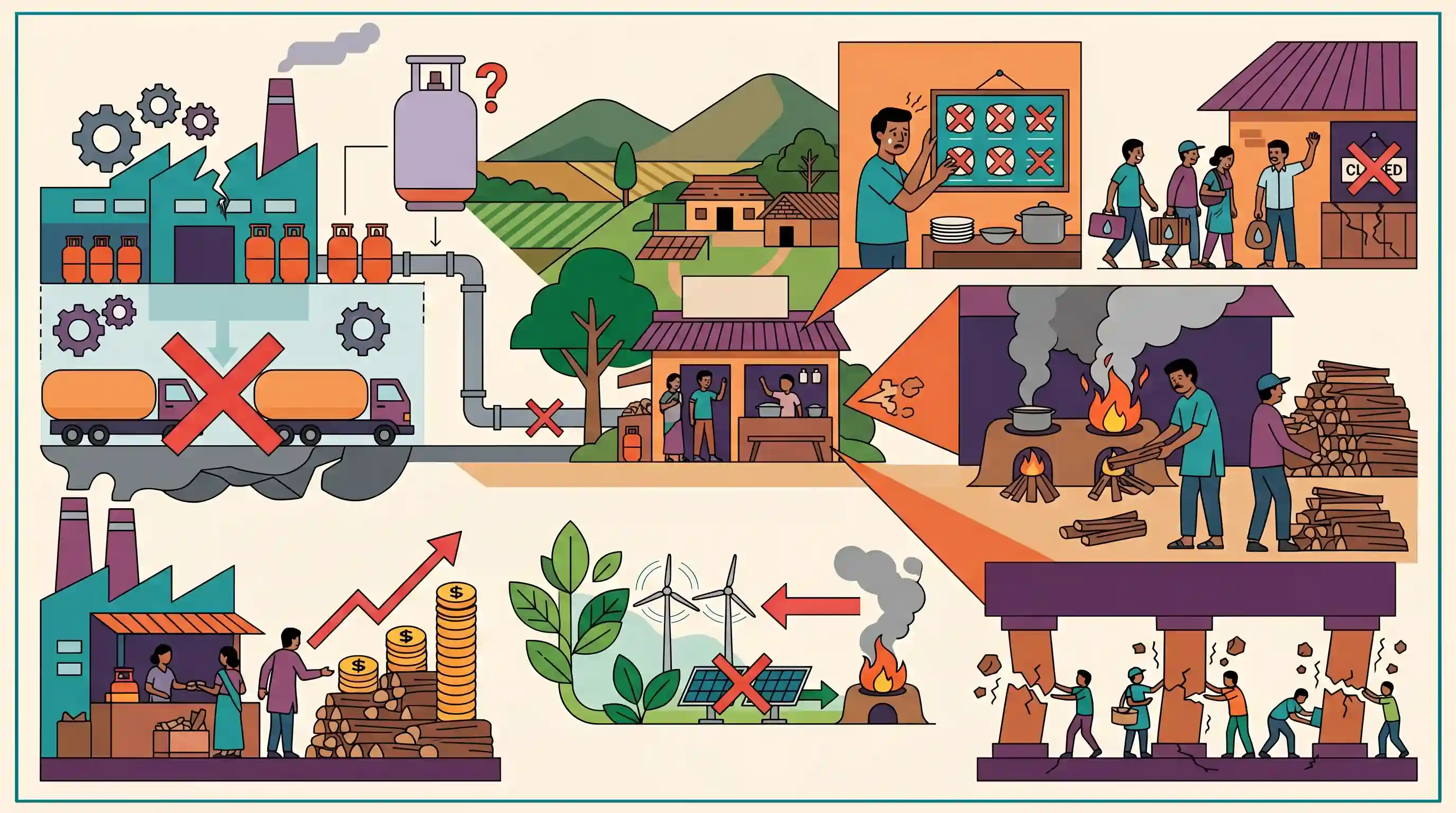
Why It Matters
Highlights the real-world vulnerability of the rural informal sector to supply chain disruptions and demonstrates how energy insecurity forces a regression to environmentally harmful traditional fuels like firewood, countering India's broader clean cooking energy goals.
Summary
A prolonged disruption in the supply of commercial LPG cylinders has severely impacted small hotels and eateries in rural areas of Shivamogga, Karnataka. Forced to either shut down, reduce menus, or lay off workers, many business owners have reverted to using firewood for cooking. This regression has driven up local firewood prices and highlights the fragility of rural micro-enterprises and the unorganized sector in the face of energy supply chain shocks, posing challenges to both livelihoods and clean energy transitions.
Key Points
- Rural hotels and small eateries in Shivamogga are facing an existential crisis due to a severe disruption in the supply of commercial LPG cylinders.
- To cope with the fuel scarcity, many establishments have reduced their operating hours, curtailed their menus, or temporarily shut down operations, leading to job losses for daily wage workers.
- The disruption has forced a regression to traditional biomass, with eateries switching back to firewood for cooking, which has concurrently driven up the cost and demand for wood in rural markets.
- The crisis highlights the acute vulnerability of the unorganized rural economy and MSMEs to energy supply chain shocks, threatening both livelihoods and clean energy transition goals.
Prelims Trap
PM Ujjwala Yojana provides subsidized commercial LPG cylinders to rural MSMEs to promote clean energy.
PM Ujjwala Yojana strictly provides deposit-free LPG connections and subsidies to women from BPL families for domestic household use, not for commercial enterprises or MSMEs.
Static Concepts Connected
How does the Essential Commodities Act (1955) regulate supply during crises?
- Regulatory power: The Centre can control production, supply, and distribution of declared essential commodities to maintain or increase equitable availability.
- Price control: It empowers the government to fix maximum retail prices (MRP) and impose stock limits to curb hoarding and black-marketing.
- Emergency diversion: During acute shortages, the government can mandate the diversion of dual-use goods (like LPG streams) exclusively for domestic household consumption, starring commercial sectors.
What are the structural vulnerabilities in India's LPG supply chain?
- High import dependence: India imports approximately 60% of its total LPG requirements, relying heavily on West Asian suppliers to meet its massive domestic and commercial demand.
- Transit chokepoints: About 90% of India's LPG imports pass through the Strait of Hormuz, making domestic fuel supply highly vulnerable to regional geopolitical tensions.
- Sectoral skew: With domestic households prioritized during shortages (forming the bulk of consumption), commercial sectors and MSMEs face acute, immediate scarcity when international supply chain shocks occur.
Cross-Topic Patterns
Global chokepoints & rural economy
Geopolitical tensions in West Asia directly translate into local job losses and MSME closures in rural India, highlighting the micro-economic vulnerability to macro supply shocks.
Energy security vs. Climate goals
Commercial fuel shortages force rural enterprises to revert to firewood, increasing localized carbon emissions and threatening India's clean energy transition and indoor air pollution targets.

Cascading impacts of global chokepoints (Strait of Hormuz) on India's unorganized sector & MSMEs is a prime GS-3 Mains theme for 2026.
Linked PYQs · 3
Linked PYQs · 3
- 2023MainsGS3
Faster economic growth requires increased share of the manufacturing sector in GDP, particularly of MSMEs. Comment on the present policies of the Government in this regard.
- 2016MainsGS3
How globalization has led to the reduction of employment in the formal sector of the Indian economy? Is increased informalization detrimental to the development of the country?
- 2022MainsGS2
‘Clean energy is the order of the day.’ Describe briefly India's changing policy towards climate change in various international fora in the context of geopolitics.
