Himachal Pradesh Tourism Growth and Ecological Sustainability
Source:outlookindia ↗
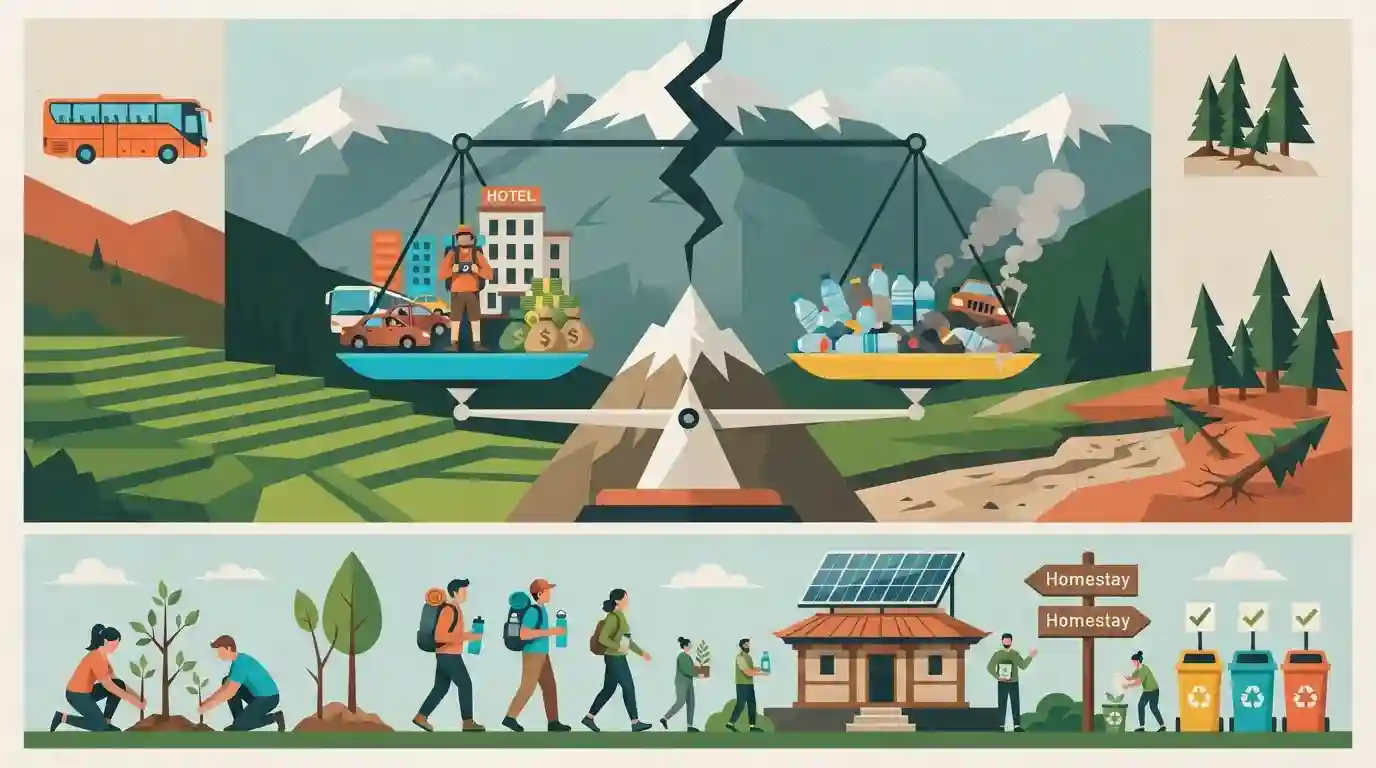
Why It Matters
Tourism is a core pillar of Himachal Pradesh's economy, making the challenge of ecological carrying capacity and sustainable development a vital area of study for state-level governance and exam preparation.
Summary
The article highlights the growing tension between tourism-driven economic growth and environmental sustainability in Himachal Pradesh, emphasizing the threats posed by overcrowding, waste generation, and fragile Himalayan infrastructure.
Key Points
- The massive surge in tourist numbers across Himachal Pradesh has posed serious sustainability and environmental challenges.
- Overcrowding, traffic congestion, waste management issues, and unplanned infrastructure expansion threaten the fragile Himalayan ecosystem.
- Balancing economic benefits from tourism with ecological carrying capacity is critical for the state's long-term viability.
Important Terms
National Green Tribunal

A specialized statutory body established in India under the National Green Tribunal Act, 2010, for effective and expeditious disposal of cases relating to environmental protection and conservation of forests and other natural resources.
UPSC context
HPAS GS Paper III (Environment & Ecology); tests statutory bodies, judicial interventions in state environmental matters, and waste management compliance.
Static Concepts Connected
What are the key ecological challenges facing the Himalayan region as per environmental studies?
- Slope Destabilization: Unregulated construction on fragile hill slopes increases landslide vulnerability and soil erosion.
- Waste Overload: Mass tourism generates massive non-biodegradable waste exceeding local municipal disposal capacities.
- Vehicular Congestion: Tourist vehicular influx drastically increases carbon emissions and localized air pollution in valleys.
Cross-Topic Patterns
Tourism overload + Himalayan disaster management linkages
The rapid influx of vehicles into hill stations directly tests state disaster management capabilities and rural urban planning under GS Paper III.

HPAS Mains GS-III may test carrying capacity limits and ecological fragile zones in hill states with a direct 10-marker on sustainable tourism.
Linked PYQs · 2
Linked PYQs · 2
- 2024HPAS_PRELIMSGS1
Arrange the following years based on the number of foreign tourist arrivals in Himachal Pradesh in descending order : (1) 2020 (2) 2021 (3) 2022 (4) 2023 (up to December 2023) Choose the correct option :
- 2020HPAS_PRELIMSGS1
Consider the given four statements and choose the correct answer from the given options. Select the true statements from the following: 1. Chamba, Kullu and Kinnaur are considered the most susceptible of landslide threat. 2. Una, Bilaspur, Sirmaur, Shimla and Solan are considered as low vulnerable of disaster threats. 3. Hum valley of Una district has hardly any natural drinking water source. 4. As per the study of central water board, Kala Amb valley in Sirmaur district has exploited the least underground water.
