Himachal To Develop Ropeways Under PPP And External Aid Modes
Source:newprojectstracker ↗
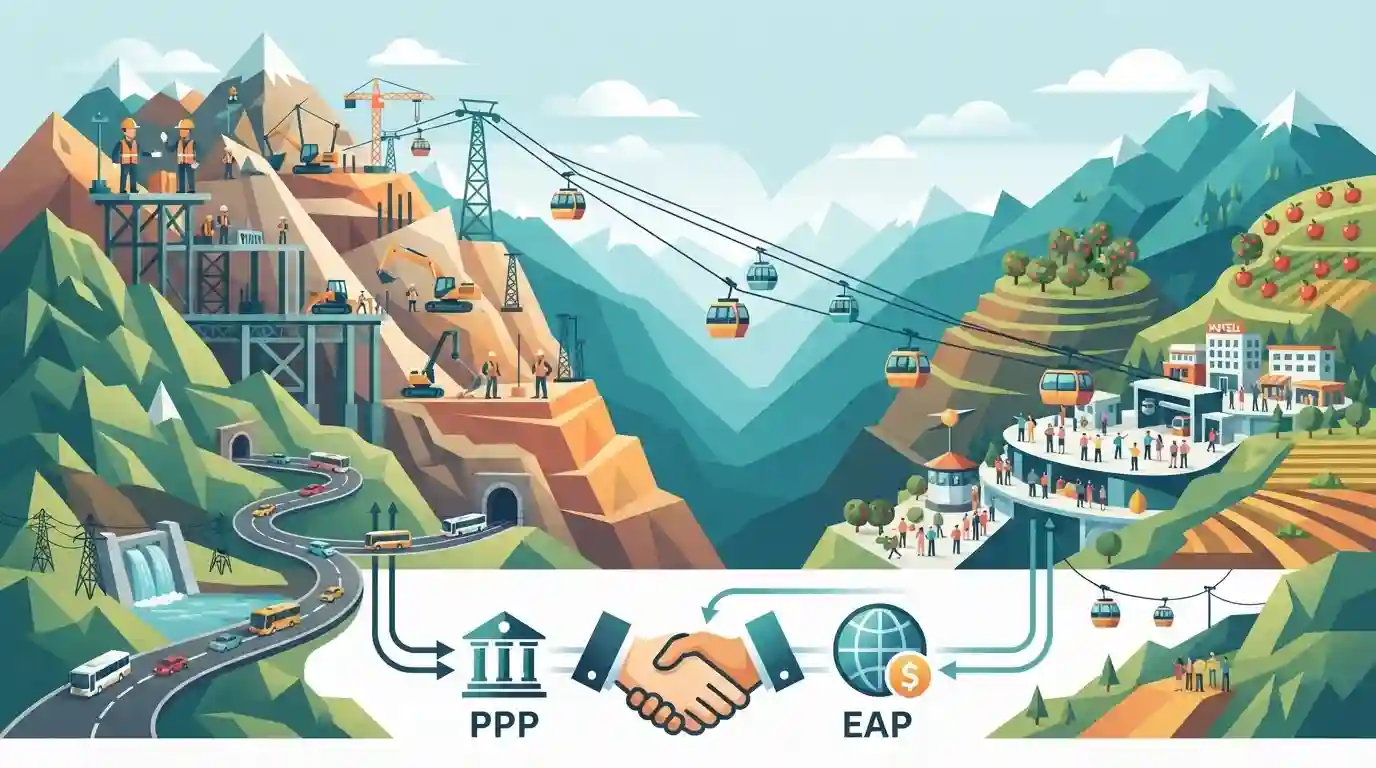
Why It Matters
Crucial for understanding infrastructure financing models (PPP/EAP) and sustainable mountain transport solutions in Himachal Pradesh.
Summary
Himachal Pradesh is pushing forward with its ambitious ropeway development plans using Public-Private Partnership (PPP) and Externally Aided Project (EAP) financing modes to cope with high construction costs and difficult mountainous topography, aiming to enhance connectivity and sustainable tourism.
Key Points
- Himachal Pradesh is focusing on developing ropeway infrastructure to boost tourism and urban mobility.
- Ropeway projects are being implemented through Public-Private Partnership (PPP) and Externally Aided Project (EAP) modes.
- High construction costs and challenging terrain present hurdles requiring alternative financing and execution frameworks.
Important Terms
Public-Private Partnership (PPP)

A framework where government and private sector entities collaborate to fund, build, and operate infrastructure projects, sharing risks and rewards to offset high public capital costs.
UPSC context
HPAS Paper III (Economy & Infrastructure): Essential for testing mechanisms of infrastructure financing, private sector participation, and overcoming fiscal constraints in hilly states.
Externally Aided Project (EAP)
Development projects financed through external bilateral or multilateral funding agencies (like the World Bank or ADB) channeled via the central government to support state capital investments.
UPSC context
HPAS Paper III (State Economy & Public Finance): Important for understanding state debt liabilities, external developmental assistance, and funding for mountainous terrain infrastructure.
Ropeway Projects
Sustainable transport systems utilizing overhead cables to connect remote tourist destinations, offering eco-friendly transit solutions across difficult mountainous topography.
UPSC context
HPAS Paper III (Infrastructure & Tourism): Evaluates sustainable tourism initiatives, green transport, and regional connectivity solutions tailored to Himachal Pradesh's unique geography.
Static Concepts Connected
What are the main models of Public-Private Partnerships (PPPs) used in infrastructure projects in India?
- BOOT Model: Private partner builds, owns, operates, and eventually transfers facility back to government after concession period.
- DBFO Model: Private partner finances, builds, and operates facility, while ownership remains with the government throughout.
- OMT Model: Government builds asset, then leases or contracts out operation and maintenance to a private entity for a fee.
Cross-Topic Patterns
Himalayan Ecology vs. Capital Infrastructure PPPs
While ropeways provide low-carbon urban transport and tourism transit in mountainous terrains, their execution requires balancing fragile Himalayan ecology with high-capital PPP frameworks.

HPAS Mains: Critically examine the viability of PPP and EAP models in financing ropeway infrastructure in Himachal's fragile terrain.
Linked PYQs · 2
Linked PYQs · 2
- 2024HPAS_PRELIMSGS1
Arrange the following years based on the number of foreign tourist arrivals in Himachal Pradesh in descending order : (1) 2020 (2) 2021 (3) 2022 (4) 2023 (up to December 2023) Choose the correct option :
- 2025HPAS_PRELIMSGS1
According to PLFS 2023-24, share of secondary and tertiary sector in total employment in Himachal Pradesh respectively are :
