Himachal Pradesh launches cervical cancer vaccination campaign
Source:Indian Express ↗
Why It Matters
This article serves as an excellent case study for GS2 answers on public health and social justice. It demonstrates a proactive, state-led preventive health intervention targeting a gender-specific disease burden, showcasing the vital role of grassroots frontline workers (ASHA) and digital infrastructure (U-WIN) in effective public service delivery.
Summary
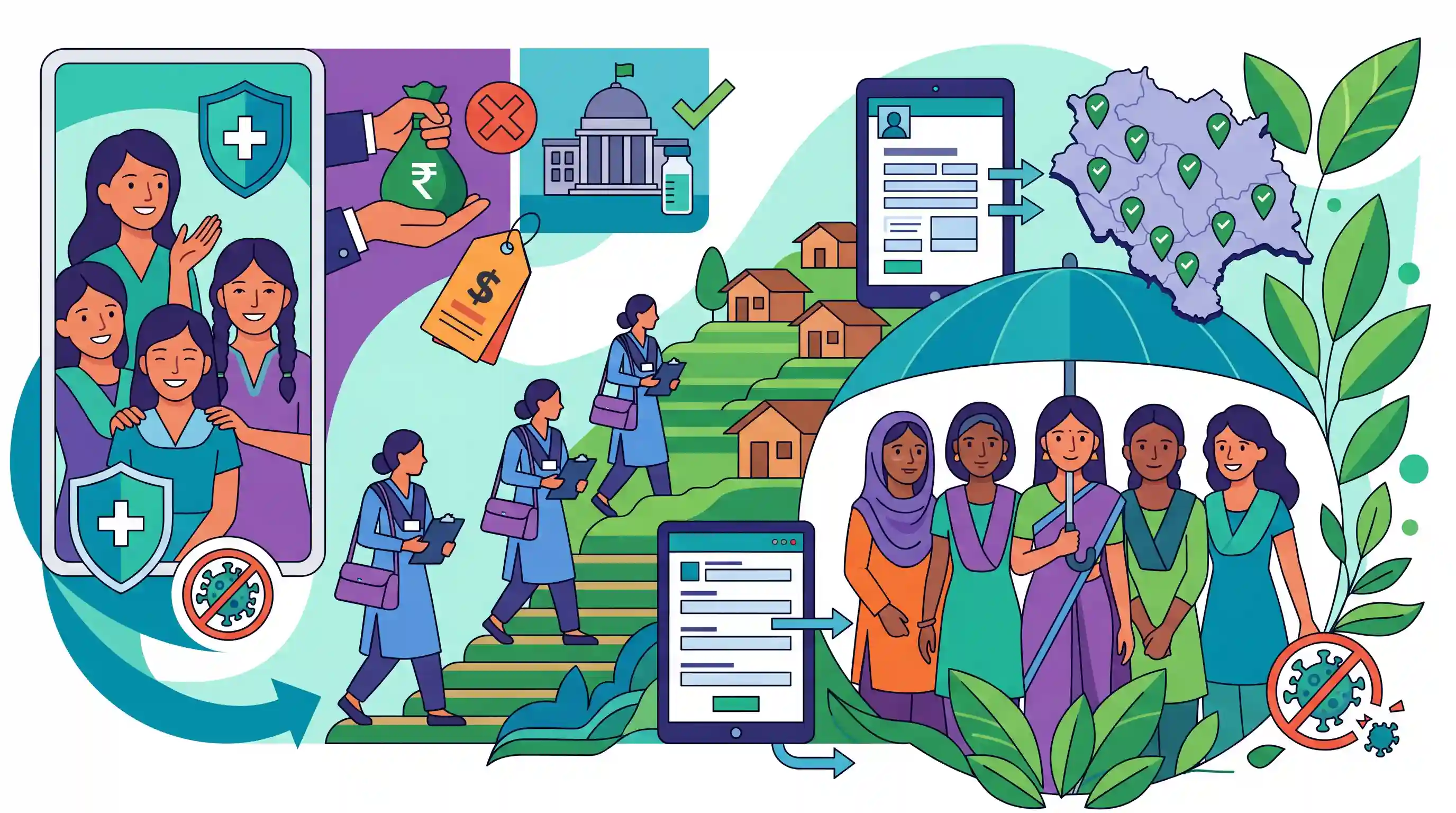
The Himachal Pradesh government is set to roll out a specialized, free-of-cost vaccination campaign to protect young girls (aged 14-15) against cervical cancer using the HPV vaccine. Leveraging grassroots ASHA workers for door-to-door surveys and the U-WIN portal for digital registration, the initiative aims to systematically reach all eligible girls, including marginalized groups. This proactive public health measure targets the second most common cancer among Indian women, simultaneously addressing immense financial barriers associated with private-sector HPV vaccination.
Key Points
- The Himachal Pradesh government is launching a free vaccination campaign against cervical cancer targeting girls aged 14 to 15 years.
- The initiative includes destitute children and migrants, ensuring widespread preventive healthcare coverage.
- ASHA workers will conduct a door-to-door survey to identify eligible beneficiaries, and registration will be processed through the U-WIN portal.
- Parental consent is mandatory for the administration of the single-dose HPV vaccine.
- Cervical cancer, primarily caused by the Human Papillomavirus (HPV), is the second most common cancer among women in India, with 1.2 to 1.3 lakh new cases reported annually.
- Providing the vaccine free of cost removes a massive financial barrier, as private sector doses can cost up to Rs 10,000.
Important Terms
U-WIN Portal

A digital platform for the Universal Immunization Programme (UIP) that maintains an electronic registry of vaccinations for pregnant women and children, modeled after the successful Co-WIN platform.
UPSC context
GS Paper 2 (Governance) and GS Paper 3 (IT). Relevant for e-governance and digital transformation in public health delivery.
ASHA (Accredited Social Health Activist)
Trained female community health activists who serve as the primary link between the public health system and rural communities under the National Health Mission (NHM).
UPSC context
GS Paper 2 (Social Justice/Health). Essential for understanding community-based health interventions and grassroots healthcare delivery mechanisms.
HPV Vaccine
A vaccine that protects against infections from certain types of Human Papillomavirus, which are responsible for the majority of cervical cancer cases worldwide.
UPSC context
GS Paper 3 (Science & Technology). Focuses on biotechnology, indigenization of medical technology (e.g., CERVAVAC), and preventive healthcare.
Cervical Cancer
A type of cancer occurring in the cervix, which is the second most common cancer among Indian women and is highly preventable through vaccination and regular screening.
UPSC context
GS Paper 2 (Social Justice/Health). Highlights health challenges specifically affecting women and the importance of national disease-prevention policies.
Universal Immunization Programme (UIP)
A major national health initiative providing free vaccines against life-threatening diseases to children and pregnant women across India; it now incorporates digital tracking via U-WIN.
UPSC context
GS Paper 2 (Health). Core topic for government health interventions and achieving Sustainable Development Goals related to maternal and child health.
Prelims Trap
HPV vaccine is a therapeutic treatment administered to cure existing cervical cancer in adult women.
HPV vaccines are purely preventive, offering maximum efficacy when administered prior to viral exposure (typically ages 9-14). They cannot cure existing HPV infections or cervical cancer.
Static Concepts Connected
What is the mandate and status of ASHA workers under the National Health Mission?
- Origin: Established in 2005 under the National Rural Health Mission to act as a community-level health educator and promoter.
- Employment Status: They are honorary volunteers receiving performance-based incentives for tasks like immunization drives, not regular salaried state government employees.
- Key Functions: Facilitating institutional deliveries (Janani Suraksha Yojana), promoting family planning, and mobilizing communities for preventive health campaigns.
How does the Human Papillomavirus (HPV) infection lead to cervical cancer?
- Viral Nature: HPV is a common sexually transmitted viral infection. High-risk strains (specifically types 16 and 18) are responsible for the vast majority of cervical cancers globally.
- Cellular Mutation: While most infections clear naturally, persistent infection by high-risk strains slowly alters cervical cells over years, eventually progressing to invasive cervical cancer if undetected.
- Indigenous Solution: India’s first indigenous quadrivalent HPV vaccine, 'CERVAVAC' by Serum Institute, targets four high-risk strains (6, 11, 16, 18) to prevent these infections entirely.
Cross-Topic Patterns
Co-WIN's legacy shaping U-WIN portal
The transition from Co-WIN to U-WIN highlights the scaling of India's Digital Public Infrastructure (DPI) to permanently digitize the Universal Immunization Programme (UIP) for pregnant women and children.
Interim Budget 2024 and HPV vaccines
The Union Interim Budget 2024-25 explicitly encouraged HPV vaccination for girls aged 9-14. State-level campaigns like Himachal's represent the decentralized implementation of this national public health priority.

A multi-statement question combining the U-WIN portal's scope, ASHA worker incentives, and indigenous HPV vaccines (CERVAVAC) is expected.
Linked PYQs · 3
Linked PYQs · 3
- 2019PrelimsGS1
Which one of the following statements is not correct?
- 2020MainsGS2
In order to enhance the prospects of social development, sound and adequate health care policies are needed particularly in the fields of geriatric and maternal health care. Discuss.
- 2021MainsGS2
Can Civil Society and Non-Governmental Organizations present an alternative model of public service delivery to benefit the common citizen? Discuss the challenges of this alternative model.
