हिमाचल प्रदेश में मंदिर सुरक्षा के लिए मानक संचालन प्रक्रियाएं
स्रोत:diarytimes ↗
क्यों मायने रखता है
HPAS Prelims के लिए अत्यंत महत्वपूर्ण है क्योंकि हिमाचल प्रदेश का सांस्कृतिक भूगोल, जिसके अंतर्गत इसके प्रमुख मंदिर, तीर्थ स्थल और 'HP पब्लिक रिलीजियस इंस्टीट्यूशंस एंड चैरिटेबल एंडोमेंट्स एक्ट, 1984' जैसे स्थानीय शासन ढांचे शामिल हैं, General Studies प्रश्नपत्र में बार-बार पूछे जाने वाले विषय हैं।
सारांश
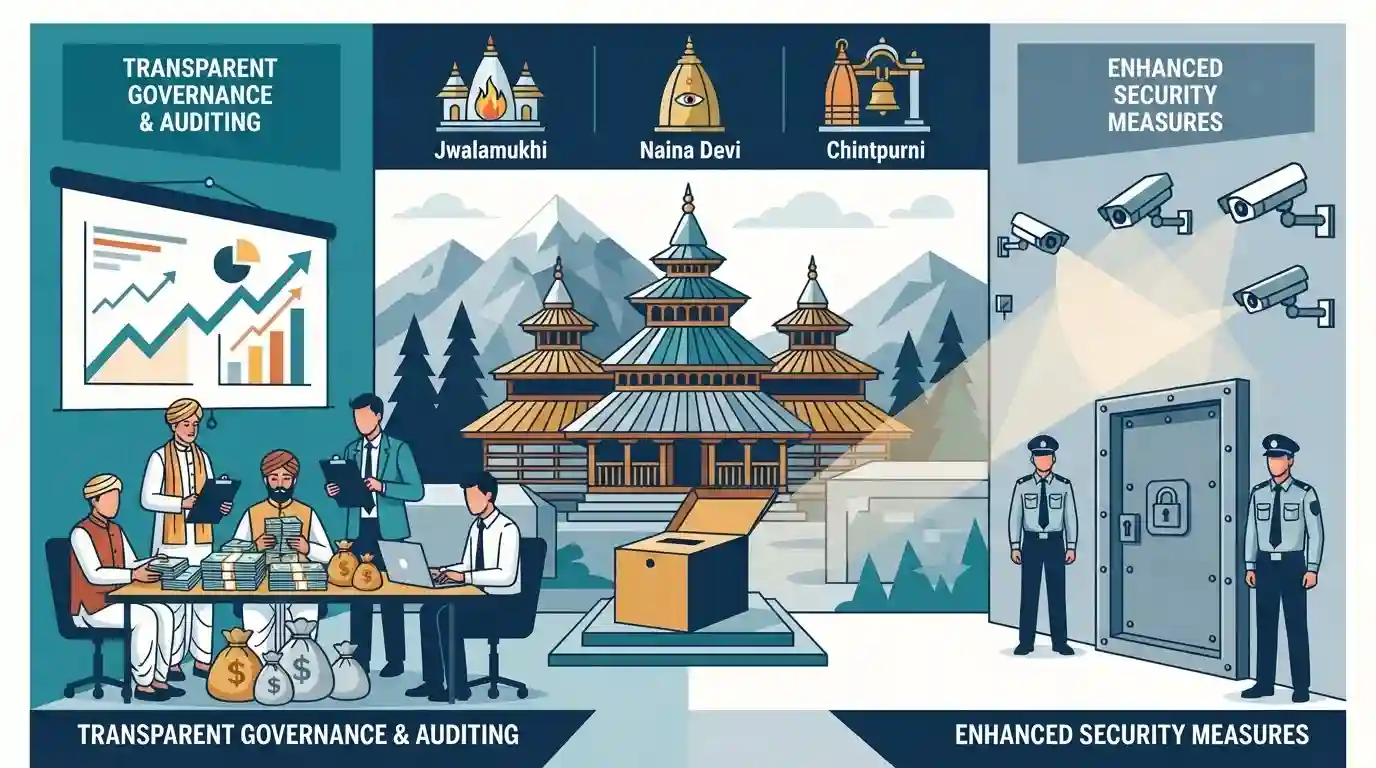
The Himachal Pradesh Government has introduced stringent new Standard Operating Procedures (SOPs) to oversee the management and security of donations at 36 government-controlled temples under the HP Public Religious Institutions and Charitable Endowments Act, 1984. Prompted by the immense value of offerings—including massive cash deposits, gold, and silver—the directives require comprehensive financial auditing, fortified strong rooms, and enhanced CCTV monitoring at prominent shrines like Chintpurni, Jwalamukhi, and Naina Devi.
मुख्य बिंदु
- The Himachal Pradesh Government has issued comprehensive Standard Operating Procedures (SOPs) for the 36 state-managed temples to ensure the security and transparent management of donations.
- New guidelines mandate the installation of tamper-proof donation boxes, expanded CCTV surveillance, robust strong rooms, and mandatory auditing of cash, jewellery, and precious metals.
- विनियमित मंदिरों, जिनमें चिंतपूर्णी, ज्वालामुखी और नैना देवी जैसे प्रमुख धार्मिक स्थल शामिल हैं, को 30 दिनों के भीतर विस्तृत अनुपालन रिपोर्ट प्रस्तुत करनी होगी।
- अकेले वर्ष 2024 में, श्रद्धालुओं ने ₹200.49 करोड़ मूल्य की संपत्ति का योगदान दिया, जो इन धर्मस्थलों में फिक्स्ड डिपॉजिट में ₹346.26 करोड़, 600 किलोग्राम सोने और 250 क्विंटल चांदी के संचयी भंडार के अतिरिक्त है।
महत्वपूर्ण शब्द
हिमाचल प्रदेश सार्वजनिक धार्मिक संस्थान और धर्मार्थ विन्यास अधिनियम, 1984

A state legislation enacted to administer public religious institutions, ensure transparent management of temple trusts, and oversee pilgrim facilities at 36 government-managed shrines.
UPSC context
Relevant to GS-2 (Governance/State laws) and GS-1 (Culture), focusing on the state's legal framework for managing and securing religious endowments.
Language, Art and Culture Department
The nodal state department in Himachal Pradesh responsible for issuing administrative SOPs and overseeing the security, cultural preservation, and financial transparency of government-controlled temples.
UPSC context
राज्य प्रशासन में सांस्कृतिक और धार्मिक संपत्तियों की विभागीय जवाबदेही और संस्थागत निगरानी के संबंध में GS-2 (शासन व्यवस्था) से संबंधित।
मंदिर प्रबंधन समितियां
Local administrative bodies at major state-run shrines tasked with implementing SOPs, managing daily affairs, securing offerings, and maintaining transparent financial records.
UPSC context
Key for GS-2 (Transparency & Accountability), testing knowledge of decentralized governance and financial auditing in public trusts.
प्रारंभिक ट्रैप
भारतीय संविधान राज्य को धार्मिक संप्रदायों की वित्तीय परिसंपत्तियों और संपत्तियों को विनियमित या प्रबंधित करने से पूर्णतः प्रतिबंधित करता है।
Under Article 25(2)(a) and Article 26(d), the State is constitutionally empowered to regulate the 'secular, economic, financial, and political' activities associated with religious practices, provided it does not interfere with essential religious rituals.
संबंधित अवधारणाएँ
भारतीय संविधान मंदिर की संपत्तियों पर राज्य के नियंत्रण और धार्मिक स्वतंत्रता के बीच संतुलन कैसे स्थापित करता है?
- Secular Regulation: Article 25(2)(a) empowers the state to regulate economic, financial, political, or other secular activities associated with religious practices.
- Property Administration: अनुच्छेद 26(d) धार्मिक संप्रदायों को संपत्ति के स्वामित्व और उसे अर्जित करने के अधिकार की गारंटी देता है, लेकिन यह अनिवार्य करता है कि इसका प्रशासन 'विधि के अनुसार' होना चाहिए।
- अनिवार्य प्रथाओं का सिद्धांत: The Supreme Court (e.g., Shirur Mutt Case) established that while essential religious practices cannot be touched, secular management of wealth/land is subject to state laws.
फ़िरोज़ शाह तुग़लक़ के ज्वालामुखी अभियान का साहित्यिक और ऐतिहासिक महत्व क्या था?
- पांडुलिपि जब्ती: अपने 1360-61 AD के नगरकोट अभियान के दौरान, फिरोज शाह तुगलक ने ज्वालामुखी मंदिर के पुस्तकालय से 1,300 संस्कृत पांडुलिपियों को एकत्र किया था।
- दलाइल-ए-फ़िरोज़शाही: He commissioned the scholar Izzuddin Khalid Khani to translate these texts into Persian, focusing on astronomy, philosophy, and divination.
- बौद्धिक संश्लेषण: The exercise demonstrated the Delhi Sultanate's strategic interest in absorbing indigenous Indian scientific and astrological knowledge.
अंतर-विषय पैटर्न
मंदिर अर्थशास्त्र और सार्वजनिक वित्त
राज्य-प्रबंधित मंदिर बोर्ड विशाल वित्तीय संरक्षक के रूप में कार्य करते हैं, जिससे यह कानूनी बहस उत्पन्न होती है कि क्या धर्मनिरपेक्ष राज्य तंत्र लोक कल्याण के लिए धार्मिक संपदा का उपयोग कर सकता है।
Rock-Cut Architecture: Deccan vs. Himalayas
राष्ट्रकूट शैलकृत मंदिरों (एलोरा) की तुलना 8वीं शताब्दी के मसरूर मंदिर समूह से करने पर यह पता चलता है कि किस प्रकार एकाश्म शिखर शैलियाँ बाह्य हिमालयी क्षेत्र में स्थानांतरित हुईं और वहाँ के अनुकूल ढल गईं।

Medieval translation bureaus (like Dalail-i-Firoz Shahi under Tughlaq) are highly probable targets for UPSC history matching questions.
संबद्ध PYQ · 3
संबद्ध PYQ · 3
- 2018HPAS_PRELIMSGS1
Which is the earliest specimen of 'Nagara design' found in H.P. ?
- 2014HPAS_PRELIMSGS1
Which one of the following is a Pagoda style temple in H.P. ?
- 2022HPAS_PRELIMSGS1
Read the following sentences and select the incorrect one : (i) St. Andrew's Church in Chamba carries the influence of Scottish architecture. (ii) The architecture of 'Manimahesh Lakshana Devi temple' is 'Indo-Aryan Nagar style (Shikhar)'. (iii) 'Champavati temple' in Chamba is built in 'Graeco Buddhist art of Gandhara'. (iv) The brass idol of the Goddess at Chatrari Shakti Devi temple in Chamba district is in the 'Kashmiri style'.
