Bihar Coalition Politics Seat Sharing Negotiations
Source:hindustantimes ↗
Why It Matters
Understanding alliance dynamics, seat-sharing mechanisms, and coalition behavior is essential for grasping the complexities of regional and national political systems in India, particularly within multi-party state contexts like Bihar.
Summary
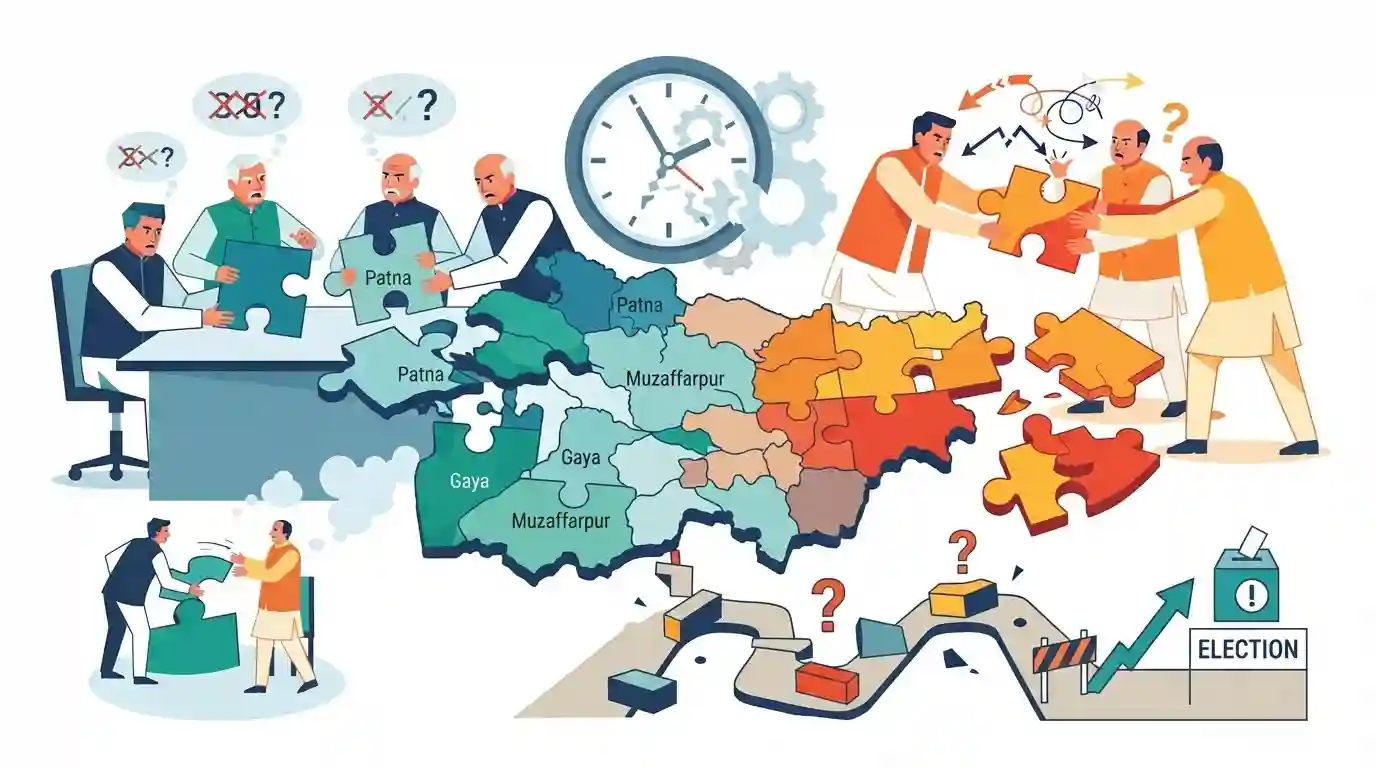
An analysis of the political dynamics surrounding seat-sharing negotiations in Bihar, highlighting how friction and delayed consensus among major alliances point towards underlying coalition confusion ahead of elections.
Key Points
- Delays and friction in finalising seat-sharing arrangements among political parties indicate deep-seated coalition confusion in Bihar politics.
- Complex alliance dynamics often emerge during assembly election cycles, testing party discipline, vote-transfer efficiency, and seat bargaining power.
- Expert analysis suggests that mismatched expectations among coalition partners can weaken campaign coherence and open doors for multi-cornered electoral contests.
Prelims Trap
Delays and friction in seat-sharing arrangements among political parties indicate the inevitable collapse of coalition politics in Bihar.
Aspirants often assume seat-sharing delays indicate alliance collapse, whereas in heterogeneous coalitions, protracted bargaining is a structural tool for maximizing vote-transfer efficiency across fragmented caste lines.
Static Concepts Connected
What are the core features and constitutional evolution of coalition politics in India?
- Kingmaker Role: Regional parties have emerged as decisive kingmakers, constraining the dominance of national parties and reshaping federal dynamics.
- CMP Instrument: Common Minimum Programme (CMP) became a standard instrument for ideologically diverse fronts to govern.
- Judicial Check: Article 356 misuse and President's Rule guidelines were significantly curtailed following landmark judgments like the S.R. Bommai case.
Cross-Topic Patterns
Caste Dynamics & Coalition Politics
Coalition bargaining power in Bihar directly reflects caste-based vote fragmentation, connecting electoral alliances with the sociology of social stratification in the Indo-Gangetic plains.

BPSC may frame coalition friction in Bihar as a structural feature of multi-party federalism rather than temporary election-season opportunism.
Linked PYQs · 2
Linked PYQs · 2
- 2022BPSC_PRELIMSGS1
According to the 15th Finance Commission's recommendations, how much share will Bihar receive in divisible pool of Central taxes from 2021-26?
- 2025BPSC_PRELIMSGS1
Consider the following statements: 1) The proportion of the young population (0-19 years) in Bihar is projected to decline significantly by 2041. 2) Bihar’s demographic dividend is expected to peak around 2041. 3) The elderly population (60+ years) in Bihar is expected to rise more sharply than in India. Select the correct answer using the codes given below:
