Role of Non-State Actors in West Asia Geopolitical Conflict
Source:The Hindu ↗
Why It Matters
The escalating conflict between Israel and Hezbollah highlights the volatile geopolitical environment in West Asia, a region critical for global energy security and trade. Understanding the influence of armed non-state actors like Hezbollah is essential for analyzing modern warfare and regional instability, which directly impacts India's strategic balancing in the Middle East and its broader foreign policy objectives.
Summary
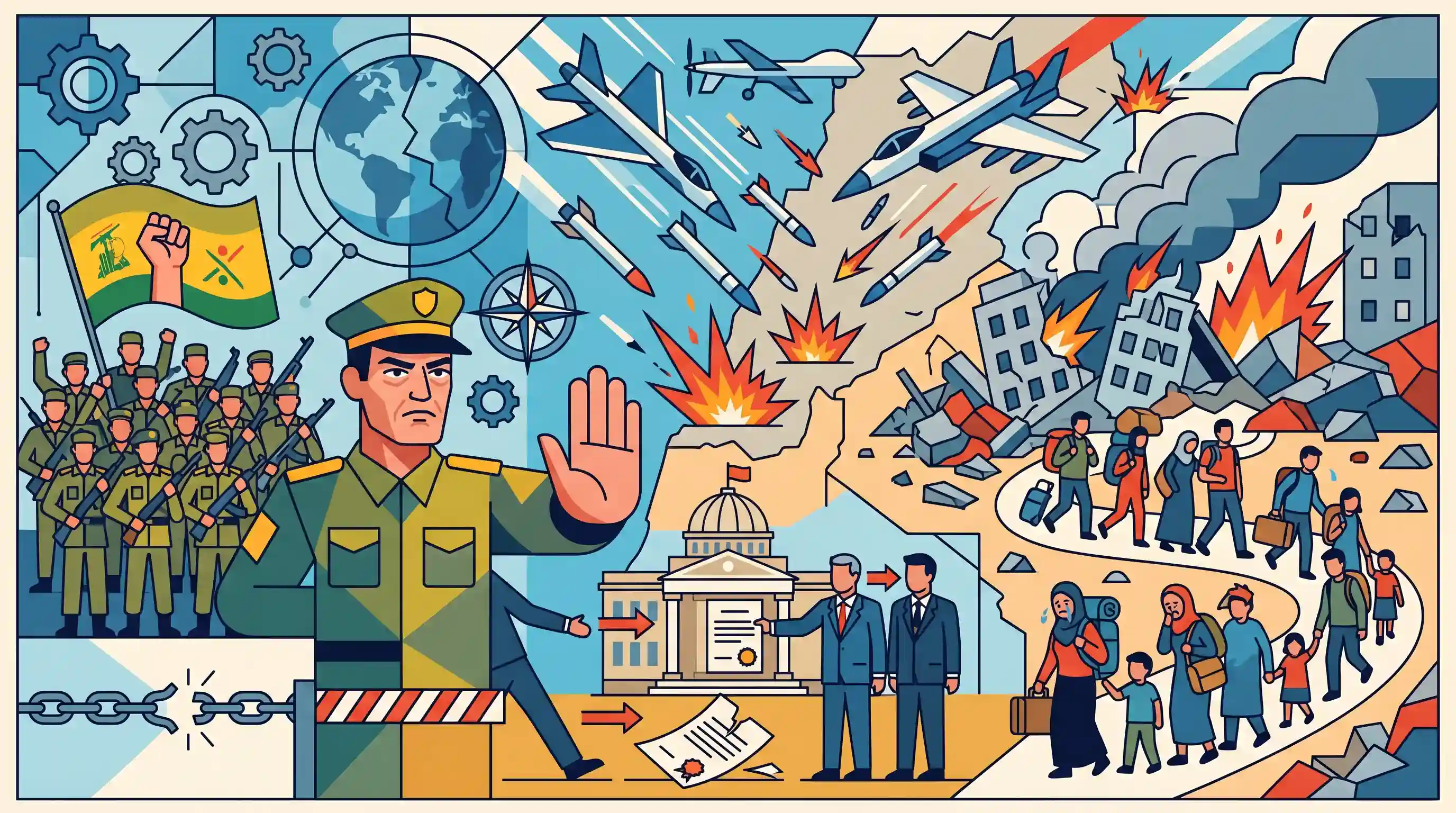
Hezbollah leader Naim Qassem vowed to confront "Israeli-American aggression" and refused to surrender, further escalating the ongoing conflict in the Middle East. The declaration comes amidst intensified Israeli military operations in southern Lebanon, which have caused significant civilian casualties and mass displacement. Concurrently, Hezbollah rejected a mandate from the Lebanese government demanding an immediate cessation of the group's military activities and the surrender of its weapons, highlighting deep internal state divisions and the disruptive role of powerful non-state actors in regional geopolitics.
Key Points
- Hezbollah leader Naim Qassem declared the group's intent to continue its armed resistance against Israel, framing it as an existential defense against "Israeli-American aggression."
- Israeli military operations in southern Lebanon have intensified, resulting in over 72 deaths and the displacement of approximately 83,000 people.
- The Lebanese government announced an immediate ban on Hezbollah's military activities and demanded the group surrender its weapons to state authorities.
- Hezbollah rejected the Lebanese government's demands, further eroding state authority and showcasing the outsized influence of armed non-state actors in the region.
- The deepening conflict between Israel and Hezbollah threatens broader geopolitical stability in West Asia, with potential ripple effects on global security and energy dynamics.
Important Terms
Hezbollah

A Lebanese Shia Islamist political party and militant group formed in 1982. It operates as a 'state within a state' and is a key member of the Iran-led Axis of Resistance.
UPSC context
Relevant for GS II (International Relations) and GS III (Security), testing knowledge of West Asian geopolitics and the role of proxy groups.
Blue Line
A 120km demarcation line established by the United Nations in 2000 to verify Israel's withdrawal from southern Lebanon; it serves as a de facto boundary, not an official border.
UPSC context
Important for Prelims (Mapping) and GS II, focusing on boundary disputes and the role of UNIFIL in West Asian stability.
Non-State Actors
Organizations or individuals with significant political or military influence that operate independently of a sovereign state's formal authority, often challenging or supplementing state power.
UPSC context
A core concept in GS II and GS III regarding global security, asymmetric warfare, and challenges to state sovereignty.
Axis of Resistance
A regional alliance led by Iran, including the Syrian government and groups like Hezbollah, Hamas, and the Houthis, united by opposition to Israeli and Western influence.
UPSC context
Vital for GS II, assessing understanding of regional power blocs, Iran's foreign policy, and Middle Eastern strategic dynamics.
Naim Qassem
The Secretary-General of Hezbollah as of October 2024, succeeding Hassan Nasrallah. He is a founding member and long-time ideological leader of the organization.
UPSC context
Relevant for Prelims (Current Affairs/Personalities) and GS II, tracking leadership changes in influential regional organizations impacting global security.
Confessionalism (Lebanon)
A unique power-sharing system in Lebanon that distributes political and institutional power among religious sects (Sunni, Shia, Maronite Christian) to maintain balance in a multiconfessional state.
UPSC context
Important for GS II (Governance/International Relations), explaining Lebanon's internal fragility and its impact on the nation's inability to centralize authority.
Prelims Trap
"The Blue Line is the internationally recognized official border between Israel and Lebanon."
The Blue Line is not a formal international border. It is a temporary "line of withdrawal" published by the UN in 2000 to confirm Israeli troop pullouts.
Static Concepts Connected
What is the Blue Line and UNIFIL's role in Lebanon?
- Blue Line: A UN-established demarcation line (2000) confirming Israel's withdrawal from southern Lebanon. It is a temporary line, distinct from a formal official international border.
- UNIFIL Mandate: A UN peacekeeping mission (United Nations Interim Force in Lebanon) tasked with monitoring hostilities and assisting Lebanese armed forces. India is a major troop-contributing nation.
What characterizes the 'State within a State' model in West Asia?
- Parallel Institutions: Armed non-state actors like Hezbollah establish parallel military, political, and social welfare systems, openly defying the legal monopoly on violence held by the central government.
- Proxy Warfare: They often act as regional proxies (e.g., Iran's Axis of Resistance), eroding domestic state sovereignty to project the strategic deterrence of external geopolitical powers.
Cross-Topic Patterns
Non-State Actors + Global Trade Disruption
Similar to Houthi disruptions in the Red Sea, Hezbollah's autonomy illustrates how armed non-state proxies wield disproportionate power to disrupt global maritime stability and energy supply chains.
UN Peacekeeping + India's Diplomatic Posture
With escalating violence near the Blue Line, India's role as a major UNIFIL troop contributor intersects with its delicate diplomatic balancing act between Israel and the Arab world.

Map-based matching of West Asian flashpoints (Blue Line, Litani River, Golan) and UN mandates will likely feature in 2026 Prelims.
Linked PYQs · 3
Linked PYQs · 3
- 2018MainsGS2
“India’s relations with Israel have, of late, acquired a depth and diversity, which cannot be rolled back.” Discuss.
- 2021MainsGS3
Analyse the multidimensional challenges posed by external state and non-state actors, to the internal security of India. Also discuss measures required to be taken to combat these threats.
- 2025MainsGS2
"Energy security constitutes the dominant kingpin of India's foreign policy, and is linked with India's overarching influence in Middle Eastern countries.” How would you integrate energy security with India's foreign policy trajectories in the coming years?
