Heavy rain and debris disrupt traffic on highways across Himachal
Source:thefederal ↗
Why It Matters
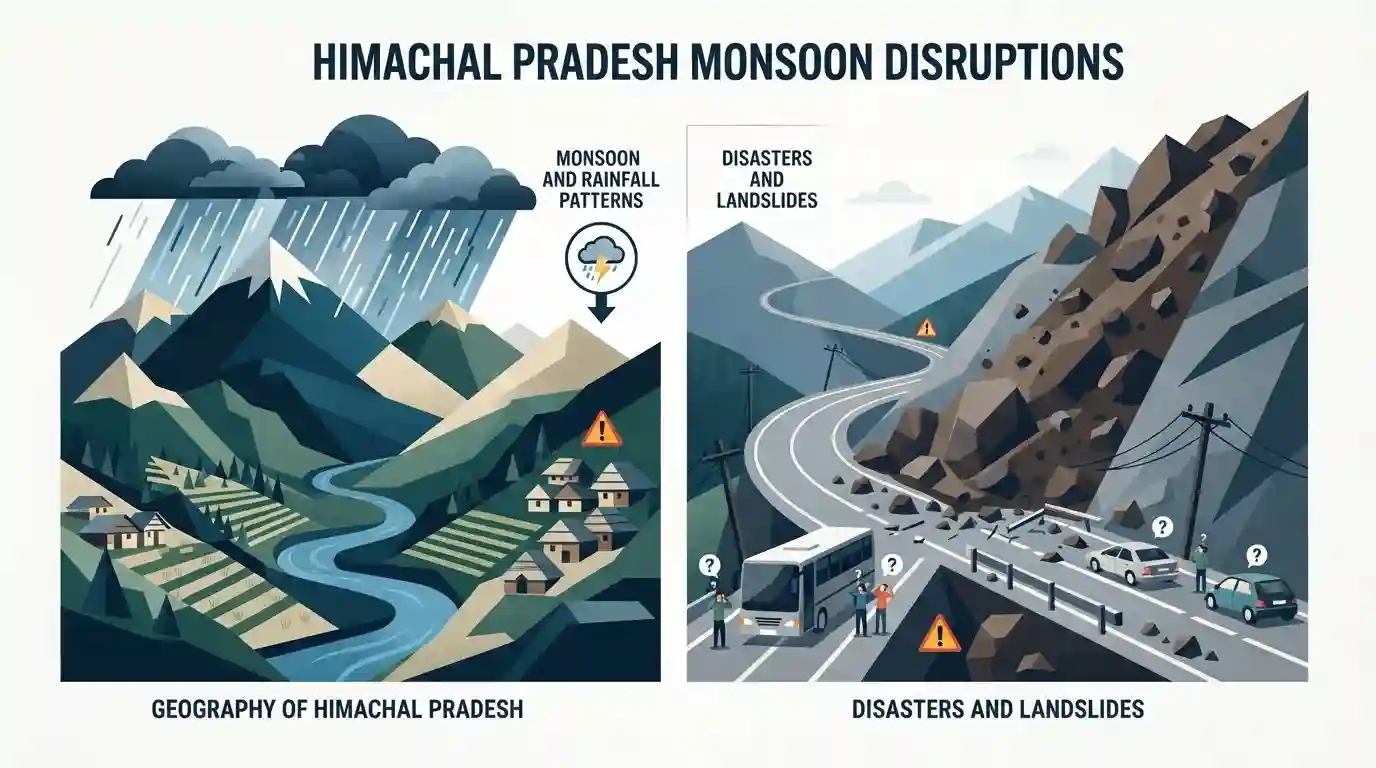
Relevant for understanding the geography, climatic conditions, and recurring monsoon-related natural hazards (landslides and road blockades) affecting infrastructure in Himachal Pradesh.
Summary
Heavy rainfall in Himachal Pradesh triggered debris and landslides on major highways, causing disruptions. The weather department forecasted a continuation of the wet spell, posing ongoing risks of landslides and blockades across vulnerable hill terrains.
Key Points
- Heavy rains in Himachal Pradesh caused debris accumulation on highways, disrupting traffic and movement.
- The Meteorological Department issued warnings predicting a wet spell and continuous rainfall activity in the state.
- Landslides and flash floods during monsoon seasons frequently affect infrastructure and connectivity in mountainous regions like Himachal Pradesh.
Prelims Trap
Heavy rainfall is the sole trigger for Himalayan landslides during the monsoon season.
Aspirants often assume landslides occur only due to continuous cloudbursts, ignoring that even moderate rainfall on over-saturated or steeply cut slopes can trigger major debris flows.
Static Concepts Connected
What are the primary geological and anthropogenic factors driving landslides in Himachal Pradesh?
- Young Geology: Himalayan mountain ranges are tectonically active, young, and fragile, consisting of sedimentary and metamorphic rocks prone to sliding.
- Anthropogenic Stress: Unscientific hill-slope cutting for road widening, heavy vehicular load, and un-regulated construction destabilize toe supports.
- Monsoon Saturation: Intense, concentrated monsoon downpours saturate soil profiles, increasing pore water pressure and triggering massive debris flows.
Cross-Topic Patterns
Monsoon landslides and horticultural supply chains
Monsoon road disruptions directly affect apple and off-season vegetable evacuation, linking seasonal rainfall patterns to Himachal's horticultural economy and rural livelihoods.
Disaster management and strategic hill connectivity
Road blockades in border and interior districts disrupt strategic troop movement and local governance supply chains, testing disaster management capacities.

HPAS Mains GS3 (Disaster Management) often asks about structural causes of Himalayan landslides. Link geology, unscientific cutting, and unseasonal cloudbursts.
Linked PYQs · 3
Linked PYQs · 3
- 2025HPAS_PRELIMSGS1
Mountain Soil Zone in Himachal Pradesh is found between :
- 2024HPAS_PRELIMSGS1
Arrange the following climatic zones of Himachal Pradesh according to rainfall amount from lowest to highest : (1) Frigid aridic zone (2) Wet temperate zone (3) Humid sub-tropical zone (4) Sub-humid sub-tropical zone Choose the correct answer from the options given below :
- 2023HPAS_PRELIMSGS1
Consider the following statements : (1) The rainiest district in Himachal Pradesh is Kangra. (2) Rainfall in the Alpine region of Himachal Pradesh varies between 300-600 mm. (3) Winter season in Himachal Pradesh extends from October to March. (4) Mandi is the hottest place in Himachal Pradesh. Choose the correct answer from the options given below :
