Risk Based Inspection of Drug Manufacturing and Quality Control
Source:The Hindu ↗
Why It Matters
Repeated instances of DEG/EG contamination in Indian-made cough syrups pose severe public health risks and threaten India's standing as the 'pharmacy of the world'. It emphasizes the critical need for systemic reforms in drug regulation and supply chain oversight.
Summary
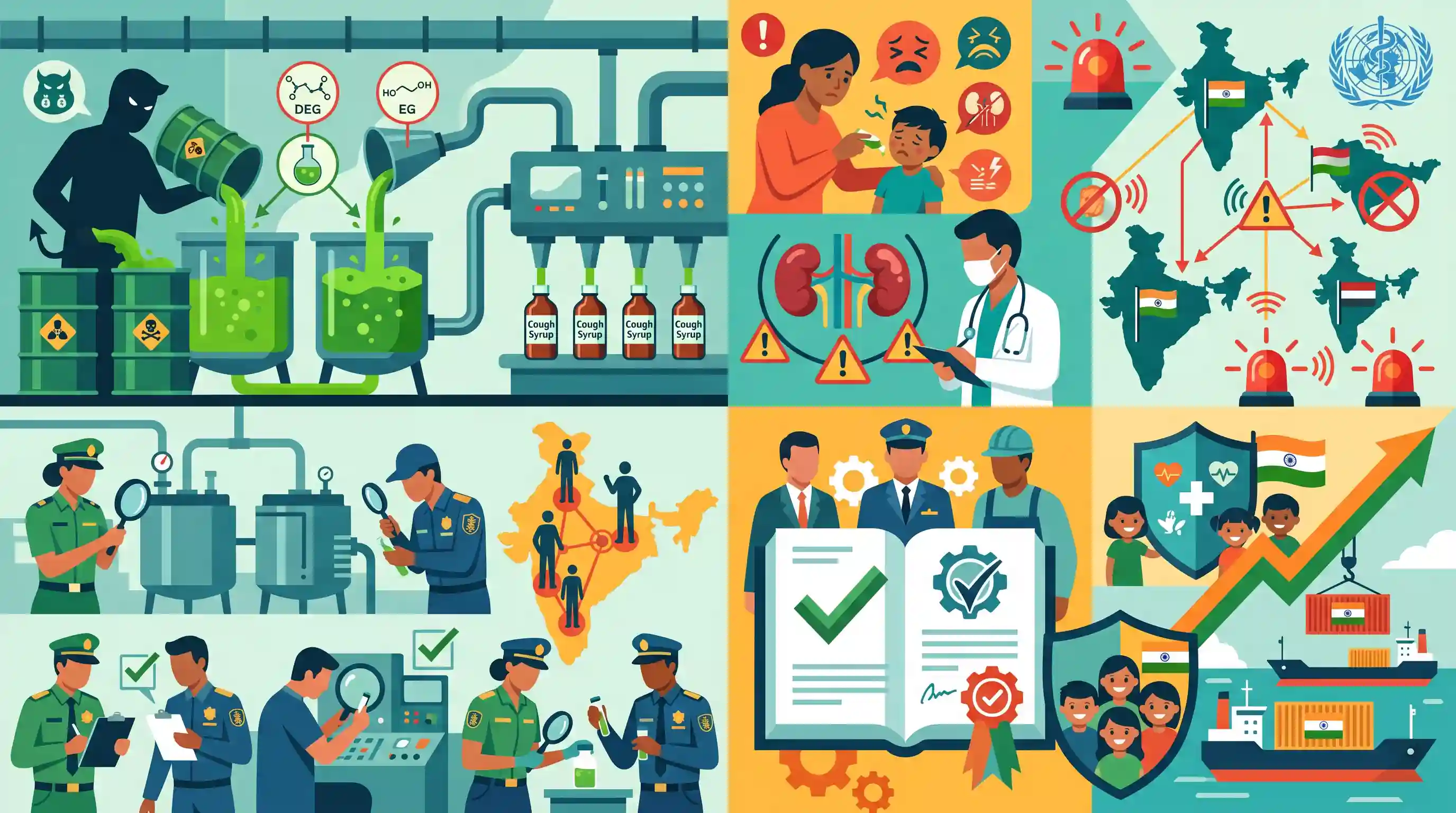
The Union Health Ministry, alongside state authorities, has launched targeted, risk-based inspections of drug manufacturing units across India. This regulatory action follows the detection of highly toxic industrial solvents, diethylene glycol (DEG) and ethylene glycol (EG), in samples of 'Coldrif' cough syrup by the Tamil Nadu Food Safety and Drug Administration. These contaminants, often illicitly substituted for pharmaceutical-grade ingredients like glycerine, have been linked to recent child fatalities in multiple states and parallel several global WHO alerts. The crisis underscores systemic vulnerabilities in India's pharmaceutical supply chain and necessitates strict enforcement of Good Manufacturing Practices (Schedule M) by the CDSCO to protect public health and India's reputation as a reliable global pharmaceutical producer.
Key Points
- The Union Health Ministry and CDSCO initiated risk-based inspections of drug manufacturers after toxic diethylene glycol (DEG) and ethylene glycol (EG) were found in a cough syrup in Tamil Nadu.
- DEG and EG are cheap, highly toxic industrial solvents illicitly used as substitutes for pharmaceutical-grade glycerine, causing severe health hazards like acute kidney injury.
- The contaminated batches are linked to the recent deaths of at least 10 children in Madhya Pradesh and Rajasthan, echoing previous global WHO alerts regarding Indian-made syrups.
- The incident highlights the urgent need for robust regulatory oversight and strict enforcement of revised Schedule M (Good Manufacturing Practices) to ensure pharmaceutical safety.
Important Terms
Central Drugs Standard Control Organisation (CDSCO)

India's national regulatory authority for pharmaceuticals and medical devices under the Ministry of Health. It oversees drug approvals, clinical trials, and sets quality standards to ensure public safety.
UPSC context
GS-2: Statutory/Regulatory Bodies; tests knowledge of healthcare governance and institutional roles.
Drugs and Cosmetics Act, 1940
The primary legislation regulating the import, manufacture, distribution, and sale of drugs and cosmetics in India. It aims to ensure that medical products are safe, effective, and meet prescribed standards.
UPSC context
GS-2: Government Policies; tests understanding of the legal framework governing India's pharmaceutical sector.
Good Manufacturing Practices (GMP)
A quality assurance system ensuring that products are consistently produced and controlled according to quality standards, minimizing risks like contamination and mislabeling that final product testing cannot fully eliminate.
UPSC context
GS-3: Science & Tech; tests awareness of industrial quality standards and safety protocols.
Schedule M
A section of the Drugs and Cosmetics Rules, 1945, prescribing mandatory Good Manufacturing Practices (GMP) for pharmaceutical units, detailing specific requirements for facilities, equipment, and quality control.
UPSC context
GS-3: Science & Tech; tests knowledge of technical regulations in the pharmaceutical industry.
Risk-based Inspection (RBI)
A regulatory strategy prioritizing inspections for manufacturing units based on their risk profile, including history of non-compliance, complaints, or the criticality of the products being manufactured.
UPSC context
GS-2: Governance; tests understanding of modern regulatory mechanisms and administrative efficiency.
Diethylene Glycol (DEG)
A toxic industrial solvent used in antifreeze. It is a lethal contaminant in cough syrups when substituted for pharmaceutical-grade ingredients, causing severe kidney failure and death.
UPSC context
GS-3: Everyday Chemistry; tests understanding of chemical toxicology and its public health impact.
Prelims Trap
"CDSCO is the sole authority responsible for issuing manufacturing licenses to pharmaceutical companies in India."
Under India's dual regulatory framework, State Drug Control Administrations issue manufacturing and sales licenses, while the central CDSCO regulates new drug approvals, clinical trials, and imports.
Static Concepts Connected
What is the division of power for drug regulation in India?
- Central Role (CDSCO): Regulates new drug approvals, clinical trials, quality of imports, and coordinates with state bodies.
- State Role: Responsible for issuing manufacturing, sale, and distribution licenses, as well as conducting facility inspections.
- Schedule M: Prescribes Good Manufacturing Practices (GMP) that state regulators must enforce during inspections.
Why are DEG and EG used in syrups and why are they dangerous?
- Illicit substitution: They are cheap industrial solvents (used in antifreeze) illegally substituted for pharmaceutical-grade glycerine or propylene glycol.
- Health impact: Ingestion leads to severe metabolic acidosis and acute kidney injury, which is often fatal, especially in children.
Cross-Topic Patterns
Pharma exports & Soft Power diplomacy
Repeated quality failures directly threaten India's "Pharmacy of the World" status, impacting its health diplomacy (like Vaccine Maitri) and export dominance in the Global South.
Federal friction in healthcare regulation
The dual-licensing system creates blind spots. Committees (like Mashelkar) have repeatedly cited federal fragmentation as a key reason for substandard drug circulation, urging a centralized regulatory structure.

Expect a 2026 Prelims question pairing CDSCO's regulatory limits with the everyday chemistry of DEG/EG (causing acute kidney injury).
Linked PYQs · 3
Linked PYQs · 3
- 2024MainsGS2
In a crucial domain like the public healthcare system the Indian State should play a vital role to contain the adverse impact of marketisation of the system. Suggest some measures through which the State can enhance the reach of public healthcare at the grassroots level.
- 2021PrelimsGS1
'Triclosan', considered harmful when exposed to high levels for a long time, is most likely present in which of the following?
- 2021PrelimsGS1
Bisphenol A (BPA), a cause of concern, is a structural/key component in the manufacture of which of the following kinds of plastics?
