Gujarat Natural Farming Initiative Doubles Turmeric Yields
Source:newindianexpress ↗
Why It Matters
This article is important for GPSC aspirants tracking state-specific agricultural developments, sustainable farming initiatives, and measures to boost farmers' incomes through natural farming.
Summary
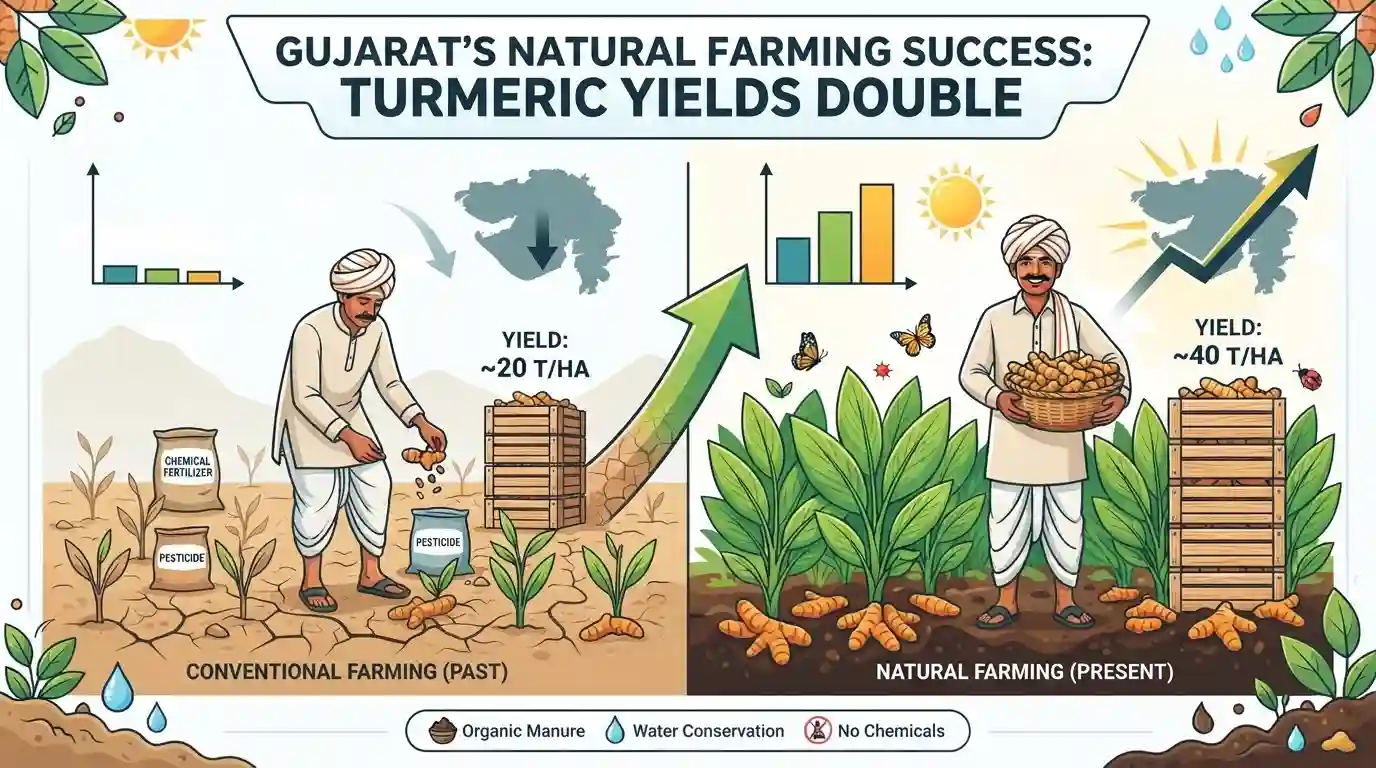
Gujarat's recent push towards natural farming has yielded significant results, with turmeric yields nearly doubling to 40 tonnes per hectare. This highlights the viability and productivity benefits of chemical-free agricultural practices in the state.
Key Points
- Gujarat's push for natural farming has successfully doubled turmeric yields to 40 tonnes per hectare.
- Natural farming practices eliminate chemical fertilizers and pesticides, improving soil health and long-term sustainability while reducing input costs for farmers.
- The initiative highlights Gujarat's growing focus on eco-friendly, chemical-free agriculture models to boost farmer income and crop productivity.
Static Concepts Connected
What are the core components and principles of Zero Budget Natural Farming (ZBNF) / Prakritik Kheti?
- Chemical-Free: Elimination of all synthetic chemical fertilizers, synthetic pesticides, and purchased external inputs.
- Beejamrut: Seed treatment using cow dung, urine, lime, and water formulation to protect young roots from fungus and soil-borne diseases.
- Jeevamrut: A fermented microbial culture made from cow dung, urine, jaggery, pulse flour, and soil to enhance soil biological activity.
- Ghanjeevamrut: A solid organic fertilizer prepared using cow dung, jaggery, and soil, applied to enrich soil nutrient status.
Cross-Topic Patterns
Natural Farming + Agri-Biotech R&D
Integration of indigenous biotechnology (GBRC) with traditional agricultural practices (SDAU) mirrors the wider push for Atmanirbhar Bharat in agri-input self-sufficiency and low-cost climate-resilient farming models.
Sustainable Agriculture + Farmers Income Framework
Focus on doubling farmers' income through input cost reduction rather than MSP hikes alone aligns with national sustainable agriculture frameworks like PKVY and Namami Gange basin farming.

Expect statement-based questions pairing natural farming input formulations (Beejamrut/Jeevamrut) with specific state agricultural research findings.
