ગુજરાત સરકાર શાળાની વિદ્યાર્થિનીઓને મફત સેનિટરી નેપકિન પૂરા પાડશે
Source:ommcomnews ↗
આ શા માટે મહત્વનું છે
This scheme represents a significant state-level public health and educational retention initiative targeting adolescent girls. It intersects with critical GS areas including women's empowerment, health schemes, and environmental compliance via waste management rules, making it highly relevant for questions on social justice and state welfare programs.
સારાંશ
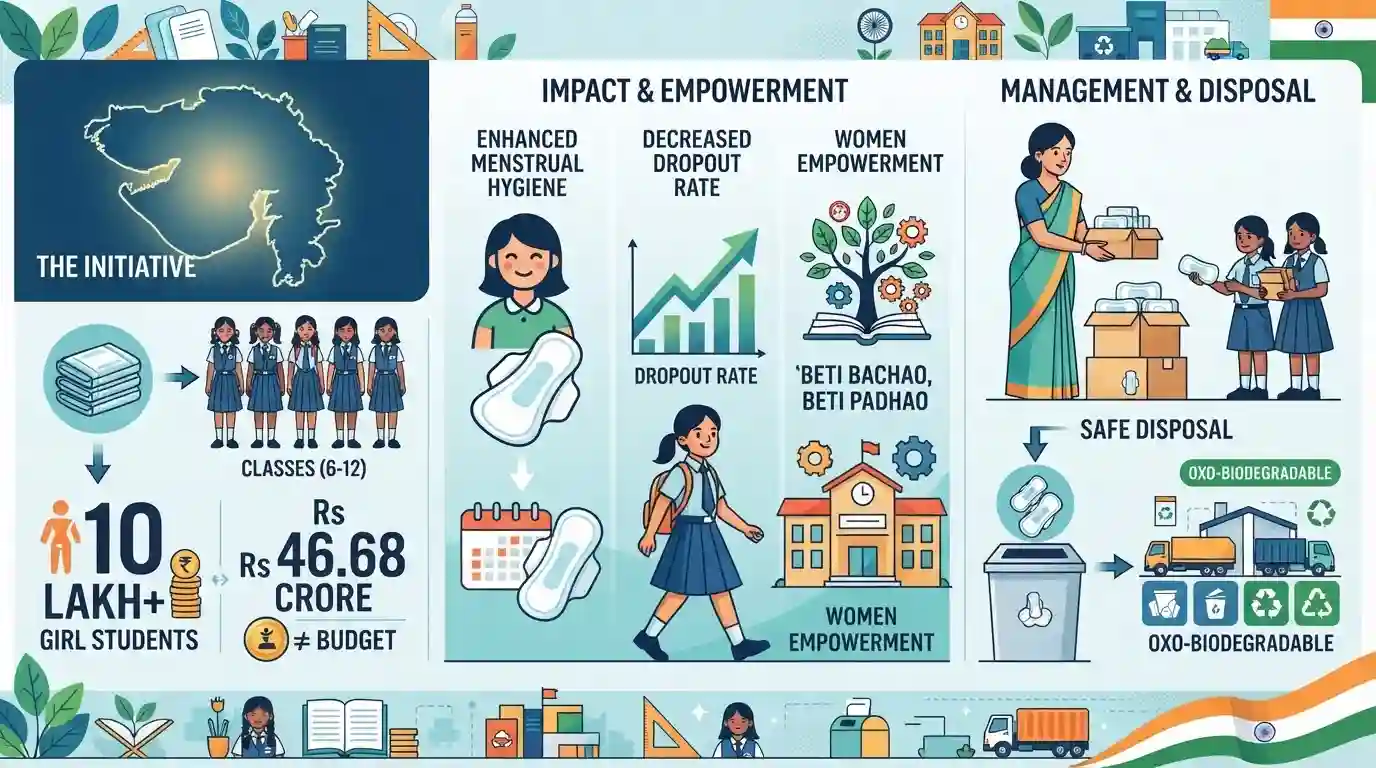
The Gujarat government has announced a scheme to distribute free oxo-biodegradable sanitary napkins to over 10 lakh girl students from classes 6 to 12 in government-run schools. With an allocated budget of Rs 46.68 crore, each student will receive napkins worth Rs 360 annually. The initiative aims to enhance menstrual hygiene, decrease the school dropout rate among girls, and aligns with broader goals of women's empowerment like the 'Beti Bachao, Beti Padhao' campaign. A dedicated female 'Nodal Teacher' in each school will manage distribution and ensure the safe disposal of used napkins in accordance with the Solid Waste Management Rules, 2016.
મુખ્ય મુદ્દા
- The Gujarat government will provide free sanitary napkins to over 10 lakh girls in classes 6 to 12 in government-run schools, aiming to improve menstrual hygiene and school attendance.
- The scheme operates on a Rs 46.68 crore budget, under which every female student will be provided with oxo-biodegradable sanitary napkins worth Rs 360 annually.
- A female 'Nodal Teacher' will be appointed in each school to oversee the distribution of the napkins and educate students on proper hygiene and disposal.
- Disposal must align with the Solid Waste Management Rules, 2016, utilizing wrapping methods to separate napkins from wet and dry waste or using incinerators.
- The state had previously launched the Taruni Suvidha Programme in 2016, offering a pack of six sanitary napkins for just Re 1.
મહત્વપૂર્ણ શબ્દો
Taruni Suvidha Programme

A 2016 Gujarat government health initiative that originally provided adolescent girls packs of six sanitary napkins for a token price of one rupee to promote menstrual hygiene.
UPSC context
GPSC Paper 3 (Public Administration); tests knowledge of state-specific health and women’s welfare schemes.
Menstrual Hygiene Scheme
A Union government program aimed at increasing access to sanitary napkins, raising hygiene awareness, and ensuring safe disposal of sanitary waste for adolescent girls, especially in rural areas.
UPSC context
GPSC Paper 3 (Social Justice/Health); tests awareness of central health schemes targeting vulnerable sections.
બેટી બચાવો, બેટી પઢાવો
ઘટતા જતા બાળ જાતિ પ્રમાણની સમસ્યાના નિવારણ માટે અને કન્યા બાળકના અસ્તિત્વ, શિક્ષણ તેમજ સશક્તિકરણને પ્રોત્સાહન આપવા માટે શરૂ કરવામાં આવેલું કેન્દ્ર સરકારનું એક મુખ્ય (ફ્લેગશિપ) અભિયાન.
UPSC context
GPSC પેપર 3 (સામાજિક ન્યાય); લિંગ સમાનતા અને મહિલા સશક્તિકરણ સંબંધિત મહત્વપૂર્ણ નીતિઓ પર પ્રકાશ પાડે છે.
Solid Waste Management Rules, 2016
Environmental regulations replacing the 2000 rules, mandating source segregation of waste into biodegradable, dry, and domestic hazardous streams, which specifically covers sanitary napkin disposal.
UPSC context
GPSC Paper 3 (Environment/Ecology); tests regulatory frameworks for waste management, pollution control, and sustainability.
પ્રિલિમ્સ ટ્રેપ
"Used sanitary napkins generated in households or schools are classified as Bio-medical waste."
સોલિડ વેસ્ટ મેનેજમેન્ટ નિયમો, 2016 હેઠળ, ઘર અથવા શાળામાં ઉત્પન્ન થતા સેનિટરી કચરાને (નેપકિન્સ, ડાયપર વગેરે) સ્પષ્ટપણે 'ઘરેલું જોખમી કચરો' તરીકે વર્ગીકૃત કરવામાં આવ્યો છે, બાયો-મેડિકલ કચરા તરીકે નહીં.
સંલગ્ન સ્થિર ખ્યાલો
How is waste segregated under the Solid Waste Management Rules, 2016?
- Three-way segregation: Waste must be segregated at source into Wet (biodegradable), Dry (plastic, metal), and Domestic Hazardous (diapers, sanitary napkins, mosquito repellents, cleaning agents).
- સેનિટરી કચરાનો નિકાલ: Manufacturers must provide pouches for wrapper disposal. Generators must securely wrap sanitary waste before handing it over to waste collectors.
What are the key drivers of female school dropouts in rural India?
- Menstrual hygiene: Lack of access to sanitary products and inadequate school WASH facilities (separate functional toilets) force girls to miss school, frequently leading to permanent dropouts during puberty.
- Socio-cultural factors: Early marriage, burden of household chores, and safety concerns during long commutes also significantly contribute to the gender gap in secondary education.
આંતર-વિષય પેટર્ન
WASH infrastructure & education retention
Providing napkins only succeeds if schools have functioning WASH (Water, Sanitation, Hygiene) infrastructure. This links state health interventions directly to the Right to Education and 'Beti Bachao Beti Padhao' dropout-prevention goals.
Environmental impact of oxo-biodegradable plastics
While marketed as eco-friendly, oxo-biodegradable materials fragment into harmful microplastics rather than fully degrading. This bridges state welfare procurement choices with broader environmental ecology concerns.

Expect a multi-statement question merging this scheme's details with the SWM 2016 'Domestic Hazardous Waste' classification.
સંલગ્ન PYQ · 3
સંલગ્ન PYQ · 3
- 2022GPSC_PRELIMSGS1
Which of the following schemes facilitates bank loans to at least one Scheduled Caste/ Scheduled Tribe borrower and at least one woman borrower per bank branch for setting up greenfield enterprises?
- 2024GPSC_PRELIMSGS1
Consider the following statements regarding National Commission for Women (NCW). 1. It has all the powers of a High Court. 2. It can attend to cases of harassment of women and order appropriate punishments. 3. It can review the Constitutional and Legal safeguards for women. 4. It facilitates redressal of grievances and advise the Government on all policy matters affecting women. Which of the above statements are correct?
- 2024GPSC_PRELIMSGS1
The National Commission for Women was set up as statutory body in January 1992 under the National Commission for Women Act, 1990. The aim of the commission is to: (A) review the Constitutional and Legal safeguards for women; (B) recommend remedial legislative measures; (C) facilitate redressal of grievances and punish the guilty. (D) advise the Government on all policy matters affecting women. Which is not correct statement?
