Gujarat Rooftop Solar Target: Clean Energy Expansion
Source:constructionworld ↗
Why It Matters
Gujarat leads India's renewable energy sector, especially in solar power. Tracking state-level targets for rooftop solar expansion provides critical insights into India's clean energy goals, decentralized power frameworks, and climate commitment implementations.
Summary
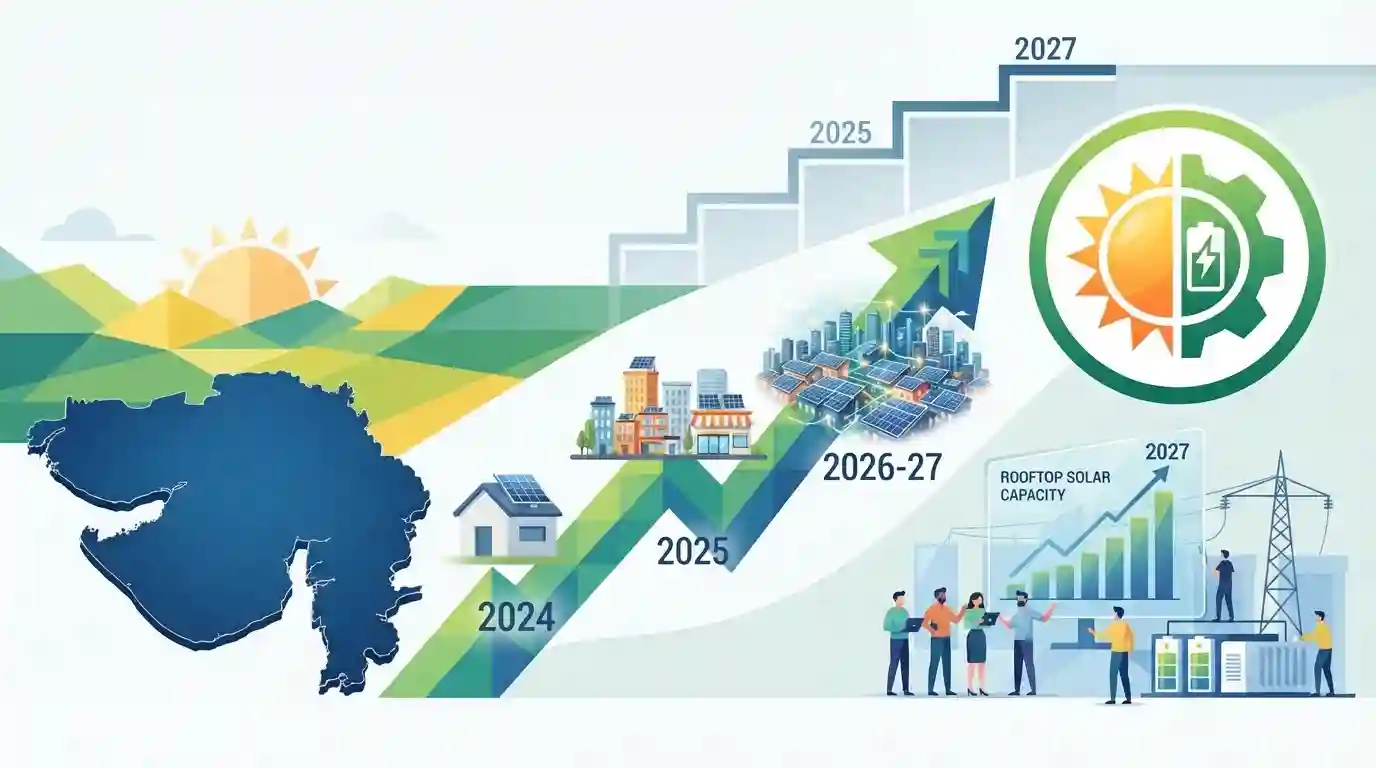
Gujarat has set an ambitious target for rooftop solar expansion for 2026-27, reinforcing its position as a leading state in India's renewable energy transition and green power generation.
Key Points
- Gujarat aims to expand its rooftop solar capacity significantly in the 2026-27 period, targeting a massive rollout to boost renewable energy generation.
- The initiative aligns with national targets and state-level objectives to promote clean energy adoption among residential, commercial, and industrial consumers.
- Rooftop solar expansion contributes directly to reducing carbon footprints and decentralizing power production across urban and rural parts of Gujarat.
Important Terms
PM Surya Ghar: Muft Bijli Yojana

A flagship central scheme launched in India to promote rooftop solar installation across households, offering financial subsidies to reduce electricity bills and support renewable energy targets.
UPSC context
Important for GS Paper III (Energy Security & Infrastructure), testing knowledge of government welfare schemes promoting green energy.
Gujarat Energy Development Agency (GEDA)
The nodal state agency in Gujarat responsible for promoting renewable energy and energy efficiency, overseeing various state and central solar installation programmes.
UPSC context
Relevant for GPSC Mains / Prelims, testing institutional frameworks and state-level implementation of renewable energy policies in Gujarat.
Gujarat Renewable Energy Policy
Comprehensive state-level policy frameworks designed to accelerate green energy adoption, decentralized power generation, and carbon neutrality in Gujarat.
UPSC context
Tests regional infrastructure planning and sustainable development goals under GPSC environment and energy management topics.
Prelims Trap
net metering, gross metering, and Battery Energy Storage Systems
Aspirants often confuse gross metering (where all generated power is fed to the grid at a feed-in tariff) with net metering (where consumers offset their own consumption first), both used in Gujarat's frameworks.
Static Concepts Connected
What are the key mechanisms and differences between net metering and gross metering in rooftop solar policies?
- Net Metering:: Consumers offset their electricity bills by consuming generated power first; only excess power is exported to the grid for credits.
- Gross Metering:: Entire solar generation is exported directly to the grid at a predetermined feed-in tariff, while consumer consumption is billed separately.
- Policy Purpose:: Both mechanisms provide regulatory frameworks to incentivize decentralized power generation and manage grid stability under state DISCOMs.
Cross-Topic Patterns
Renewables vs. Land & Water Use Policies
Gujarat's renewable expansion interacts with industrial land-use policies in Kutch and water-use regulations for green hydrogen generation, creating complex environmental compliance matrices tested in GS-3.
Rooftop Solar and DISCOM Financial Health
The massive surge in decentralized solar capacity strains conventional distribution company (DISCOM) finances, linking renewable policy directly to state fiscal health and power tariff rationalization.

Expect a 2-statement question combining Gujarat's 100 GW 2030 target with PM Surya Ghar scheme metrics for rooftop solar leadership.
Linked PYQs · 2
Linked PYQs · 2
- 2026GPSC_PRELIMSGS1
Which of the following statement/s is/are correct regarding Renewable Energy Installed Capacity in India? 1. Wind energy is second only to solar energy in the Indian renewable sector. 2. Biomass power capacity accounts for around 30% of India's total renewable energy. 3. India ranks among the top three countries in the world in Hydropower Installed Capacity. Choose the correct option from the following.
- 2025GPSC_PRELIMSGS1
Under the Green Open Access Rules, 2022, the minimum size of the renewable energy project eligible for open access is
