Gujarat Deploys Health Camps in Flood Affected Districts
Source:dailypioneer ↗
આ શા માટે મહત્વનું છે
Highlights the standard operating procedures and public health interventions required immediately following a natural disaster like flooding, a frequent issue in India. Also touches upon the geographic vulnerability of the Tapi and Narmada river basins in South and Central Gujarat.
સારાંશ
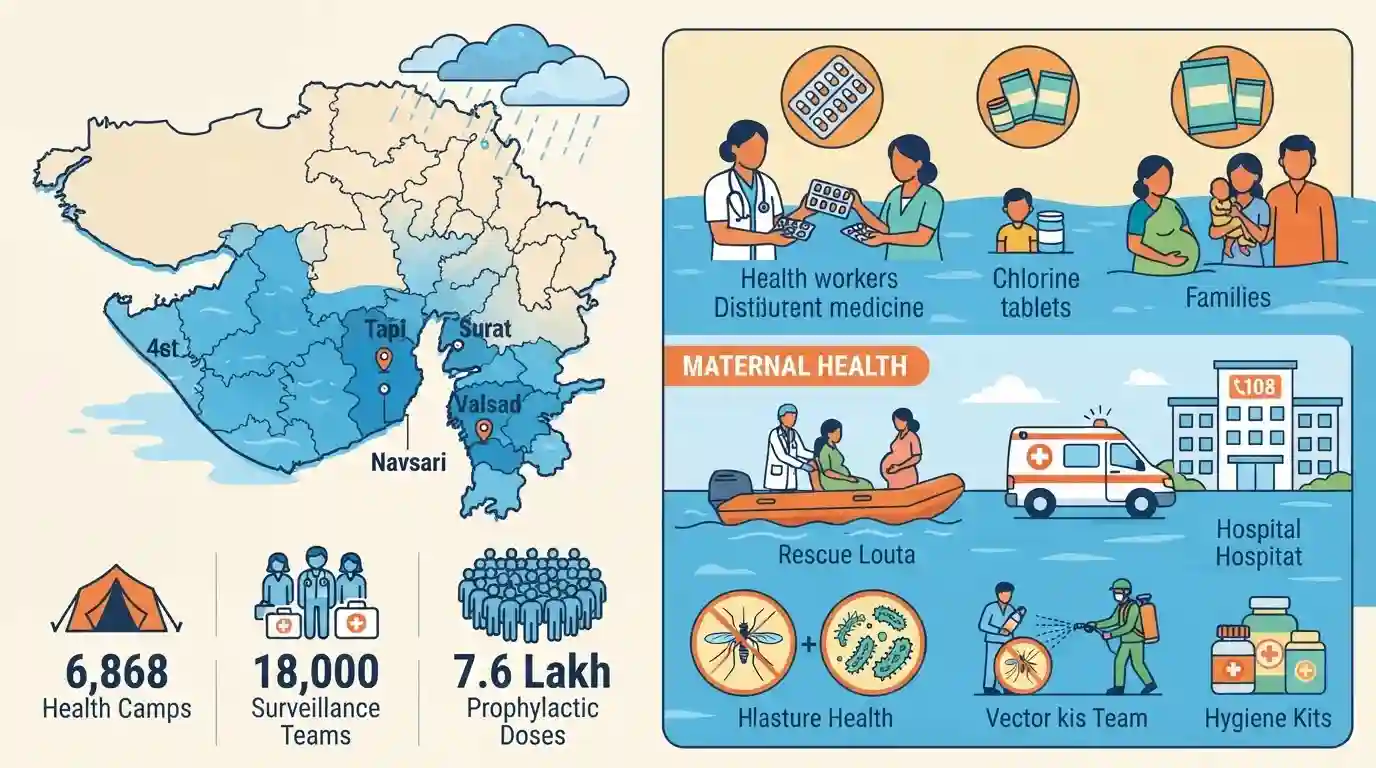
In the wake of heavy rains and flooding in south and central Gujarat, the state health department implemented robust disaster management and public health measures. To preempt outbreaks of water-borne and vector-borne diseases, authorities established nearly 6,868 health camps and mobilized 18,000 surveillance and vector control teams across the hardest-hit districts, including Surat, Tapi, Valsad, and Navsari. The initiative involved administering prophylactic medicines to over 7.6 lakh individuals to prevent diseases like leptospirosis, alongside the distribution of chlorine tablets and ORS. The 'Monsoon Action Plan' also prioritized maternal health by relocating pregnant women to medical facilities and keeping the 108 Emergency Service on high alert.
મુખ્ય મુદ્દા
- The Gujarat health department set up 6,868 medical camps and deployed 18,000 surveillance teams to prevent disease outbreaks in flood-affected districts.
- Medicines and prophylactic treatments were administered to over 7.6 lakh people, targeting diseases like leptospirosis, vector-borne infections, and water-borne diseases.
- Chlorine tablets, ORS packets, and ointments for fungal infections were distributed widely as part of the state's Monsoon Action Plan.
- Special focus was placed on shifting pregnant women in advanced stages to healthcare facilities and maintaining 108 Emergency Service ambulances on standby.
મહત્વપૂર્ણ શબ્દો
Leptospirosis

A zoonotic bacterial disease caused by Leptospira, transmitted to humans through water, soil, or food contaminated with infected animal urine, often surging during monsoons and floods.
UPSC context
GS Paper III (Science & Tech/Health); tests understanding of public health threats, communicable diseases, and zoonotic outbreaks.
Vector-Borne Diseases
Illnesses caused by pathogens transmitted to humans by vectors like mosquitoes, ticks, and flies, typically spiking during monsoon and post-monsoon flood conditions.
UPSC context
GS Paper III (Science & Tech/Health); tests knowledge of major epidemics, public health challenges, and national disease control programmes.
108 Emergency Service
A 24/7 free integrated emergency medical response system in India, operating via a Public-Private Partnership (PPP) model funded under the National Health Mission.
UPSC context
GS Paper II (Governance/Health); tests public health infrastructure, emergency medical care models, and public-private service delivery.
Monsoon Action Plan
A structured disaster preparedness and response framework designed by state/local administrations to mitigate flooding, waterlogging, and epidemic risks before and during rains.
UPSC context
GS Paper III (Disaster Management); tests state-level administrative readiness, risk mitigation, and seasonal calamity response.
Disaster Management
A systematic cycle of planning, coordinating, and implementing measures for prevention, mitigation, preparedness, emergency response, and recovery from natural or man-made calamities.
UPSC context
GS Paper III (Disaster Management); tests institutional frameworks, disaster risk reduction, and community-based resilience.
પ્રિલિમ્સ ટ્રેપ
Leptospirosis is a viral hemorrhagic fever transmitted primarily by mosquito vectors during post-flood waterlogging.
Aspirants confuse leptospirosis with viral infections like dengue or chikungunya; it is a bacterial zoonotic disease spread through contact with rodent urine in floodwaters.
સંલગ્ન સ્થિર ખ્યાલો
What are key post-disaster public health response stages under NDMA guidelines?
- Rescue and Relief: Immediate evacuation of vulnerable populations (like pregnant women) and medical triage post-disaster.
- Epidemic Prevention: Halting water/vector-borne disease outbreaks via chlorination, sanitation, and distributing prophylactic medicines.
- Emergency Logistics: Utilizing coordinated ambulance networks (like 108) and surveillance teams for real-time risk assessment.
What is Leptospirosis and how is it transmitted during floods?
- Pathogen: Zoonotic bacterial disease caused by bacteria of the genus Leptospira, not a viral pathogen.
- Transmission: Acquired through direct contact with water, damp soil, or vegetation contaminated with urine of infected rodents.
- Flood Catalyst: Heavy waterlogging forces rodents out of burrows, contaminating stagnant floodwaters and exposing human populations.
આંતર-વિષય પેટર્ન
Post-disaster epidemiological surveillance
Links GS-3 disaster response to GS-2 public health, demonstrating how extreme weather shifts emergency management from physical rescue to biological containment.
Topography and drainage-driven flood risks
Connects GS-1 physical geography of coastal rivers (Tapi, Damanganga) with GS-3 disaster vulnerability, highlighting how specific terrain features trigger persistent waterlogging.

NDMA post-disaster protocols on epidemic prevention and health surveillance coordination likely to be a GS-3 Mains theme in 2026.
સંલગ્ન PYQ · 3
સંલગ્ન PYQ · 3
- 2021GPSC_PRELIMSGS1
Statement: A large number of people in the city die every year due to polluted drinking water. Courses of action: 1. The government should make necessary arrangements to provide safe drinking water to the people of the city. 2. The government should educate people about the dangers of drinking contaminated water.
- 2025GPSC_PRELIMSGS1
Consider the following statements about the Tapi River: 1. The Tapi river flows south of the Satpura mountain range. 2. The Tapi river is the only river in the Indian peninsula that flows from east to west. 3. The Ajanta and Satmala mountains are situated to the north of the Tapi river. Which of the above statement(s) is/are correct?
- 2019GPSC_PRELIMSGS1
Which of the following statements are correct regarding excavated sites in Gujarat? Site On the River/Or Esle 1. Lothal Saraswati 2. Rojadi Bhadar 3. Dholavira In the Desert of Kutch 4. Malvan Tapi
