Gujarat Grid Code: Strengthening Renewable Energy Integration
Source:solarquarter ↗
Why It Matters
Crucial for understanding state-level policy mechanisms facilitating India's green energy transition, grid stabilization, and renewable energy integration under state utilities.
Summary
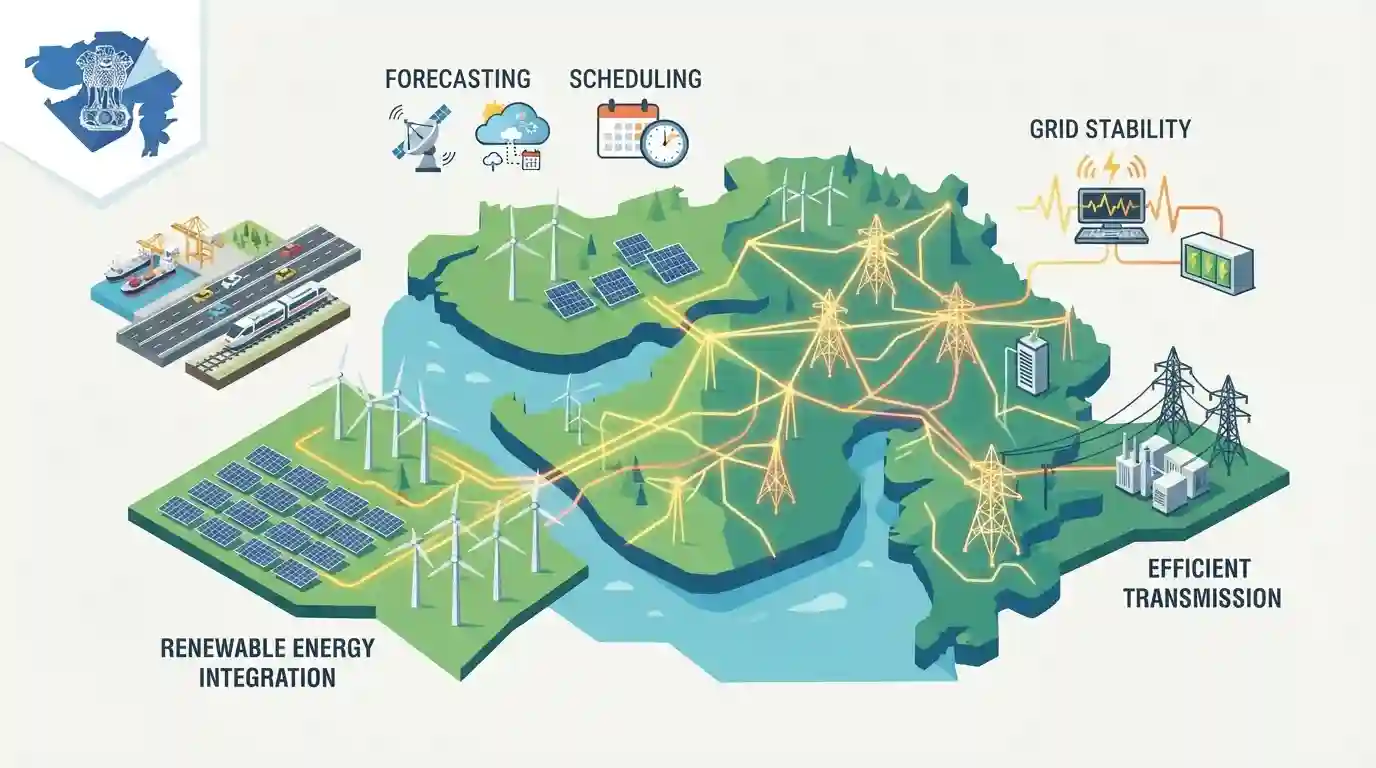
The Government of Gujarat has officially notified the Gujarat Grid Code, 2026, aimed at modernizing power system operations and facilitating the large-scale integration of renewable energy sources such as solar and wind. The policy provides robust technical guidelines for grid stability, forecasting, scheduling, and efficient transmission network management.
Key Points
- The Government of Gujarat notified the Gujarat Grid Code, 2026, to modernize power system operations and accommodate massive renewable energy integration.
- The new grid code outlines technical standards, forecasting requirements, and scheduling mechanisms for wind, solar, and hybrid energy projects.
- It aims to ensure grid stability, balance intermittent power supply, and comply with national grid mandates under the Central Electricity Regulatory Commission (CERC).
Important Terms
Gujarat Grid Code 2026

A comprehensive regulatory framework notified by the state to govern the planning, operation, and development of Gujarat's intra-state power grid, focusing on renewable energy integration, forecasting, and grid stability.
UPSC context
Important for GPSC Paper 3 (Infrastructure, Energy & State Governance), testing state policies on renewable energy integration and power grid management.
GETCO
Gujarat Energy Transmission Corporation Limited, functioning as the State Transmission Utility responsible for intra-state power transmission, network management, and grid operations.
UPSC context
Relevant for GPSC Paper 3 under energy infrastructure and state-owned corporate bodies managing power transmission systems.
Prelims Trap
The Gujarat Grid Code 2026 is enacted directly and exclusively by the Central Electricity Regulatory Commission (CERC) without state regulatory involvement.
Aspirants often confuse intra-state grid codes (notified by GERC/State Govt) with inter-state transmission rules governed exclusively by the Central Electricity Regulatory Commission (CERC).
Static Concepts Connected
What is the institutional framework governing electricity regulation in India at central and state levels?
- Statutory Origins: Statutory basis under the Electricity Act, 2003, which created the Central Electricity Regulatory Commission (CERC) and State Electricity Regulatory Commissions (SERCs).
- Jurisdiction Split: CERC regulates inter-state transmission tariffs and power exchange operations, while SERCs (like GERC) handle intra-state distribution, generation, and grid codes.
- Load Dispatch: State Load Despatch Centres (SLDC) operate under state transmission utilities to ensure real-time security and dispatch of electricity within state boundaries.
Cross-Topic Patterns
State Grid Code + CERC National Mandates
Gujarat's 2026 Grid Code links state-level renewable integration (Infrastructure) with federal CERC mandates, matching national emission targets and energy storage mandates.
Renewable Energy Integration + BESS Policy
Integration of solar and wind with mandatory BESS for prosumers >100 kW bridges state energy policy with climate action commitments.

Expect matching questions between state grid codes (GERC) and central CERC mandates for renewable energy integration in infrastructure.
Linked PYQs · 2
Linked PYQs · 2
- 2026GPSC_PRELIMSGS1
Which of the following statement/s is/are correct regarding Renewable Energy Installed Capacity in India? 1. Wind energy is second only to solar energy in the Indian renewable sector. 2. Biomass power capacity accounts for around 30% of India's total renewable energy. 3. India ranks among the top three countries in the world in Hydropower Installed Capacity. Choose the correct option from the following.
- 2025GPSC_PRELIMSGS1
A key technical feature of the "One Nation - One Grid - One Frequency" system in India is
