Anticipatory Bail Rejected in Criminal Case by Gujarat High Court
Source:timesofindia-indiatimes ↗
Why It Matters
Reflects judicial standards regarding anticipatory bail in serious criminal offenses like rape and blackmail, highlighting the legal balance between personal liberty and societal justice.
Summary
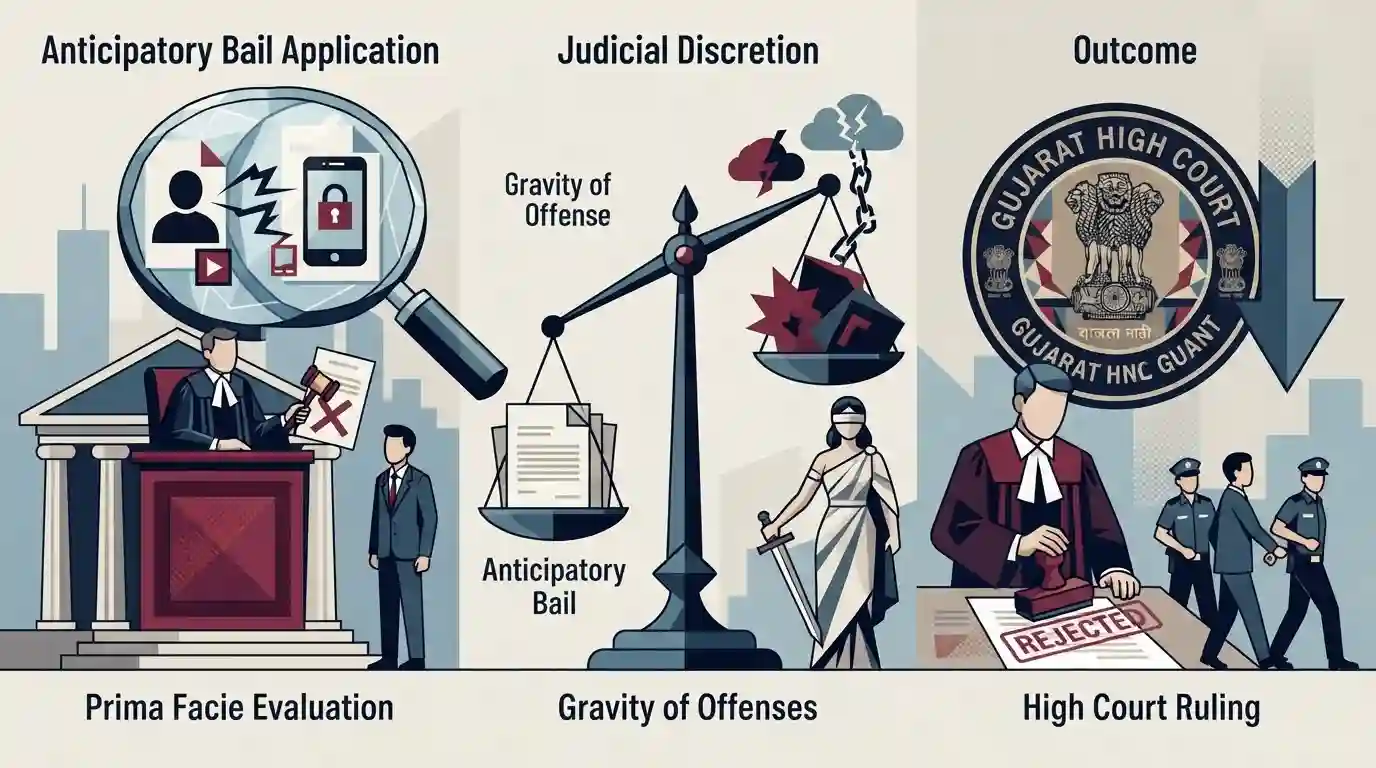
The Gujarat High Court dismissed an anticipatory bail application in a rape and video blackmail case, ruling that courts must carefully examine whether a prima facie case exists before granting pre-arrest bail, particularly in serious offenses involving digital exploitation and grave allegations.
Key Points
- The Gujarat High Court rejected an anticipatory bail plea in a rape and video blackmail case, emphasizing that a prima facie case must be thoroughly examined before granting pre-arrest relief.
- The court noted the gravity of allegations involving sexual assault coupled with extortion and digital blackmail, highlighting that individual liberty must be balanced against societal interest in heinous crimes.
- The ruling reinforces legal principles governing the exercise of judicial discretion under criminal procedure provisions regarding pre-arrest bail.
Prelims Trap
Anticipatory bail must be granted once an accused agrees to cooperate with the police investigation in any criminal case.
Aspirants often assume anticipatory bail is a fundamental right or routinely granted upon cooperative investigation, missing that courts must evaluate the prima facie case and gravity of heinous crimes first.
Static Concepts Connected
What are the key statutory guidelines and parameters for granting anticipatory bail under Indian criminal law?
- Statutory Basis: Section 438 of the CrPC (now corresponding provisions in BNSS) provides for directions for grant of bail to person apprehending arrest.
- Judicial Parameters: Courts must weigh the gravity of the offense, antecedents of the applicant, possibility of fleeing justice, and tampering with evidence.
- Extraordinary Remedy: Anticipatory bail is an extraordinary remedy and should not be granted mechanically in heinous crimes involving grave societal impact.
Cross-Topic Patterns
Anticipatory Bail & Criminal Jurisprudence
Anticipatory bail under CrPC Section 438 is balanced against societal interest, highlighting judicial discretion in heinous offenses like digital blackmail and sexual violence.

Anticipatory bail conditions under CrPC/BNSS and judicial parameters in heinous offenses are a recurring prelims/mains theme.
Linked PYQs · 1
Linked PYQs · 1
- 2024GPSC_PRELIMSGS1
Article 22 of the Constitution of India confers which of the following rights for a person who is arrested or detained? 1. Right to be informed of the grounds of arrest. 2. Right to consult and to be defended by a legal practitioner. 3. Right to be released after 24 hours unless the magistrate authorises further detention. Select the correct answer code:
