Gujarat To Provide Free Replacement Textbooks To Flood Victims
Source:deshgujarat ↗
આ શા માટે મહત્વનું છે
Highlights a state-specific disaster relief and educational welfare initiative in Gujarat, relevant for questions on state administration, disaster management response, and education continuity during natural calamities.
સારાંશ
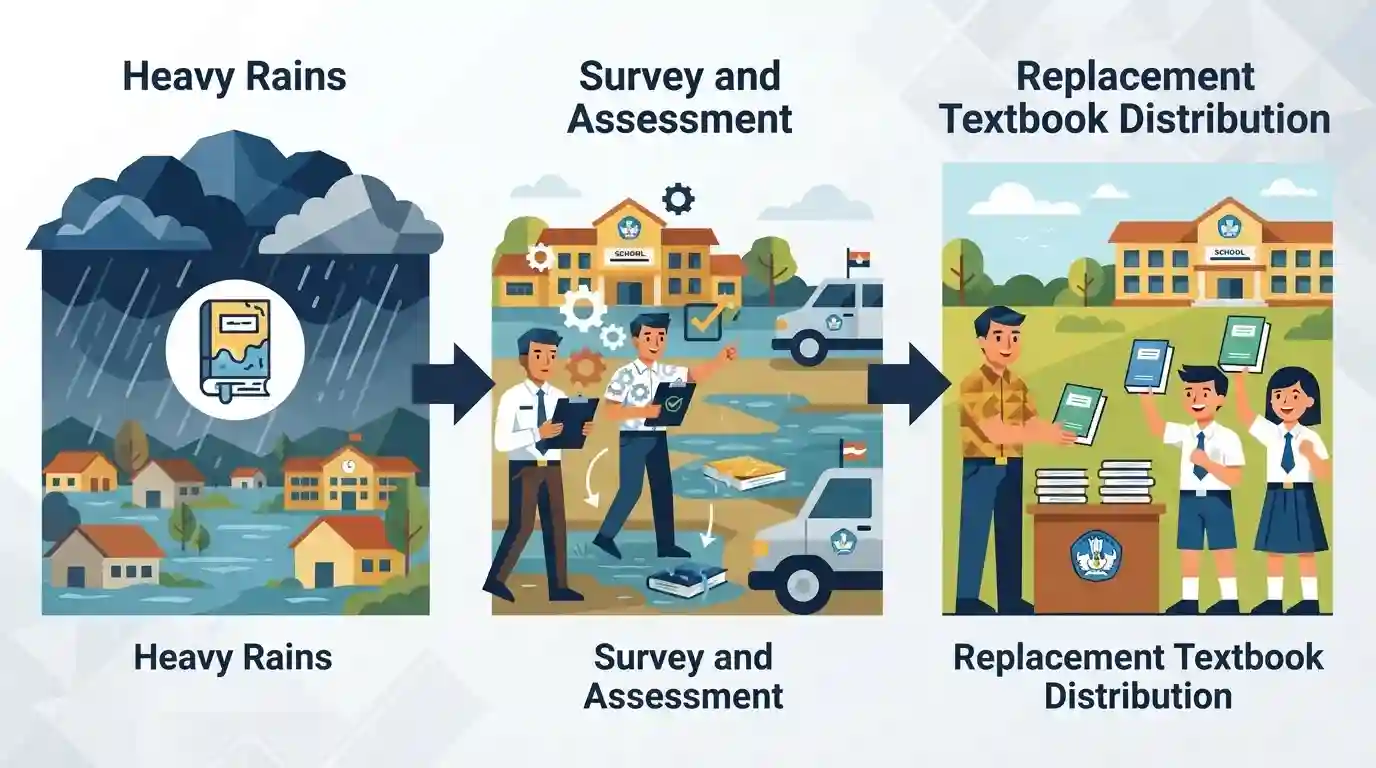
The Gujarat government has decided to provide free replacement textbooks to students in government and grant-in-aid schools whose books were ruined due to recent heavy rains. Manubhai Pawar, Chairman of the Gujarat State School Textbook Board (GSSTB), stated that District Education Officers (DEOs) and District Primary Education Officers (DPEOs) have been tasked with surveying the extent of the damage to facilitate the distribution.
મુખ્ય મુદ્દા
- The Gujarat government will provide free replacement textbooks to students in government and grant-in-aid schools whose books were damaged by heavy rains.
- The Gujarat State School Textbook Board (GSSTB) has directed District Education Officers (DEOs) and District Primary Education Officers (DPEOs) to assess the damage.
- The initiative aims to ensure continuous education for students affected by floods and natural disasters in the state.
મહત્વપૂર્ણ શબ્દો
Gujarat State School Textbook Board (GSSTB)

The Gujarat State School Textbook Board (GSSTB) is a state-level statutory body responsible for the research, publication, and distribution of educational textbooks for schools in Gujarat.
UPSC context
Important for GS Paper 2 (Education) to understand institutional mechanisms for educational delivery and welfare interventions during regional crises.
Grant-in-aid Schools
Grant-in-aid schools are privately managed educational institutions that receive regular financial assistance from the government to subsidize operational costs, teacher salaries, or infrastructure development.
UPSC context
Relevant for GS Paper 2 (Social Sector/Education) regarding public-private partnership models and government mechanisms to subsidize equitable access to schooling.
District Education Officer (DEO)
A District Education Officer (DEO) is a state public servant responsible for implementing government policies, inspecting schools, and overseeing the administrative and academic functioning of institutions within a district.
UPSC context
Crucial for GS Paper 2 (Governance, Education) in understanding district-level educational administration, state accountability, and the ground-level execution of policies.
Government of Gujarat
The sub-national executive authority responsible for the legislative and administrative governance of the Indian state of Gujarat, overseeing state-level welfare, educational policies, and disaster response.
UPSC context
Highlights GS Paper 2 (Functions and Responsibilities of State Governments) concerning localized state interventions in disaster management and social welfare.
પ્રિલિમ્સ ટ્રેપ
"State Disaster Response Funds (SDRF) can only be utilized for disasters explicitly notified by the Central Government."
States actually have the flexibility to use up to 10% of their annual SDRF allocation for immediate relief in unnotified "local disasters".
સંલગ્ન સ્થિર ખ્યાલો
What is the funding and utilization framework of the SDRF?
- Statutory Basis: Formed under the Disaster Management Act, 2005. It is the primary fund available with State Governments for responses to notified disasters.
- Funding Pattern: The Centre contributes 75% for general category states and 90% for special category/hilly states.
- Local Flexibility: Up to 10% of the annual allocation can be used for state-specific unnotified disasters (e.g., localized flooding, lightning).
How did the 'Grant-in-Aid' system for schools originate in India?
- Wood's Despatch: Introduced by Wood's Despatch (1854) to expand the educational network by encouraging private and missionary bodies to establish schools.
- Conditional Funding: Grants are given on the condition that privately managed institutions adhere to specific quality standards and state regulations.
આંતર-વિષય પેટર્ન
Sendai Framework & Service Continuity
India's NDMP aligns with the Sendai Framework's goal to substantially reduce disaster damage to critical infrastructure, ensuring minimal disruption to essential societal services like education.
RTE Act & Local Disaster Mitigation
While RTE mandates free education, replacing textbooks post-disaster bridges fundamental rights (Article 21A) with state-level disaster relief and fiscal flexibility.

Expect a multi-statement question linking Sendai Framework targets to localized basic service continuity (education/health) in 2026.
સંલગ્ન PYQ · 1
સંલગ્ન PYQ · 1
- 2021GPSC_PRELIMSGS1
The 15ᵗʰ Finance Commission recommended Grants-in-Aid falls into five broad categories. Which of the following is NOT in the said categories?
