Surat Municipal Corporation Launches Interactive Civic Portal
Source:Indian Express ↗
Why It Matters
Provides a highly relevant case study for GS Paper 2 on how Urban Local Bodies can leverage digital interactive platforms for crowdsourcing ideas, thereby strengthening decentralized participatory governance and e-governance outcomes.
Summary
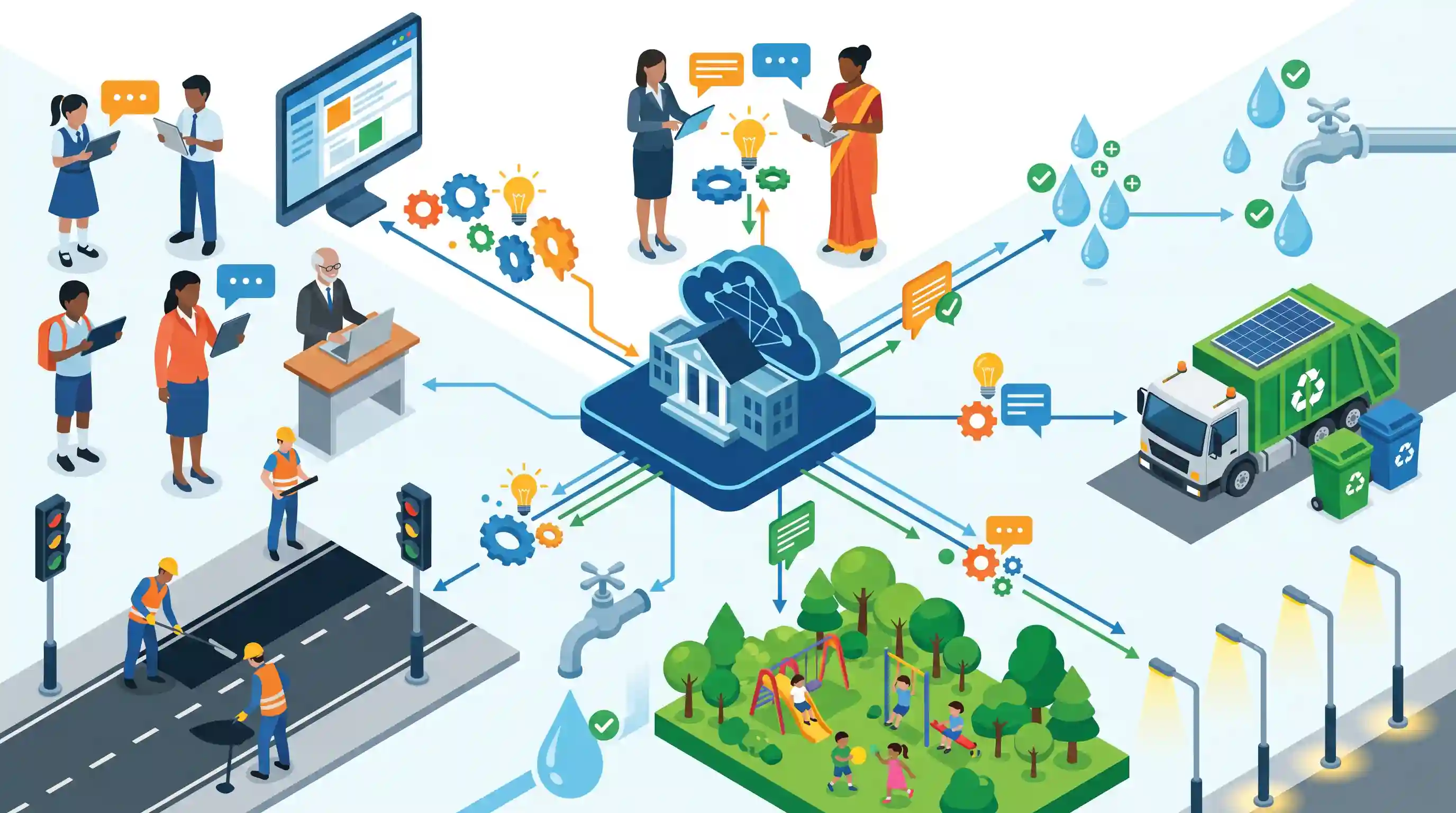
The Surat Municipal Corporation (SMC) plans to launch an interactive e-governance portal titled 'My Dear MaNaPa' to foster direct civic engagement. Aimed at students from Classes 9 to 12, along with teachers and principals of SMC-run schools, the portal allows the academic community to submit suggestions and ideas to improve the city's municipal services. This initiative represents an innovative approach by urban local bodies to utilize an 'interactive service model' in e-governance, actively seeking youth and citizen participation to enhance public service delivery.
Key Points
- The Surat Municipal Corporation (SMC) is proposing a new digital portal named 'My Dear MaNaPa'.
- The portal aims to facilitate civic engagement by involving students (Class 9-12), teachers, and principals from SMC-run Suman Schools.
- It serves as an interactive platform for the educational community to submit innovative ideas and suggestions for improving city administration.
- The initiative exemplifies an interactive service model of e-governance, using crowdsourcing to expand and enhance municipal service delivery.
Important Terms
My Dear MaNaPa Portal

An interactive e-governance portal launched by the Surat Municipal Corporation, allowing students (Classes 9-12) and educators to submit suggestions for city improvement and public service delivery.
UPSC context
GS-II: E-governance and youth participation in governance; a case study for innovative citizen-engagement models in urban governance.
Surat Municipal Corporation (SMC)
The urban local body responsible for the administration and infrastructure of Surat, Gujarat; widely recognized for its high performance in cleanliness and digital governance initiatives.
UPSC context
GS-II: Structure and functioning of Urban Local Bodies (ULBs); useful for examples of successful municipal management in India.
74th Constitutional Amendment Act
The 1992 legislation that granted constitutional status to Urban Local Bodies (ULBs), introducing Part IX-A and the Twelfth Schedule to the Indian Constitution.
UPSC context
GS-II: Indian Polity and Governance; tests knowledge of democratic decentralization and local self-government in urban areas.
E-Governance
The application of Information and Communication Technology (ICT) to simplify government processes, enhance service delivery, and promote SMART (Simple, Moral, Accountable, Responsive, Transparent) governance.
UPSC context
GS-II: Governance and Digital India; core topic regarding the role of technology in public service delivery and transparency.
Civic Engagement
The active participation of individuals in the decision-making and problem-solving processes of their community to address issues of public concern and improve quality of life.
UPSC context
GS-II: Citizen participation in governance; relevant for discussing the 'bottom-up' approach in public administration and urban planning.
Citizen-centric Administration
A governance philosophy where public services are designed around the needs, convenience, and feedback of citizens, ensuring accountability and ease of access.
UPSC context
GS-IV: Ethics and Governance; tests understanding of the service delivery aspect of public administration and administrative ethics.
Prelims Trap
"My Dear MaNaPa is a central scheme under the Smart Cities Mission for youth participation."
It is a purely local initiative by the Surat Municipal Corporation, not a centrally sponsored scheme or a Ministry of Housing and Urban Affairs portal.
Static Concepts Connected
What are the primary interaction models of E-Governance?
- G2C (Government-to-Citizen): One-way delivery of public services and information dissemination to the public (e.g., land records via Bhoomi, utility payments).
- C2G (Citizen-to-Government): Two-way engagement allowing citizens to provide feedback, grievance redressal, and policy crowdsourcing (e.g., MyGov, My Dear MaNaPa).
- G2G and G2B: Inter-departmental data sharing to reduce red tape (G2G) and portals designed to improve the ease of doing business (G2B).
How does the 74th Constitutional Amendment envision citizen participation in ULBs?
- Ward Committees: Mandates the creation of Ward Committees in municipalities with a population of over 3 lakhs to ensure grassroots engagement and proximity in grievance redressal.
- 12th Schedule: Lists 18 functional items (like public health, urban planning, sanitation) which implicitly require local community engagement for effective implementation and monitoring.
Cross-Topic Patterns
E-Governance + Citizen Charters
Transitions governance from passive service delivery (like static Citizen Charters) to active policy co-creation, highly relevant for GS-2 Accountability and GS-4 Public Service delivery.
Youth Demographics + Urban Planning
Integrates the 'demographic dividend' with urban administration, moving beyond mere employment to view youth as active stakeholders in local policy crowdsourcing.

Expect a GS2 Mains question evaluating the shift from transactional G2C e-governance to interactive C2G platforms for policy co-creation.
Linked PYQs · 4
Linked PYQs · 4
- 2024MainsGS2
Analyse the role of local bodies in providing good governance at local level and bring out the pros and cons merging the rural local bodies with the urban local bodies.
- 2024MainsGS2
e-governance is not just about the routine application of digital technology in service delivery process. It is as much about multifarious interactions for ensuring transparency and accountability. In this context evaluate the role of the 'Interactive Service Model' of e-governance.
- 2025MainsGS4
"Constitutional morality is not a natural sentiment but a product of civil education and adherance of the rule of law." Examine the significance of constitutional morality for public servant highlighting the role in promoting good governance and ensuring accountability in public administration.
- 2025MainsGS2
e-governance projects have a built-in bias towards technology and back-end integration than user-centric designs. Examine.
