Welfare guarantee schemes verification and leakage prevention
Source:The Hindu ↗
Why It Matters
The article demonstrates a real-world governance challenge in welfare administration: ensuring targeted delivery and minimizing fiscal leakages through routine de-duplication and beneficiary authentication (e.g., weeding out ghost beneficiaries).
Summary
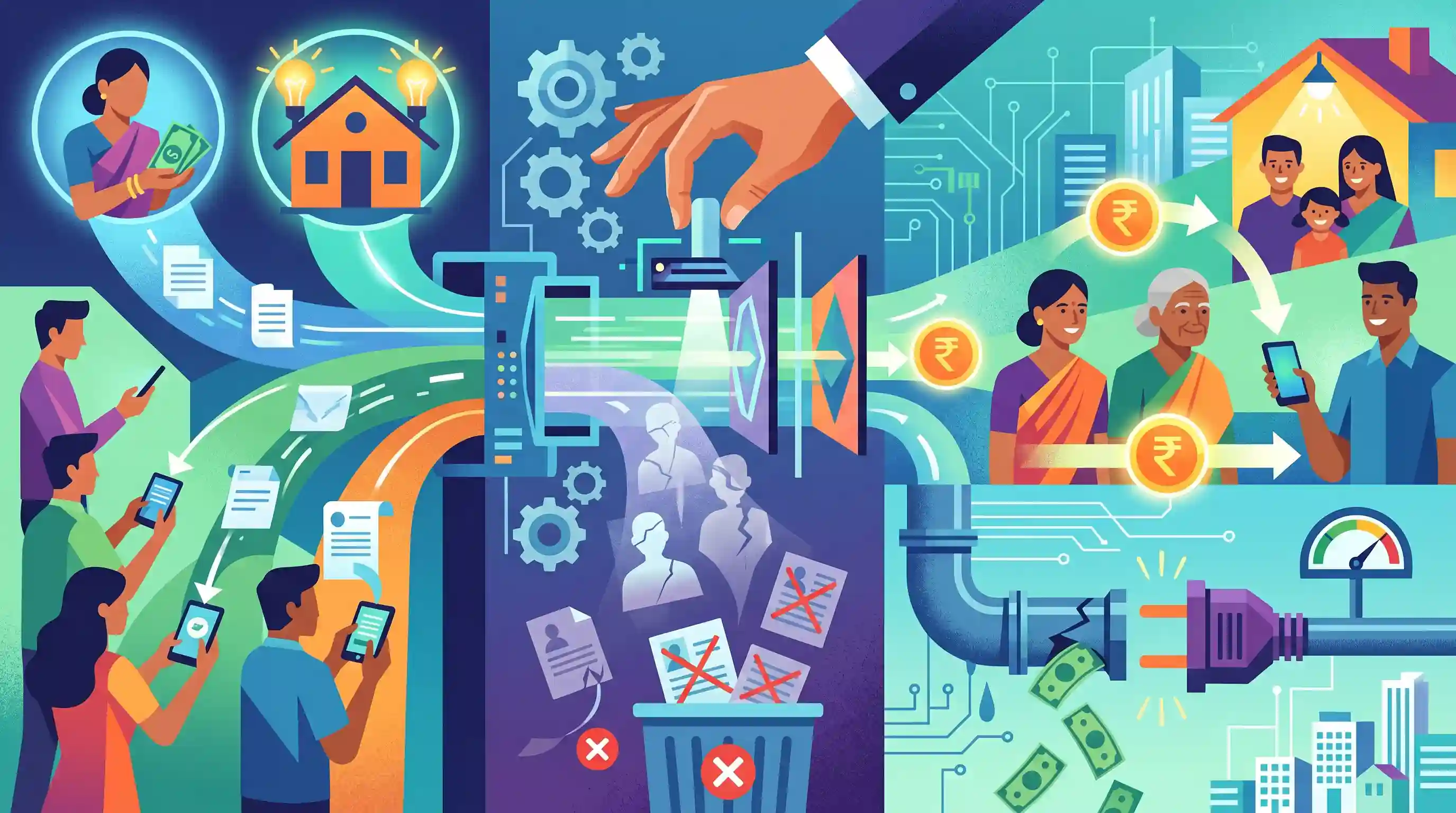
Karnataka Chief Minister D.K. Shivakumar clarified that the State's guarantee schemes, including 'Gruha Lakshmi' and 'Gruha Jyothi', will continue without interruption. He dismissed rumors of their discontinuation, explaining that the ongoing re-application drive is an administrative measure to verify beneficiary data. This verification process aims to weed out fake records and "ghost beneficiaries" (such as accounts in the names of deceased persons), ensuring that Direct Benefit Transfers (DBT) reach genuine citizens while plugging leakages in welfare delivery.
Key Points
- Karnataka Chief Minister D.K. Shivakumar confirmed that the state government's guarantee schemes will continue to be implemented fully, dismissing rumors of discontinuation.
- A re-application process is underway strictly to authenticate beneficiary names, addresses, and bank accounts.
- The verification drive aims to weed out fake records and ghost beneficiaries, such as benefits being drawn in the names of deceased individuals.
- The administrative exercise highlights the governance challenge of curbing leakages in Direct Benefit Transfers (DBT) while maintaining welfare commitments.
Important Terms
Gruha Lakshmi Scheme

A Karnataka state welfare program providing ₹2,000 monthly financial assistance to female heads of households (BPL and APL) via Direct Benefit Transfer to promote financial independence.
UPSC context
GS-II: Welfare schemes for vulnerable sections. Tests understanding of gender-targeted financial inclusion and state-level social safety nets.
Gruha Jyothi Scheme
A social welfare initiative in Karnataka offering up to 200 units of free electricity monthly to domestic consumers, aimed at reducing the cost of living for households.
UPSC context
GS-II: Welfare schemes; GS-III: Infrastructure (Energy). Relevant for discussing utility subsidies and state fiscal management.
Direct Benefit Transfer (DBT)
A mechanism to transfer subsidies and welfare benefits directly into beneficiaries' bank accounts, leveraging the JAM (Jan Dhan-Aadhaar-Mobile) trinity to eliminate intermediaries and reduce corruption.
UPSC context
GS-II: E-governance and transparency. A core topic for administrative reforms and plugging leakages in public delivery.
Ghost Beneficiaries
Ineligible or non-existent recipients (e.g., deceased individuals or duplicate entries) listed in welfare databases who fraudulently draw government benefits meant for genuine citizens.
UPSC context
GS-II: Governance, transparency, and accountability. Essential for discussing the 'leakage' problem in Indian welfare distribution.
JAM Trinity
The integration of Jan Dhan bank accounts, Aadhaar biometric ID, and Mobile numbers, forming the digital infrastructure required for targeted delivery of government subsidies.
UPSC context
GS-III: Indian Economy and financial inclusion. The technological backbone of modern welfare delivery and e-governance.
Prelims Trap
"Digital verification drives to weed out ghost beneficiaries aim to reduce exclusion errors in DBT."
Removing fake or dead beneficiaries fixes INCLUSION errors. EXCLUSION errors happen when genuine, eligible citizens lose benefits due to authentication or biometric failures.
Static Concepts Connected
What are Inclusion and Exclusion errors in welfare delivery?
- Inclusion Error: Providing welfare benefits to ineligible individuals, such as fake accounts or deceased persons (ghost beneficiaries).
- Exclusion Error: Denying rightful benefits to genuine, eligible citizens, often due to biometric failures, strict documentation rules, or digital illiteracy.
How do universal guarantee schemes impact state macroeconomics?
- Revenue Deficit: Subsidies classify as revenue expenditure, which can rapidly balloon revenue deficits if unbacked by proportional tax collections.
- Capex Crowding Out: High committed welfare spending reduces the available fiscal room for long-term capital expenditure (infrastructure, health facilities).
- Market Borrowing: To fund guarantees, states often resort to increased off-budget or market borrowings, pushing against FRBM Act limits.
Cross-Topic Patterns
Welfare Subsidies + Article 293
Heavy expenditure on state guarantees often leads to increased market borrowing, invoking the Centre's constitutional power to regulate state debt under Article 293.
DBT + Right to Privacy
Mandatory Aadhaar-based digital verification for scheme continuity frequently touches upon the Puttaswamy judgment's proportionality test for targeted welfare delivery.

Expect a 2026 question linking 'inclusion vs exclusion errors' in DBT with the macroeconomic strain of guarantee schemes on State finances.
Linked PYQs · 3
Linked PYQs · 3
- 2023MainsGS2
e-governance, as a critical tool of governance, has ushered in effectiveness, transparency and accountability in governments. What inadequacies hamper the enhancement of these features ?
- 2015MainsGS3
In what way could replacement of price subsidy with Direct Benefit Transfer (DBT) change the scenario of subsidies in India ? Discuss.
- 2022MainsGS2
Besides the welfare schemes, India needs deft management of inflation and unemployment to serve the poor and the underprivileged sections of the society. Discuss.
