GST दर सुसंगतीकरण और निजी खपत प्रभाव
स्रोत:इंडियन एक्सप्रेस ↗
क्यों मायने रखता है
यह अप्रत्यक्ष कर सुधारों (राजकोषीय नीति) और मुद्रास्फीति प्रबंधन (मौद्रिक नीति लक्ष्यों) के बीच समष्टि आर्थिक (macroeconomic) अंतर्संबंधों पर प्रकाश डालता है। यह समझना कि GST युक्तिकरण किस प्रकार खुदरा मुद्रास्फीति और निजी उपभोग को प्रभावित करता है, आर्थिक विकास, संसाधनों के संग्रहण और कराधान से संबंधित GS Paper 3 के विषयों के लिए महत्वपूर्ण है।
सारांश
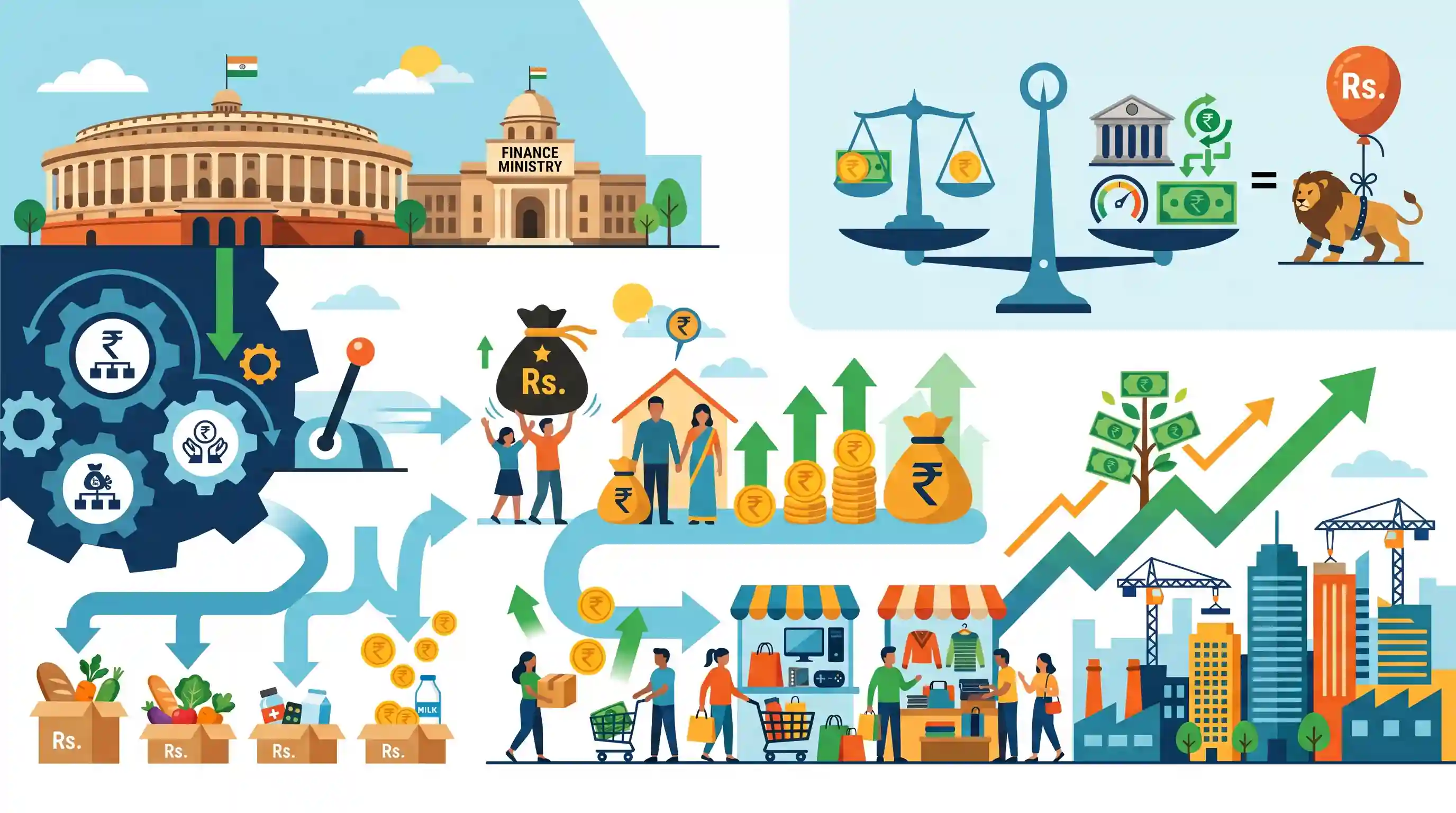
According to an RBI bulletin article, structural reforms within the Goods and Services Tax (GST) framework—specifically rationalizing tax slabs and reducing rates on essential goods—can play a pivotal role in lowering retail prices and curbing inflation. By decreasing the indirect tax burden on consumers, such reforms effectively increase households' disposable income. This enhancement in purchasing power is projected to stimulate private consumption, which is a major driver of India's economic growth. The article highlights that alongside monetary policy, supply-side interventions and indirect tax reforms are essential tools for maintaining macroeconomic stability and managing inflation.
मुख्य बिंदु
- An RBI article suggests that rationalizing Goods and Services Tax (GST) slabs and reducing rates on essential items can significantly lower retail prices.
- By reducing the indirect tax burden on consumers, GST reforms can help alleviate domestic inflationary pressures.
- Lower retail prices lead to enhanced household disposable incomes, which in turn acts as a catalyst for boosting private consumption.
- Increased private consumption driven by tax rationalization is expected to support and accelerate broader macroeconomic growth.
- The analysis underscores the critical role of fiscal policy and structural tax reforms in complementing the RBI's monetary policy efforts to manage inflation.
महत्वपूर्ण शब्द
वस्तु एवं सेवा कर (GST)

वस्तुओं और सेवाओं की आपूर्ति पर लगाया जाने वाला एक एकीकृत, गंतव्य-आधारित अप्रत्यक्ष कर, जो 2017 से कई केंद्रीय और राज्य करों को समाहित करता है।
UPSC context
GS-3: Indian Economy and mobilization of resources; crucial for understanding fiscal reforms and 'One Nation, One Tax'.
जीएसटी परिषद
एक संवैधानिक निकाय (अनुच्छेद 279A) जिसकी अध्यक्षता केंद्रीय वित्त मंत्री द्वारा की जाती है, जो GST दरों और नीतियों पर केंद्र और राज्यों को सिफारिशें देने के लिए उत्तरदायी है।
UPSC context
GS-2: संघवाद और संवैधानिक निकाय; केंद्र-राज्य राजकोषीय संबंधों और सहकारी संघवाद की गतिशीलता का परीक्षण करता है।
Rate Rationalization
बहु-स्तरीय GST कर संरचना को सरल बनाने की प्रक्रिया, जिसमें जटिलता कम करने, अनुपालन को बढ़ावा देने और कीमतों को कम करने के लिए टैक्स स्लैबों का विलय या समायोजन किया जाता है।
UPSC context
GS-3: कराधान और समावेशी विकास; GST 2.0 और ईज़ ऑफ डूइंग बिजनेस के संदर्भ में अक्सर चर्चा की जाती है।
इनवर्टेड ड्यूटी स्ट्रक्चर
एक ऐसी कर व्यवस्था जहाँ कच्चे माल या इनपुट पर कर की दर तैयार उत्पादों पर कर की दर से अधिक होती है, जो घरेलू विनिर्माण को नुकसान पहुँचाती है।
UPSC context
GS-3: औद्योगिक विकास और 'मेक इन इंडिया'; व्यापार नीति और विनिर्माण क्षेत्र की प्रतिस्पर्धात्मकता के लिए प्रासंगिक।
भारतीय रिज़र्व बैंक (RBI)
भारत का केंद्रीय बैंक और विनियामक निकाय जो मौद्रिक नीति, मूल्य स्थिरता बनाए रखने और बैंकिंग क्षेत्र के पर्यवेक्षण के लिए उत्तरदायी है।
UPSC context
GS-3: मौद्रिक नीति और मुद्रास्फीति; व्यापक आर्थिक स्थिरता और केंद्रीय बैंकिंग कार्यों से संबंधित प्रश्नों के लिए महत्वपूर्ण।
अप्रत्यक्ष कर
A tax collected by an intermediary from the consumer and paid to the government, typically levied on goods and services.
UPSC context
GS-3: सरकारी बजटिंग; कर आपतन (tax incidence) और GST की ओर बदलाव को समझने के लिए मुख्य अवधारणा।
खुदरा मुद्रास्फीति (CPI)
शहरी और ग्रामीण उपभोक्ताओं द्वारा उपभोक्ता वस्तुओं की एक मार्केट बास्केट के लिए भुगतान की गई कीमतों में समय के साथ होने वाले औसत परिवर्तन का एक माप।
UPSC context
GS-3: मुद्रास्फीति और आर्थिक विकास; मौद्रिक नीति लक्ष्यों और परिवारों की क्रय शक्ति को समझने के लिए महत्वपूर्ण।
प्रारंभिक ट्रैप
"The RBI uses GST slab rationalisation as a structural tool to curb retail inflation."
GST एक अप्रत्यक्ष कर है और GST Council द्वारा संचालित एक राजकोषीय नीति उपकरण है। RBI केवल इसका सुझाव देता है; इसके वास्तविक उपकरण पूरी तरह से मौद्रिक हैं।
संबंधित अवधारणाएँ
अप्रत्यक्ष कर मुद्रास्फीति और प्रयोज्य आय (disposable income) को कैसे प्रभावित करते हैं?
- खुदरा कीमतें: GST जैसे कर वस्तुओं की अंतिम कीमत में शामिल होते हैं। इनमें कटौती करने से खुदरा मुद्रास्फीति (CPI) सीधे तौर पर कम होती है।
- प्रयोज्य आय: अप्रत्यक्ष करों को कम करने से खुदरा कीमतों में कमी आती है, जिससे परिवारों की वास्तविक क्रय शक्ति और खर्च योग्य आय (disposable income) में वृद्धि होती है।
- PFCE का प्रभाव: उच्च प्रयोज्य आय निजी अंतिम उपभोग व्यय (PFCE) को बढ़ावा देती है, जो भारत की GDP का लगभग 60% है।
What is the mandate of the GST Council regarding tax rates?
- अनुच्छेद 279A: Under Article 279A, it is a constitutional body headed by the Union Finance Minister, responsible for recommending GST rates, exemptions, and tax slabs.
- मतदान शक्ति: केंद्र के पास 1/3rd मतदान भारांश है, जबकि सभी राज्यों के पास सम्मिलित रूप से 2/3rds हिस्सा है। कोई भी निर्णय (जैसे स्लैब बदलना) लेने के लिए 3/4th बहुमत की आवश्यकता होती है।
अंतर-विषय पैटर्न
मुद्रास्फीति लक्ष्यीकरण एवं राजकोषीय समन्वय
RBI का लचीला मुद्रास्फीति लक्ष्यीकरण (4% +/- 2%) अक्सर सरकार के आपूर्ति-पक्ष के उपायों और कर कटौती पर निर्भर करता है, जब केवल रेपो रेट में वृद्धि स्थिर लागत-प्रेरित मुद्रास्फीति (sticky cost-push inflation) को कम करने में सक्षम नहीं होती है।
Fixing the Inverted Duty Structure
Reducing GST slabs often aims to resolve the inverted duty structure—where taxes on inputs exceed those on finished goods—which blocks manufacturers' working capital and stifles manufacturing growth.

Expect a 2026 question linking RBI's monetary policy limits with the GST Council's fiscal mandate to control sticky cost-push inflation.
संबद्ध PYQ · 4
संबद्ध PYQ · 4
- 2019MainsGS3
Enumerate the indirect taxes which have been subsumed in the Goods and Services Tax (GST) in India. Also, comment on the revenue implications of the GST introduced in India since July 2017.
- 2024MainsGS3
What are the causes of persistent high food inflation in India? Comment on the effectiveness of the monetary policy of the RBI to control this type of inflation.
- 2019MainsGS3
Do you agree with the view that steady GDP growth and low inflation have left the Indian economy in good shape? Give reasons in support of your arguments.
- 2017PrelimsGS1
What is/are the most likely advantages of implementing 'Goods and Services Tax (GST)'? 1. It will replace multiple taxes collected by multiple authorities and will thus create a single market in India. 2. It will drastically reduce the 'Current Account Deficit' of India and will enable it to increase its foreign exchange reserves. 3. It will enormously increase the growth and size of economy of India and will enable it to overtake China in the near future. Select the correct answer using the code given below:
