Great Nicobar project environmental assessment and EIA controversy
Source:The Hindu ↗
Why It Matters
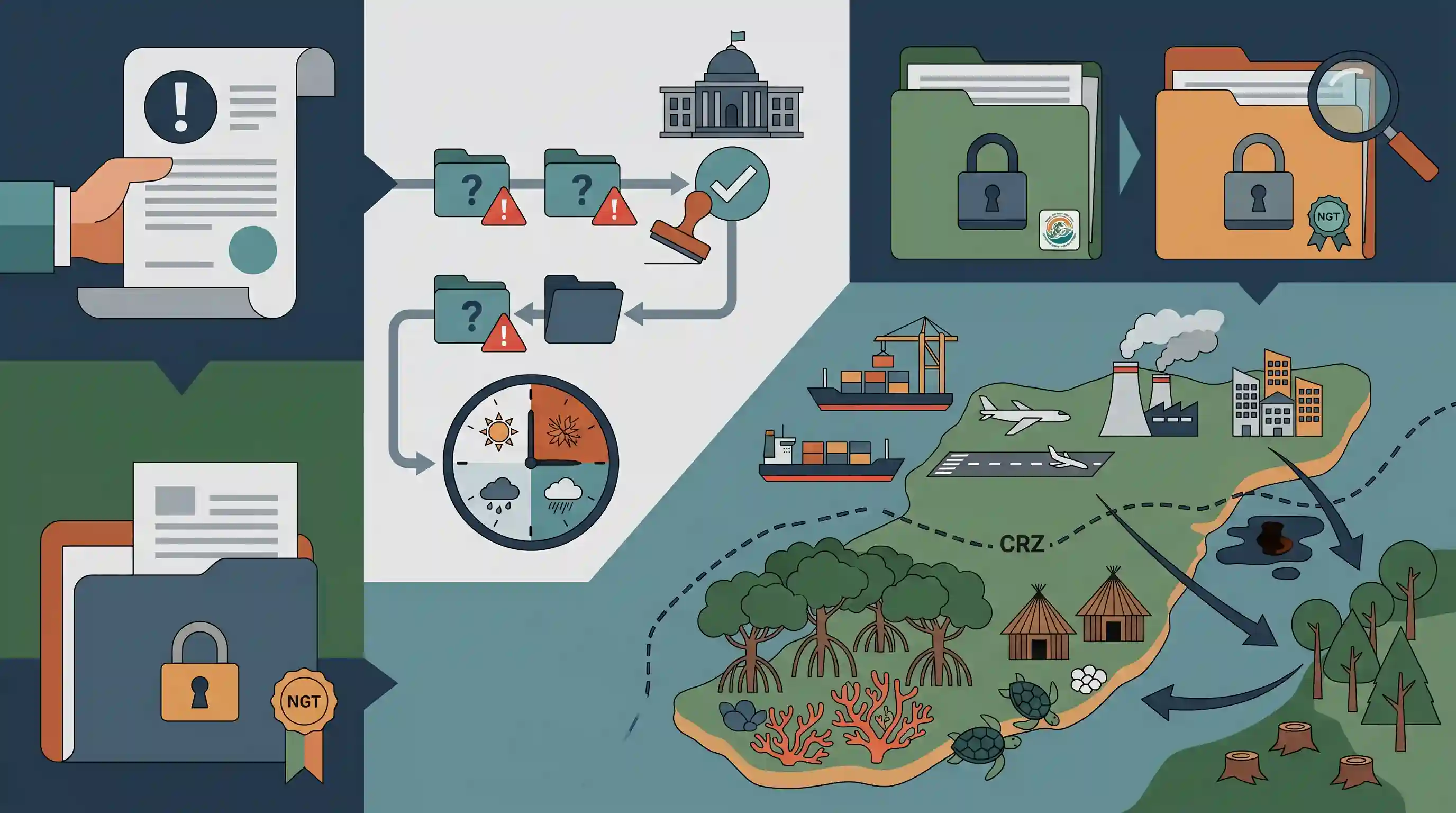
The controversy over the Great Nicobar development project highlights the procedural rigor required for Environmental Impact Assessments (EIAs) in ecologically sensitive and strategic zones. It underscores the ongoing debate between large-scale infrastructure development and environmental conservation, as well as the crucial role of statutory bodies like the NGT in ensuring transparency and compliance.
Summary
Congress leader Jairam Ramesh has written to Union Environment Minister Bhupender Yadav, demanding an immediate pause and review of the Great Nicobar Island development project. He alleges that the project's environmental clearance was granted based on an inadequate Environment Impact Assessment (EIA) that failed to conduct mandatory multi-seasonal baseline studies. Emphasizing the ecological sensitivity of the Andaman and Nicobar Islands, Ramesh also urged the government to release the confidential report of the High-Powered Committee (HPC) set up by the National Green Tribunal (NGT) to re-evaluate the project.
Key Points
- Congress leader Jairam Ramesh urged Environment Minister Bhupender Yadav to suspend the Great Nicobar Island development project, citing grossly inadequate ecological assessments.
- Ramesh alleged the EIA clearance relied on short-term baseline data, violating statutory mandates that require multi-season studies for port projects in ecologically sensitive regions like the Andaman and Nicobar Islands.
- He demanded that the High-Powered Committee (HPC) report, constituted by the National Green Tribunal (NGT) to re-examine the project's clearance, be made public for transparency.
- Ramesh highlighted that under the Island Coastal Regulation Zone Notification, 2019, comprehensive EIAs are mandatory for eroding coastlines, noting ISRO mapped Galathea Bay as an eroding area.
Important Terms
Environment Impact Assessment (EIA)

A systematic process to evaluate the potential environmental, social, and economic impacts of a proposed project. Statutorily backed by the Environment Protection Act, 1986, it ensures informed decision-making for sustainable development.
UPSC context
GS Paper III (Environment); vital for questions on environmental governance, project clearances, and the 2006 vs. 2020 notification debates.
National Green Tribunal (NGT)
A specialized quasi-judicial body established under the NGT Act, 2010, for the expeditious disposal of environmental cases. It applies the 'polluter pays' and 'precautionary' principles to protect natural resources.
UPSC context
GS Paper II (Statutory Bodies) and GS Paper III (Environment); frequently tested for its jurisdiction, powers, and role in judicial activism.
Island Coastal Regulation Zone (ICRZ) Notification, 2019
A 2019 regulatory framework specifically for the Andaman & Nicobar and Lakshadweep islands. It relaxes certain 2011 development norms to promote eco-tourism and strategic infrastructure like ports near high-tide lines.
UPSC context
GS Paper III (Conservation); important for understanding island-specific ecological protections versus developmental/strategic needs (e.g., Great Nicobar project).
High-Powered Committee (HPC)
An expert panel, often mandated by courts or the NGT, to re-evaluate specific environmental concerns. In this context, the 2023 NGT-ordered committee revisited the Great Nicobar project's clearances.
UPSC context
GS Paper II & III; relevant for case studies on executive-judiciary interaction and oversight mechanisms in mega-infrastructure projects.
Environmental Management Plan (EMP)
A site-specific guidance document that outlines mitigation measures, monitoring protocols, and institutional responsibilities to manage environmental risks throughout a project's construction and operation phases.
UPSC context
GS Paper III (Environmental Degradation); tests technical knowledge of the post-EIA implementation phase and compliance monitoring.
Prelims Trap
"Galathea Bay is India's most critical nesting site for the endangered Olive Ridley Sea Turtle."
Galathea Bay is globally crucial for the Giant Leatherback Sea Turtle. Olive Ridleys are famously associated with Odisha's coast (Gahirmatha and Rushikulya).
Static Concepts Connected
What are the core stages of the Environmental Impact Assessment (EIA) process?
- Screening: Determining whether a project requires a full or partial EIA study based on its scale and potential ecological impact.
- Scoping: Identifying key environmental issues and defining the mandatory Terms of Reference (ToR) for the assessment study.
- Public Consultation: A mandatory hearing (often bypassed or poorly executed in fast-tracked projects) to record the concerns of local affected communities.
- Appraisal: Detailed scrutiny of the EIA report by the Expert Appraisal Committee (EAC) to recommend final clearance or rejection.
Which tribes in the Andaman & Nicobar Islands are classified as PVTGs?
- Andaman Islands: Great Andamanese, Jarawa, Onge, and Sentinelese are the officially recognized Particularly Vulnerable Tribal Groups (PVTGs) here.
- Nicobar Islands: Only the Shompen are classified as a PVTG in this group. The Nicobarese are recognized as Scheduled Tribes but not as PVTGs.
Cross-Topic Patterns
Maritime Security vs. Island Ecology
The International Container Transshipment Terminal leverages proximity to the Malacca Strait, creating a direct GS2/GS3 intersection between strategic maritime security and massive primary rainforest loss.
Tribal Rights & Mega-Projects
The diversion of 130 sq km of forest tests the limits of tribal rights and constitutional protections for semi-nomadic PVTGs like the Shompen against national infrastructure goals.

Expect a composite 2026 Prelims question linking the Shompen PVTG, Giant Leatherback nesting at Galathea Bay, and ICRZ norms.
Linked PYQs · 3
Linked PYQs · 3
- 2024MainsGS3
What role do environmental NGOs and activists play in influencing Environmental Impact Assessment (EIA) outcomes for major projects in India? Cite four examples with all important details.
- 2020MainsGS3
How does the draft Environment Impact Assessment (EIA) Notification, 2020 differ from the existing EIA Notification, 2006?
- 2014PrelimsGS1
Which of the following have coral reefs? 1. Andaman and Nicobar Islands 2. Gulf of Kachchh 3. Gulf of Mannar 4. Sunderbans Select the correct answer using the code given below.
