Delhi draft startup policy introduces venture capital fund
Source:The Hindu ↗
Why It Matters
Demonstrates sub-national level policy formulation to boost the start-up ecosystem. It is relevant for GS-3 topics involving investment models (Venture Capital/AIFs) and inclusive growth, as it introduces targeted support for women and marginalized communities similar to central schemes like Stand-Up India.
Summary
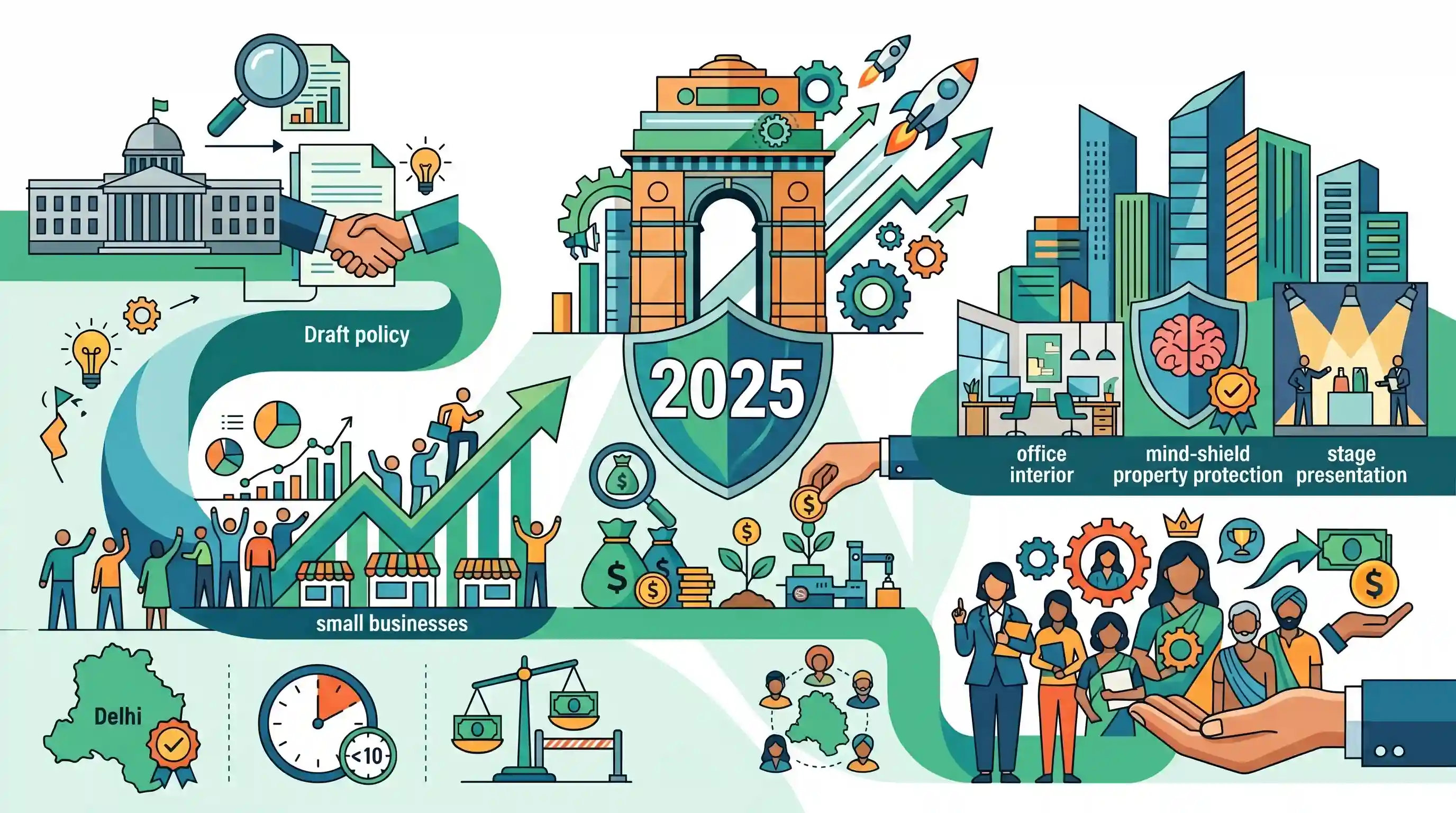
The Delhi Government has released the draft "Delhi Startup Policy, 2025" for public feedback, aiming to establish the capital as a premier global innovation hub. The policy targets the facilitation of at least 5,000 start-ups by 2035, backed by a ₹200 crore venture capital fund to offer critical early-stage financing. Beyond financial assistance, the policy includes non-fiscal benefits such as workspace solutions, intellectual property (IP) protection, and exhibition support. A notable aspect of the policy is its focus on inclusive growth, with specific provisions and additional assistance earmarked for start-ups led by women and individuals from marginalized communities. Eligible businesses must be registered in Delhi, operate for less than 10 years, and maintain a turnover below ₹100 crore.
Key Points
- The Delhi government released the draft "Delhi Startup Policy, 2025" to transform the city into a global innovation hub.
- The policy aims to support at least 5,000 start-ups by 2035, underpinned by a ₹200 crore venture capital fund for financial backing.
- Support mechanisms include direct financial assistance, workspace solutions, intellectual property (IP) protection, and exhibition subsidies.
- The policy specifically promotes inclusive growth by providing additional assistance to start-ups led by women and marginalized communities.
- Eligibility is restricted to businesses registered in Delhi, under 10 years old, with an annual turnover not exceeding ₹100 crore.
Important Terms
Delhi Startup Policy 2025

A draft policy by the Delhi Government aiming to establish the capital as a global innovation hub by facilitating 5,000 startups by 2035 through fiscal and non-fiscal support.
UPSC context
GS Paper II: Government Policies; GS Paper III: Indian Economy and innovation-led growth strategies.
Delhi Startup Venture Capital Fund
A ₹200 crore fund designed to provide equity and structured-debt financing to early-stage ventures, aiming to bridge the funding gap and attract private co-investment.
UPSC context
GS Paper III: Investment Models and mobilization of resources for industrial development.
Delhi Startup Portal
A digital single-window platform for startup registration, incentive application tracking, and connecting entrepreneurs with mentors, investors, and grievance redressal mechanisms.
UPSC context
GS Paper II: E-governance applications, transparency, and accountability in administrative service delivery.
Inclusive Growth
A development strategy ensuring benefits reach marginalized segments; the policy provides higher financial ceilings and priority access for women-led and marginalized community startups.
UPSC context
GS Paper III: Inclusive growth and issues arising from it, specifically social justice in entrepreneurship.
Intellectual Property (IP) Protection
Financial support for filing patents and trademarks (up to ₹3 lakh), intended to encourage innovation by securing legal ownership of creative and technical works.
UPSC context
GS Paper III: Issues relating to Intellectual Property Rights (IPR) and their impact on innovation.
Industries Department
The nodal agency of the Delhi Government responsible for implementing the startup policy and overseeing the monitoring committee and task force.
UPSC context
GS Paper II: Statutory and executive bodies responsible for policy implementation and industrial regulation.
Prelims Trap
State start-up policies are legally bound to adopt the updated national DPIIT turnover limits to grant benefits.
States have autonomy over their specific scheme criteria. Delhi's draft policy intentionally retains a lower ₹100 crore turnover limit, diverging from updated national DPIIT standards.
Static Concepts Connected
How does Venture Capital (VC) differ from Angel Investment?
- Angel Investors: High-net-worth individuals investing their own personal capital into a startup, typically at the very early 'seed' stage.
- Venture Capital: Professionally managed funds that pool institutional money to invest in early-stage startups with high growth potential (like Delhi's ₹200cr fund).
What are the core criteria for a 'Startup' under the DPIIT framework?
- Age Limit: The entity must not be older than 10 years from its date of incorporation or registration.
- Entity Type: Must be registered as a Private Limited Company, a Registered Partnership Firm, or a Limited Liability Partnership (LLP).
- Innovation Focus: Must be working towards the innovation, development, or commercialization of new products, processes, or services.
Cross-Topic Patterns
Start-up Policies + Inclusive Growth
State-level mandates for women and marginalized community start-ups mirror the central 'Stand-Up India' scheme, blending entrepreneurial innovation directly with financial inclusion and social empowerment.
Intellectual Property + Innovation Economy
The provision of non-fiscal IP support connects to the central Start-ups Intellectual Property Protection (SIPP) scheme, highlighting the role of patent fee subsidies in the knowledge economy.

Expect GS3 questions evaluating how state-backed VC funds and regional start-up policies complement national DPIIT frameworks.
Linked PYQs · 4
Linked PYQs · 4
- 2014PrelimsGS1
What does venture capital mean?
- 2016PrelimsGS1
With reference to 'Stand Up India Scheme', which of the following statements is/are correct? 1. Its purpose is to promote entrepreneurship among SC/ST and women entrepreneurs. 2. It provides for refinance through SIDBI. Select the correct answer using the code given below.
- 2025PrelimsGS1
With reference to investments, consider the following: I. Bonds II. Hedge Funds III. Stocks IV. Venture Capital How many of the above are treated as Alternative Investment Funds?
- 2019MainsGS3
It is argued that the strategy of inclusive growth is intended to meet the objectives of inclusiveness and sustainability together. Comment on this statement.
