Sonam Wangchuk Detention and Ladakh Sixth Schedule Political Demands
Source:The Hindu ↗
Why It Matters
Highlights the ongoing constitutional and political friction in Ladakh following the 2019 reorganization, specifically concerning tribal autonomy, political representation, and the state\'s use of preventive detention laws against civil rights activists.
Summary
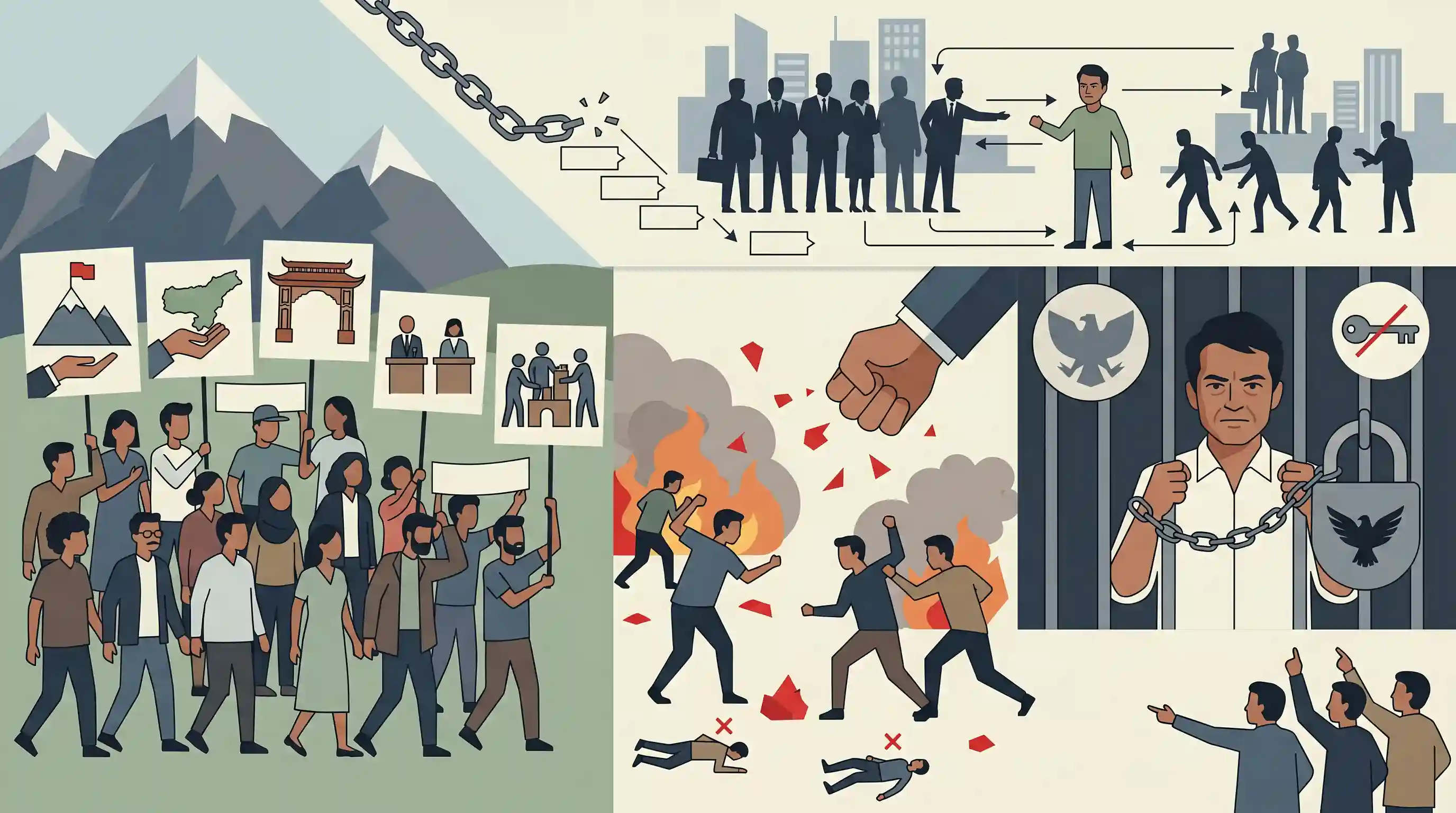
The UT Congress in Ladakh strongly condemned the detention of climate activist Sonam Wangchuk under the National Security Act (NSA), asserting that his arrest will not restore peace in the region. Wangchuk, who has been leading peaceful protests demanding statehood, Sixth Schedule status, separate parliamentary seats, and local recruitment, was detained after recent demonstrations turned violent, resulting in four deaths. Congress leaders accused the central government of making Wangchuk a scapegoat for its own administrative failures and of using agencies like the ED and CBI to harass him over unfulfilled election promises regarding Ladakh's constitutional status.
Key Points
- Climate activist Sonam Wangchuk was detained under the National Security Act (NSA) and lodged in a Jodhpur jail following violent protests in Ladakh that left four people dead.
- The protests, articulated by the Leh Apex Body and Kargil Democratic Alliance, are centered on demands for statehood, inclusion in the Sixth Schedule, separate parliamentary seats for Leh and Kargil, and guaranteed local recruitment.
- The Ladakh Congress condemned the arrest, asserting that the government is using Wangchuk as a scapegoat to deflect from its own administrative mishandling and unfulfilled election promises.
- Congress highlighted that Wangchuk had engaged in peaceful protests like fasts and padyatras but faced alleged harassment from central agencies like the ED and CBI before the situation escalated.
Important Terms
National Security Act (NSA)

A 1980 preventive detention law allowing authorities to detain individuals for up to 12 months without trial to maintain national security or public order.
UPSC context
GS Paper 2/3: Tests constitutional provisions (Article 22), preventive detention limits, and the balance between state security and civil liberties.
Sixth Schedule of the Constitution
Constitutional framework under Articles 244(2) and 275(1) providing for Autonomous District Councils with legislative and executive powers in specific tribal areas.
UPSC context
GS Paper 2: Significant for tribal governance, regional autonomy, and constitutional safeguards for culture/land in vulnerable ecosystems.
Leh Apex Body (LAB)
A socio-political conglomerate representing diverse groups in Leh, leading the unified regional movement for Ladakh's statehood and constitutional protections.
UPSC context
GS Paper 2: Relevant for pressure groups, regional political movements, and governance challenges in strategic border regions.
Kargil Democratic Alliance (KDA)
A coalition of political and religious groups in Kargil that collaborates with the LAB to demand statehood and Sixth Schedule status for Ladakh.
UPSC context
GS Paper 2: Illustrates regional identity politics and cooperative federalism within the Union Territory framework.
Central Bureau of Investigation (CBI)
India's premier investigative agency. In the Ladakh context, it is probing alleged FCRA (Foreign Contribution Regulation Act) violations involving activist-led institutions.
UPSC context
GS Paper 2: Concerns statutory bodies, agency jurisdiction, and the regulation of non-governmental organizations and foreign funding.
Statehood
The constitutional status of a full state within India, granting an elected legislature and greater political autonomy compared to Union Territory status.
UPSC context
GS Paper 2: Key for understanding federalism, the reorganization of states, and the evolving administrative structure of border territories.
Prelims Trap
"Ladakh is currently governed by Autonomous District Councils established under the Sixth Schedule."
Ladakh's current Hill Councils are statutory bodies (LAHDC Act 1995). They lack the constitutional legislative and judicial powers granted to 6th Schedule ADCs.
Static Concepts Connected
How do Sixth Schedule ADCs differ from statutory Hill Councils?
- Constitutional vs Statutory: ADCs derive power from Article 244(2) and the Sixth Schedule, whereas Ladakh's LAHDCs are created by a 1995 Parliamentary Act.
- Legislative Power: ADCs can make laws on land, forests, and customs. LAHDCs primarily hold executive powers over local development funds and schemes.
- Judicial Power: Sixth Schedule areas can establish village councils or courts to try suits under customary law; LAHDCs completely lack this judicial capacity.
What are the constitutional limits on Preventive Detention under Article 22?
- Article 22 Exception: Article 22(3)(b) denies regular procedural safeguards (like production before a magistrate within 24 hours) to individuals detained under laws like the NSA.
- Advisory Board Limit: Under Article 22(4), detention cannot exceed three months unless approved by an Advisory Board consisting of persons qualified to be High Court judges.
Cross-Topic Patterns
Sixth Schedule vs Border Geopolitics
Granting 6th Schedule status in a sensitive border region involves balancing local tribal autonomy (Article 244) with centralized security and administrative control (UT without legislature).
Preventive Detention & Civil Liberties
The application of the NSA to environmental activists blurs the line between 'public order' and 'national security', a recurring tension in Article 22 jurisprudence.

Expect a 2026 Prelims question comparing the legislative and judicial powers of Sixth Schedule ADCs with statutory bodies like LAHDC.
Linked PYQs · 3
Linked PYQs · 3
- 2015PrelimsGS1
The provisions in Fifth Schedule and Sixth Schedule in the Constitution of India are made in order to
- 2023PrelimsGS1
Consider the following statements: 1. According to the Constitution of India, the Central Government has a duty to protect States from internal disturbances. 2. The Constitution of India exempts the States from providing legal counsel to a person being held for preventive detention. 3. According to the Prevention of Terrorism Act, 2002, confession of the accused before the police cannot be used as evidence. How many of the above statements are correct?
- 2025MainsGS2
Discuss the nature of Jammu and Kashmir Legislative Assembly after the Jammu and Kashmir Reorganization Act, 2019. Briefly describe the powers and functions of the Assembly of the Union Territory of Jammu and Kashmir.
