Mine tailing recycling exempted from fresh environmental clearance
Source:The Hindu ↗
Why It Matters
The article highlights the crucial balance between environmental regulation (via the EC process) and the need for resource optimization in the mining sector. It touches upon 'circular economy' concepts by turning waste (tailings) into wealth, a topic directly relevant to GS3 (Environment and Economy). It is also vital for understanding India's strategic resource push for its energy transition.
Summary
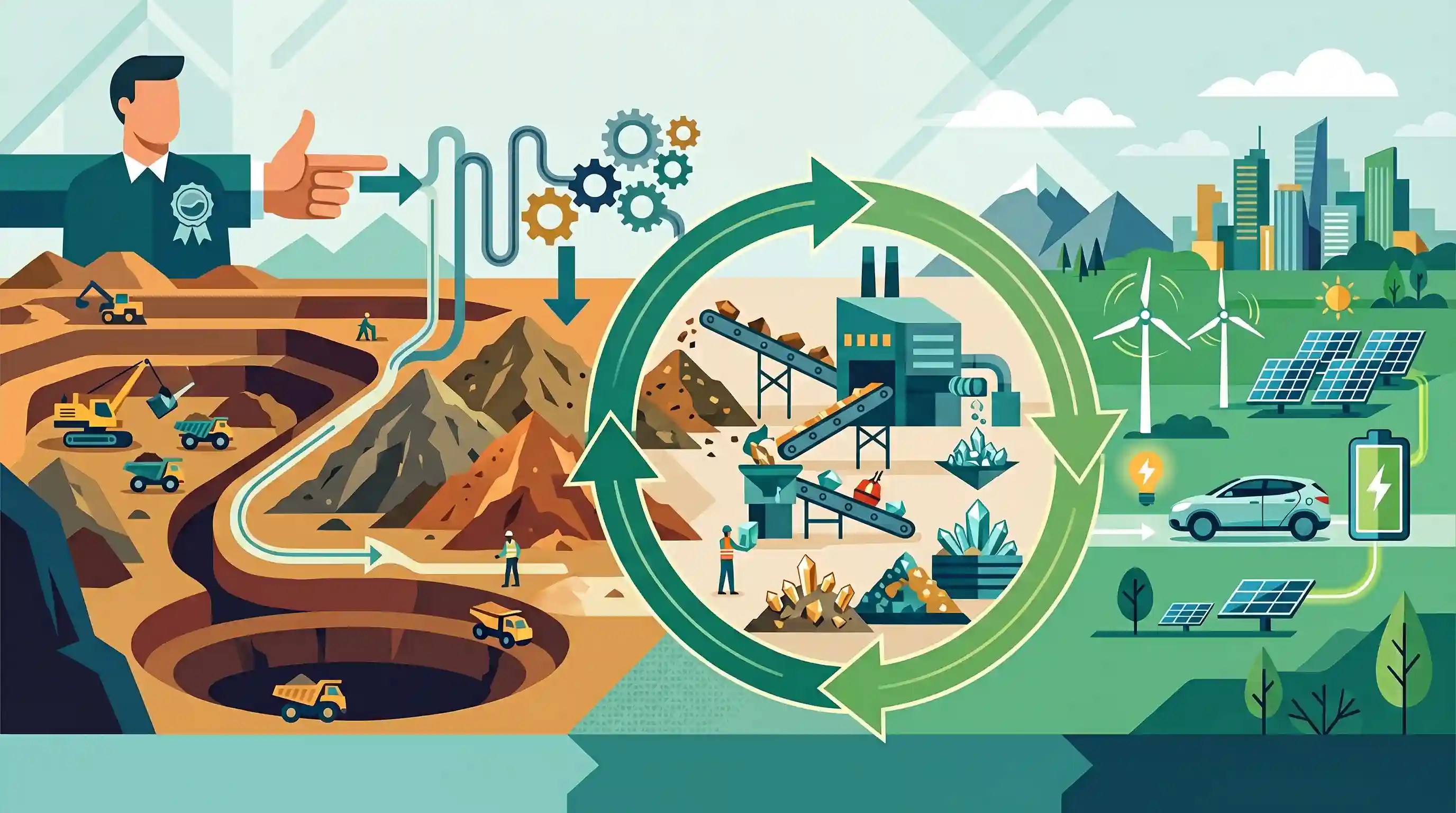
The Union Environment Ministry has decided to exempt the recycling of 'tailings'—the residual waste generated from ore extraction—within existing mine leases from requiring fresh Environmental Clearance (EC). This policy change is intended to streamline regulatory processes, minimizing administrative bottlenecks while promoting sustainable mining practices. By facilitating the extraction of valuable resources from mine waste, the government aims to foster a circular economy and reduce the environmental footprint of sprawling tailing dumps. This move is particularly significant as India ramps up mining efforts to secure critical minerals essential for its energy transition goals.
Key Points
- The Union Environment Ministry has exempted the recycling of mining tailings within existing mine leases from the requirement of a fresh Environmental Clearance (EC).
- Tailings are the residual waste material generated during the extraction of ores, which often still contain recoverable minerals.
- The policy shift aims to reduce regulatory bottlenecks, enabling quicker recovery of valuable minerals from mine waste.
- This aligns with the principles of a circular economy, optimizing resource use and reducing the environmental footprint of waste dumps.
- The exemption is strategically timed as India accelerates mining activities, particularly for critical minerals required for the energy transition.
Important Terms
Environmental Impact Assessment (EIA)

A systematic process evaluating the potential environmental, social, and economic consequences of a proposed project before granting approval under the Environment (Protection) Act, 1986.
UPSC context
GS Paper 3 (Environment); essential for topics on regulatory frameworks and sustainable development.
Environmental Clearance (EC)
A mandatory statutory approval required from the MoEFCC or state-level authorities for specified industrial and developmental projects to ensure adherence to environmental safeguards.
UPSC context
GS Paper 3 (Environment/Economy); key for understanding Ease of Doing Business and environmental governance.
Tailings
Residual waste materials—crushed rock, water, and processing chemicals—left over after the valuable fraction has been separated from the ore during mining.
UPSC context
GS Paper 1 (Resources) and GS 3 (Waste Management); relevant for secondary resource recovery policies.
Critical Minerals
Metallic or non-metallic elements (e.g., Lithium, Cobalt) essential for high-tech industries and national security, which are vulnerable to supply disruptions.
UPSC context
GS Paper 1 (Geography) and GS 3 (Energy Security); vital for the green energy transition.
Circular Economy
An economic model aimed at minimizing waste and maximizing resource efficiency by reusing, refurbishing, and recycling materials in a closed-loop system.
UPSC context
GS Paper 3 (Sustainable Development); central to strategies decoupling growth from resource depletion.
Prelims Trap
Recycling of mining tailings is uniformly exempt from Environmental Clearance across India.
The exemption is highly conditional. It applies strictly to recycling operations located within existing, already-cleared mine leases to prevent new land acquisition.
Static Concepts Connected
What is the difference between Overburden, Tailings, and Slag?
- Overburden: The natural soil and rock layer removed to access the ore body. It is typically untreated and simply dumped aside.
- Tailings: The finely ground rock and chemical waste left over after extracting valuable primary minerals from the mined ore.
- Slag: The stony waste matter separated from molten metals during the smelting and refining process in metallurgy.
Which mining-related activities are typically exempt from Environmental Clearance under EIA norms?
- Traditional Extraction: Manual extraction of ordinary clay or sand by local communities for customary, non-commercial uses like pottery.
- Maintenance Dredging: Routine dredging and desilting of dams, reservoirs, or canals for maintenance purposes.
- Secondary Processing: Recycling of tailings within existing, valid mine leases, as it avoids fresh land acquisition and utilizes already cleared zones.
Cross-Topic Patterns
Critical Minerals & Secondary Extraction
Extracting REEs and cobalt from tailing dumps links environmental waste management directly to India's strategic push to reduce import dependency for EV and solar supply chains.
EIA Streamlining vs. Ecological Safeguards
Exempting tailing recycling mirrors recent EIA amendments (like border infrastructure) that prioritize strategic economic goals and ease of doing business over stringent, repetitive environmental assessments.

Expect a 2026 question merging Critical Minerals import reliance, the new Tailings Policy, and EIA secondary extraction exemptions.
Linked PYQs · 5
Linked PYQs · 5
- 2025MainsGS3
Mineral resources are fundamental to the country's economy and these are exploited by mining. Why is mining considered an environmental hazard? Explain the remedial measures required to reduce the environmental hazard due to mining.
- 2014MainsGS3
Environmental Impact Assessment studies are increasingly undertaken before a project is cleared by the Government. Discuss the environmental impacts of coal-fired thermal plants located at coal pitheads.
- 2024MainsGS3
What role do environmental NGOs and activists play in influencing Environmental Impact Assessment (EIA) outcomes for major projects in India? Cite four examples with all important details.
- 2017MainsGS1
In spite of adverse environmental impact, coal mining is still inevitable for development." Discuss.
- 2025PrelimsGS1
Consider the following statements : Statement I: In India, State Governments have no power for making rules for grant of concessions in respect of extraction of minor minerals even though such minerals are located in their territories. Statement II: In India, the Central Government has the power to notify minor minerals under the relevant law. Which one of the following is correct in respect of the above statements?
