Rajasthan Tribal Area Development Fund And Financial Allocation
Source:timesofindia-indiatimes ↗
Why It Matters
Important for RPSC RAS aspirants to track state-level financial outlays, budgetary allocations, and welfare programs directed at tribal sub-plans and marginalized communities in Rajasthan.
Summary
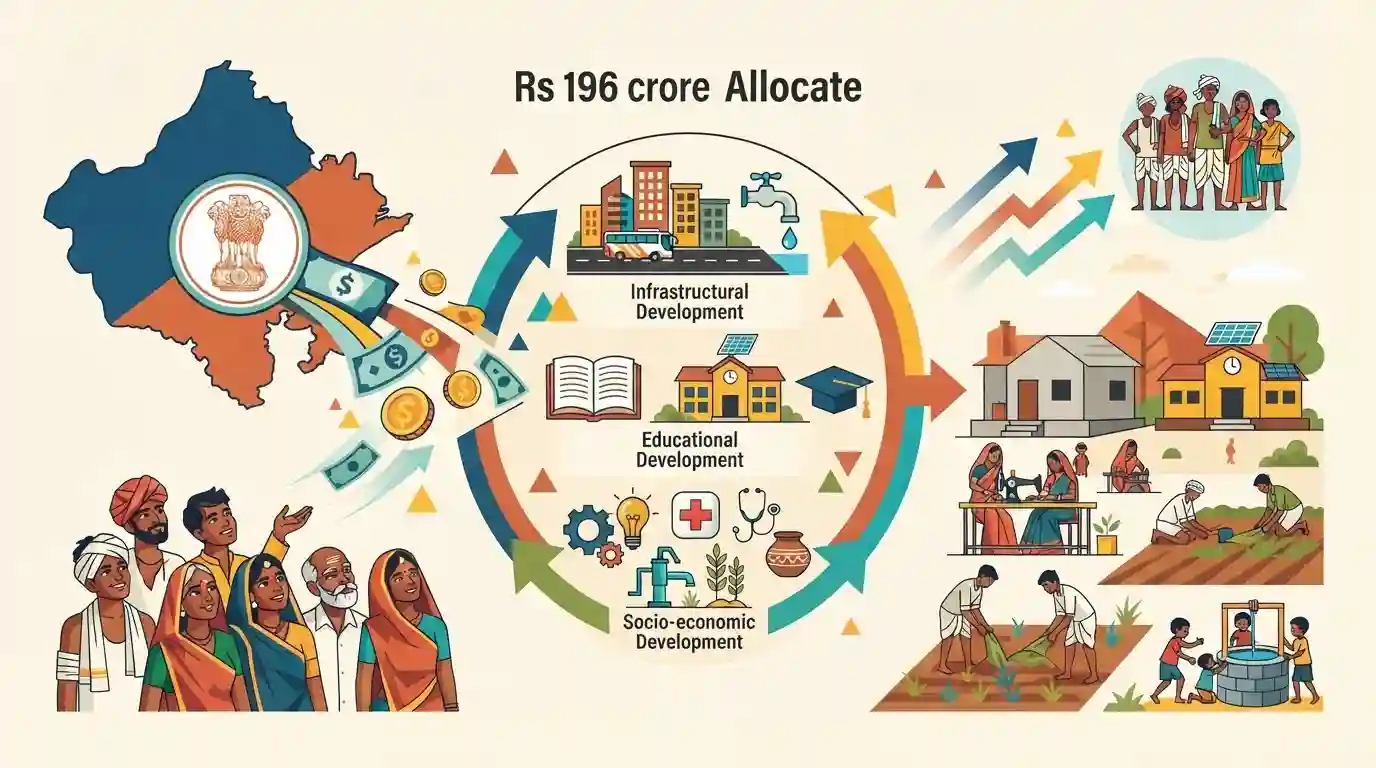
The Rajasthan government has approved a financial allocation of Rs 196 crore aimed at accelerating the infrastructural, educational, and socio-economic development of tribal regions across the state. This initiative focuses on strengthening basic amenities, promoting local livelihoods, and empowering tribal communities under state welfare plans.
Key Points
- The Rajasthan government has cleared Rs 196 crore for the comprehensive development of tribal regions in the state.
- The funding targets infrastructure development, education, livelihood generation, and basic amenities in tribal-dominated areas.
- Aims to bridge socio-economic gaps and uplift marginalized communities under the Tribal Area Development (TAD) framework.
Important Terms
Rajasthan Government

The apex executive body of Rajasthan responsible for formulating state policies, administering laws, and implementing welfare schemes for socio-economic development across various sectors including tribal welfare.
UPSC context
Important for RPSC Papers (Polity and Governance) testing administrative structures, policy execution, and governance mechanisms in Rajasthan.
Tribal Area Development Department
A specialized department of the Rajasthan government mandated to design, coordinate, and execute welfare, educational, and infrastructural programs for the socio-economic upliftment of tribal communities.
UPSC context
Essential for RPSC exams under Welfare Schemes and Tribal Development topics, testing knowledge of administrative bodies targeting vulnerable sections.
Prelims Trap
All tribal development funding in Rajasthan is exclusively sourced from state budget revenues without any central grants-in-aid.
Aspirants often confuse central grants-in-aid under Article 275(1) with state-funded allocations like the Rajasthan Tribal Development Fund, though both contribute to tribal area development.
Static Concepts Connected
What are the constitutional provisions for the welfare and administration of Scheduled Areas and Scheduled Tribes in Rajasthan?
- Fifth Schedule: Fifth Schedule governs the administration and control of Scheduled Areas in Rajasthan through Tribes Advisory Councils (TAC).
- Article 275(1) Grants: Article 275(1) provides grants-in-aid from the Consolidated Fund of India to states for promoting the welfare of STs or raising the administration level of Scheduled Areas.
- Article 335 Claims: Article 335 claims the consideration of ST claims in making appointments to services and posts in connection with state affairs.
Cross-Topic Patterns
Article 275(1) and Tribal Sub-Plan financing
Rajasthan's allocation under Article 275(1) links central grants for Scheduled Tribes with state-level budgetary outlays in TSP (Tribal Sub-Plan) blocks.
Central welfare missions and state convergence
PM-JANMAN and Dharti Aaba Abhiyan connect state tribal welfare schemes directly with central saturation missions for PVTGs.

Expect a statement-based question linking Article 275(1) grants, TSP districts, and recent budgetary allocations for tribal welfare in Rajasthan.
Linked PYQs · 2
Linked PYQs · 2
- 2024RPSC_PRELIMSGS1
Who among the following are eligible for Aastha Scheme in Rajasthan? (i) Persons with specially abled category. (ii) Specially abled category with more than 40 percent disability. (iii) If people are specially abled 2 or more people are specially abled. (iv) Families with 2 or more specially abled persons.
- 2024RPSC_PRELIMSGS1
Who among the following are eligible for Amrita Scheme in Rajasthan? (i) Persons with specially abled 40% or more disability. (ii) Specially abled category with more than 40% percent disability. (iii) B.P.L. family persons. (iv) Families where 2 or more people are specially abled. (v) Families with a specially abled transgender.
