Drug Manufacturing Licence Suspension for Substandard Drugs
Source:The Hindu ↗
Why It Matters
Directly relates to health governance, drug safety regulations, and the accountability of the pharmaceutical sector in India.
Summary
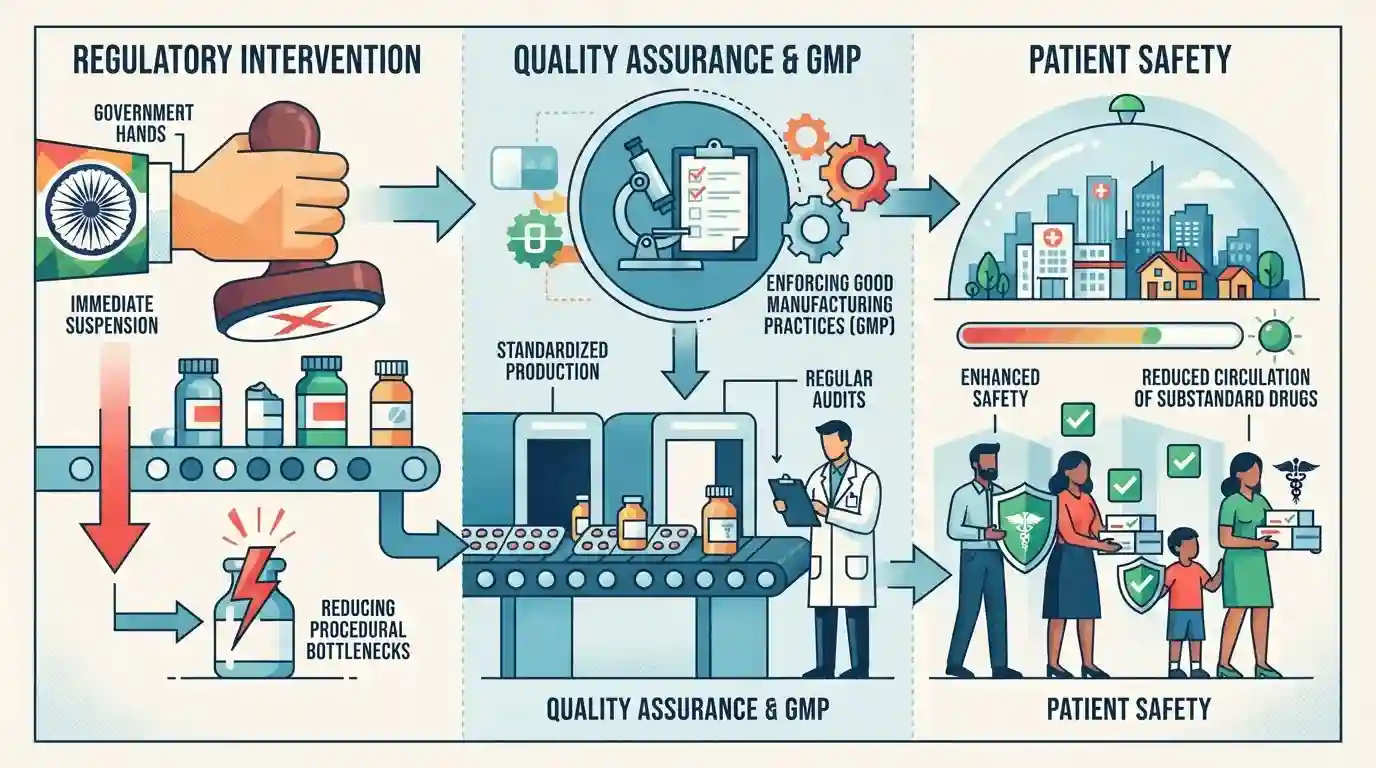
The Indian government has proposed strict regulatory amendments to enable the immediate suspension of manufacturing licences for substandard and spurious drugs. Addressing existing procedural bottlenecks, the move aims to enhance pharmaceutical quality assurance, enforce Good Manufacturing Practices (GMP), and safeguard patient safety against the circulation of sub-standard medications.
Key Points
- The Indian government has proposed amendments to mandate the immediate suspension of manufacturing licences for substandard or adulterated drugs to protect public health.
- Current regulatory provisions often involve protracted legal and procedural delays before errant manufacturing units face suspension or cancellation.
- The move aims to strengthen India's pharmaceutical quality control framework, ensuring higher compliance with Good Manufacturing Practices (GMP).
- This reform is critical for maintaining international confidence in India's reputation as the pharmacy of the world.
Important Terms
Drugs and Cosmetics Act

Principal central legislation governing the import, manufacture, distribution, and sale of drugs and cosmetics in India, designed to prevent substandard and spurious products and ensure public safety.
UPSC context
Important for GS Paper II (Health, Governance, and Statutory Regulatory Frameworks). Tests understanding of drug safety laws and regulatory mechanisms in India.
Central Drugs Standard Control Organisation
National regulatory body under the Ministry of Health and Family Welfare responsible for ensuring the safety, quality, and efficacy of drugs, medical devices, and cosmetics nationwide.
UPSC context
Important for GS Paper II (Health Sector Governance). Evaluates the role of federal drug regulators in enforcing quality standards and clinical trial oversight.
Ministry of Health and Family Welfare
The central government department in charge of formulating national health policy, overseeing public health programs, and regulating medical infrastructure and pharmaceutical standards across India.
UPSC context
Important for GS Paper II (Social Sector Policy, Health, and Government Interventions). Tests knowledge of executive governance structures in India's public health domain.
Static Concepts Connected
What are the statutory provisions governing drug standards and manufacturing licensing in India?
- Parent Act: Legislation source: Enacted in 1940, the Drugs and Cosmetics Act regulates the import, manufacture, distribution, and sale of drugs and cosmetics across India.
- Schedule M: GMP guidelines: Schedule M of the Drugs and Cosmetics Rules, 1945, mandates Good Manufacturing Practices and facility requirements for pharmaceutical units.
- Regulatory Body: Central authority: The Central Drugs Standard Control Organisation (CDSCO), headed by the Drugs Controller General of India (DCGI), coordinates regulatory control.
Cross-Topic Patterns
Pharma GMP Enforcement + Export Competitiveness
Stringent GMP compliance reforms directly impact India's pharmaceutical export competitiveness and trade compliance under international IP and WTO norms.

Expect matching questions on Schedule M provisions and Drugs and Cosmetics Act enforcement mechanisms for substandard drug suspensions.
Linked PYQs · 2
Linked PYQs · 2
- 2014MainsGS3
Can overuse and free availability of antibiotics without Doctor's prescription, be contributors to the emergence of drug-resistant diseases in India? What are the available mechanisms for monitoring and control? Critically discuss the various issues involved.
- 2013MainsGS3
What do you understand by Fixed Dose Drug Combinations (FDCs) ? Discuss their merits and demerits.
