Google plans to restart nuclear plant to power AI infrastructure
Source:The Hindu ↗
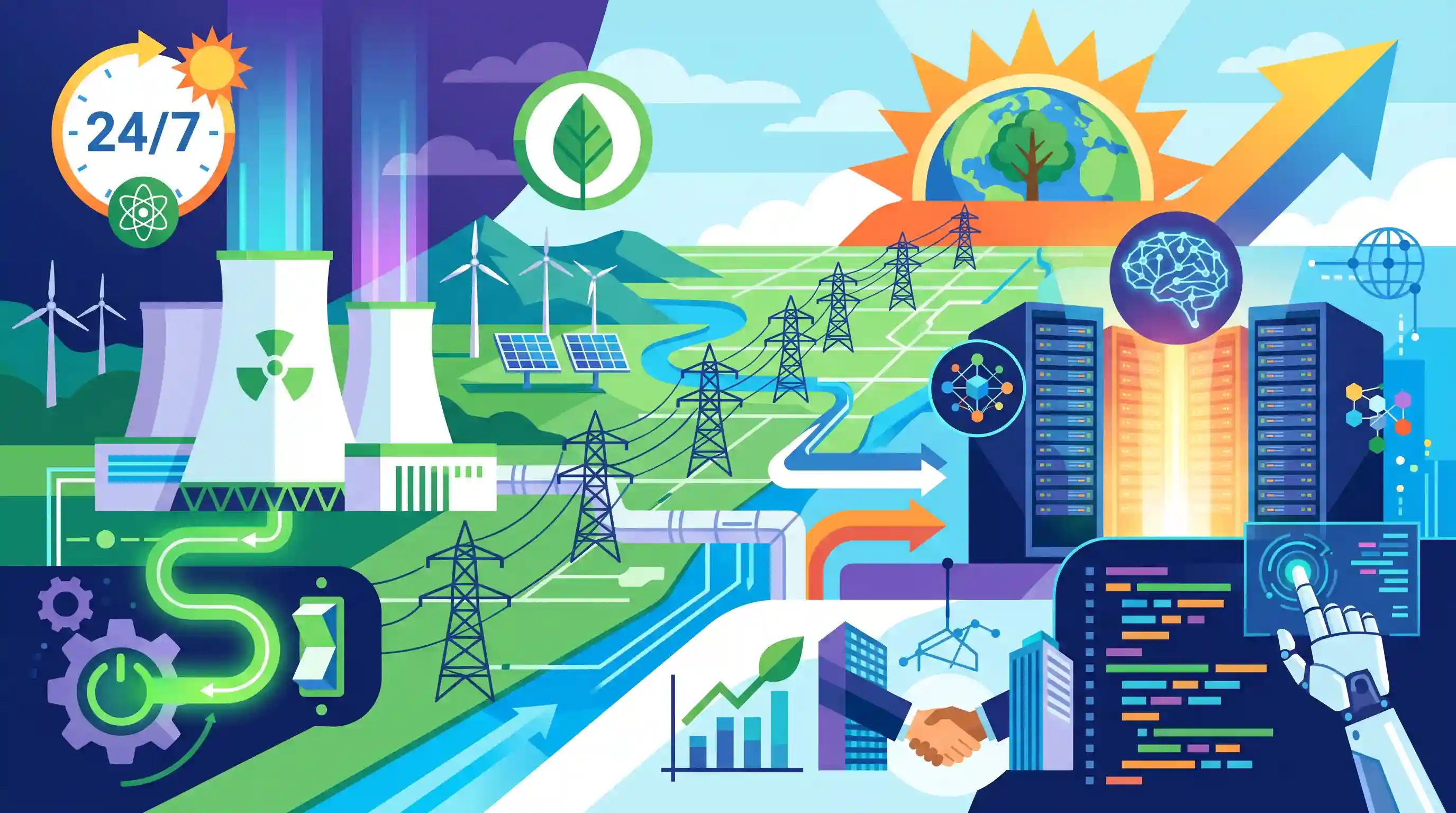
Why It Matters
The article bridges three critical UPSC GS3 topics: emerging technology (AI), energy security, and environmental sustainability. It highlights the often-ignored environmental cost of AI and data centers, demonstrating how massive computational requirements are reshaping the global energy mix and reviving the debate around nuclear power's role as a necessary 'green' baseload energy source.
Summary
Google has announced a partnership with NextEra Energy to restart operations at the Duane Arnold nuclear power plant in Iowa by 2029, securing a 25-year power purchase agreement. This strategic move highlights the massive energy consumption associated with the rapid growth of Artificial Intelligence (AI) data centers. Tech giants are increasingly looking toward nuclear energy as a critical source of reliable, 24/7 carbon-free electricity to meet their corporate sustainability and net-zero goals while powering resource-intensive AI infrastructure. This trend is further evidenced by a similar recent agreement between Microsoft and Constellation Energy to revive a reactor at the historic Three Mile Island nuclear facility.
Key Points
- Google has signed a 25-year power purchase agreement with NextEra Energy to restart the Duane Arnold Energy Center in Iowa by 2029.
- This revival is primarily driven by the massive, uninterrupted electricity demands of Google's expanding Artificial Intelligence (AI) infrastructure and data centers.
- The International Energy Agency (IEA) projects that electricity consumption by data centers globally could double by 2030, underscoring the energy-intensive nature of AI.
- Major tech firms, including Microsoft (which recently signed a deal to restart Three Mile Island), are increasingly turning to nuclear energy because it provides reliable, 24/7 carbon-free baseload power, unlike intermittent renewables like solar and wind.
- Google is also exploring future nuclear technologies, having partnered with Elementl Power to back the development of advanced nuclear power plants.
Important Terms
International Energy Agency (IEA)

An autonomous intergovernmental organization established in 1974 under the OECD framework to ensure global energy security and provide policy guidance and data analysis for the clean energy transition.
UPSC context
GS Paper 2 (International Institutions) and Paper 3 (Energy Security). Tests knowledge of global energy governance and policy reports like World Energy Outlook.
Power Purchase Agreement (PPA)
A long-term legal contract between an electricity producer and a buyer (off-taker) at a pre-agreed price. It provides financial certainty for developers and ensures stable, long-term energy supply for consumers.
UPSC context
GS Paper 3 (Economy, Infrastructure). Vital for understanding energy sector financing, regulatory frameworks, and the viability of large-scale renewable or nuclear projects.
Baseload Power
The minimum amount of electricity a utility must provide to the grid to meet constant demand. Nuclear power serves as a reliable, 24/7 baseload source compared to intermittent solar or wind.
UPSC context
GS Paper 3 (Science & Technology, Energy). Tests understanding of grid stability and the technological requirements for powering continuous-operation infrastructure like AI data centers.
Small Modular Reactors (SMRs)
Advanced nuclear reactors with a power capacity of up to 300 MW per unit. They are modular, factory-built, and designed for easier deployment near high-demand hubs like industrial zones or data centers.
UPSC context
GS Paper 3 (Science & Technology). A high-priority topic for nuclear energy diversification, civil nuclear cooperation, and India's Nuclear Energy Mission goals.
Net-Zero Emissions
A target state where greenhouse gas emissions are balanced by their removal from the atmosphere. It is the central goal of the Paris Agreement and corporate sustainability strategies.
UPSC context
GS Paper 3 (Environment & Climate Change). Relates to India’s 'Panchamrit' commitments and the transition of the IT sector toward carbon-neutral operations.
Prelims Trap
Small Modular Reactors (SMRs) utilize nuclear fusion to provide clean, waste-free energy for AI data centers.
Tech giants are investing in SMRs, which are advanced nuclear FISSION reactors, not fusion. While safer and smaller, they still rely on splitting atoms and produce radioactive waste.
Static Concepts Connected
What is the difference between 'Baseload' and 'Peaking' power plants?
- Baseload Power: Provides a continuous, uninterrupted supply of electricity to meet the minimum grid demand (e.g., Nuclear, Coal).
- Peaking Power: Designed to quickly ramp up and supply electricity during periods of maximum grid demand (e.g., Gas turbines, Pumped Hydro).
- Renewable Intermittency: Sources like solar and wind cannot serve as baseload without massive battery storage due to their reliance on weather.
What are the key characteristics of Small Modular Reactors (SMRs)?
- Capacity: Generates up to 300 MW(e) per unit, which is roughly one-third of the generating capacity of traditional nuclear power reactors.
- Modularity: Systems and components are factory-assembled and transported as a unit to a location for installation, drastically reducing capital costs.
- Passive Safety: Relies on natural physical phenomena like circulation and gravity to shut down during emergencies, minimizing need for human intervention.
Cross-Topic Patterns
AI's Carbon Footprint vs Climate Goals
The massive energy footprint of LLMs directly challenges corporate ESG and global net-zero commitments, creating a tension between digital growth and climate mitigation (e.g., India's Panchamrit goals).
SMRs and India's Nuclear Strategy
India is exploring SMRs and private-sector partnerships (e.g., NTPC) to complement its traditional three-stage nuclear program, aiming to replace coal baseload without destabilizing the grid.

The intersection of AI's massive energy demand, grid baseload stability, and Small Modular Reactors (SMRs) is highly probable for 2026.
Linked PYQs · 3
Linked PYQs · 3
- 2023MainsGS3
Introduce the concept of Artificial Intelligence (AI). How does Al help clinical diagnosis? Do you perceive any threat to privacy of the individual in the use of Al in healthcare?
- 2020MainsGS3
Describe the benefits of deriving electric energy from sunlight in contrast to the conventional energy generation. What are the initiatives offered by our Government for this purpose?
- 2020PrelimsGS1
In India, why are some nuclear reactors kept under "IAEA Safeguards" while others are not?
