Limitations of HbA1c testing for diabetes management in India
Source:Indian Express ↗
Why It Matters
With diabetes imposing a massive health burden on India, recognizing the limitations of standard global diagnostic tools due to prevalent local health conditions (like anemia) is vital. It highlights the intersection of different public health challenges and underscores the need for context-specific healthcare policies and indigenous clinical guidelines to ensure effective disease management.
Summary
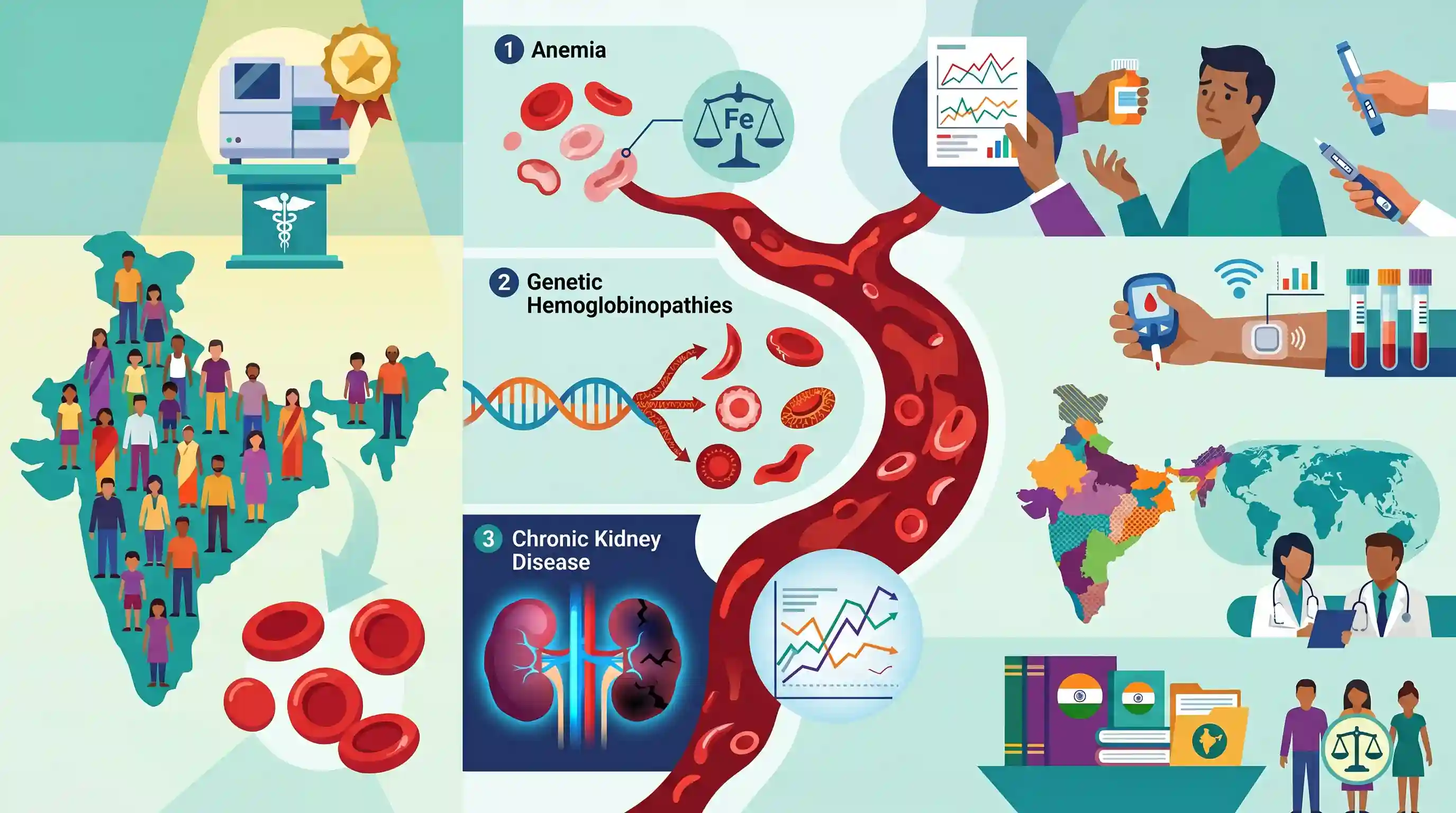
The article discusses the limitations of relying solely on the HbA1c test—the global "gold standard" for diabetes management—in the Indian context. With over 101 million diabetics, India faces unique demographic and biological challenges, including a high prevalence of iron-deficiency anemia, genetic hemoglobinopathies (such as thalassemia), and chronic kidney disease. These underlying conditions alter the lifespan and structure of red blood cells, leading to falsely skewed HbA1c results. Consequently, over-reliance on this single metric can cause widespread misdiagnosis and improper treatment. The situation underscores the necessity for context-specific healthcare policies and localized clinical guidelines that combine HbA1c with alternative diagnostics, like fasting blood sugar tests or Continuous Glucose Monitoring (CGM).
Key Points
- The HbA1c test, which measures average blood glucose over 2-3 months by assessing sugar-coated hemoglobin, is globally considered the gold standard for diabetes management.
- In India, the test\'s accuracy is significantly compromised by the high prevalence of iron-deficiency anemia, genetic hemoglobinopathies (like thalassemia), and chronic kidney disease, which alter red blood cell lifespans.
- Inaccurate HbA1c readings can lead to misdiagnosis, resulting in either dangerous over-medication (causing hypoglycemia) or inadequate disease management for India\'s 101 million diabetics.
- Medical experts suggest that HbA1c should not be used in isolation; it must be correlated with traditional fasting/post-prandial blood glucose tests or Continuous Glucose Monitoring (CGM) systems.
- The issue highlights the critical need for localized, India-specific clinical guidelines that account for the unique biological and demographic profile of the population, rather than relying solely on global standards.
Important Terms
National Programme for Prevention and Control of Non-Communicable Diseases (NP-NCD)

A central health scheme (renamed from NPCDCS) focused on strengthening infrastructure, early diagnosis, and management of chronic diseases like diabetes and cancer through NCD cells and clinics.
UPSC context
GS Paper II (Health/Governance). Tests understanding of government interventions to tackle India's rising NCD burden.
Anaemia Mukt Bharat (AMB)
A flagship health initiative launched in 2018 using a '6x6x6 strategy' to accelerate the reduction of anemia among women, children, and adolescents through multi-sectoral interventions.
UPSC context
GS Paper II (Social Justice/Health). Relevant for questions on maternal-child health and nutritional security.
Indian Council of Medical Research (ICMR)
India's apex body for biomedical research, responsible for formulating health guidelines, coordinating clinical trials, and providing scientific evidence for national health policy and diagnostic standards.
UPSC context
GS Paper III (Science & Tech/Health). Essential for understanding India's institutional framework for medical research.
HbA1c (Glycated Hemoglobin)
A blood test measuring average glucose levels over 2-3 months. In India, its reliability is often compromised by high rates of iron-deficiency anemia and genetic blood disorders.
UPSC context
GS Paper III (Science & Tech). Tests knowledge of diagnostic technologies and their biological limitations.
Hemoglobinopathies
Inherited genetic blood disorders, such as thalassemia and sickle cell disease, which alter hemoglobin structure and red blood cell lifespan, significantly impacting public health and diagnostic accuracy.
UPSC context
GS Paper II (Health). Significant for policies on tribal health and rare genetic disease management.
Non-communicable Diseases (NCDs)
Chronic, non-infectious conditions like diabetes and heart disease driven by genetics, lifestyle, and environment; they account for the majority of deaths in India's modern epidemiological transition.
UPSC context
GS Paper II (Social Justice/Health). A major focus of contemporary public health policy and lifestyle interventions.
Prelims Trap
"HbA1c test directly measures the concentration of free glucose circulating in the blood plasma."
HbA1c measures glycated hemoglobin inside red blood cells, not free plasma glucose. It reflects a 2-3 month average because of the 120-day lifespan of red blood cells.
Static Concepts Connected
What is the biological mechanism behind the HbA1c test?
- Glycation process: It measures the percentage of hemoglobin proteins within red blood cells that have become chemically coated with sugar.
- 120-day window: It provides a 2-3 month average of blood sugar levels because a typical red blood cell lives for approximately 120 days.
- RBC vulnerability: Any condition that alters the natural lifespan of red blood cells (like anemia, thalassemia, or CKD) will artificially skew the glycated hemoglobin ratio.
What are India's major frameworks for tackling these intersecting diseases?
- NP-NCD mandate: The National Programme for Prevention and Control of Non-Communicable Diseases (NP-NCD) mandates screening for diabetes, hypertension, and common cancers.
- Anaemia Mukt Bharat: A strategy using a 6x6x6 framework (beneficiaries, interventions, institutional mechanisms) to reduce the exact iron-deficiency anemia that skews Indian HbA1c results.
Cross-Topic Patterns
Anemia's ripple effect on NCDs
High prevalence of iron-deficiency anemia (targeted by Anaemia Mukt Bharat) actively undermines diabetes diagnostic accuracy, linking nutritional deficiency outcomes to metabolic disease mismanagement.
Western standards vs. Indian genetics
Reflects a broader public health challenge where imported clinical "gold standards" fail against South Asia's unique demographic realities and endemic conditions like hemoglobinopathies.

Expect a 2026 Science & Tech question linking the mechanism of HbA1c (glycation, 120-day RBC lifespan) to anemia or thalassemia.
Linked PYQs · 4
Linked PYQs · 4
- 2023PrelimsGS1
Consider the following statements in the context of interventions being undertaken under Anaemia Mukt Bharat Strategy: 1. It provides prophylactic calcium supplementation for pre-school children, adolescents and pregnant women. 2. It runs a campaign for delayed cord clamping at the time of child-birth. 3. It provides for periodic deworming to children and adolescents. 4. It addresses non-nutritional causes of anaemia in endemic pockets with special focus on malaria, hemoglobinopathies and fluorosis. How many of the statements given above are correct?
- 2024MainsGS2
In a crucial domain like the public healthcare system the Indian State should play a vital role to contain the adverse impact of marketisation of the system. Suggest some measures through which the State can enhance the reach of public healthcare at the grassroots level.
- 2017MainsGS3
Stem cell therapy is gaining popularity in India to treat a wide variety of medical conditions including Leukaemia, Thalassemia, damaged cornea and severe burns. Describe briefly what stem cell therapy is and what advantages it has over other treatments?
- 2023MainsGS3
Introduce the concept of Artificial Intelligence (AI). How does Al help clinical diagnosis? Do you perceive any threat to privacy of the individual in the use of Al in healthcare?
