Strategic failure of maximum pressure sanctions against Iran
Source:The Hindu ↗
Why It Matters
The US-Iran conflict directly impacts India's national interests through potential disruptions in crude oil supplies, diaspora security in the Middle East, and regional connectivity projects (like Chabahar Port). Understanding the geopolitical dynamics of the Persian Gulf is crucial for both Mains (GS2 International Relations) and Prelims (geography and international affairs).
Summary
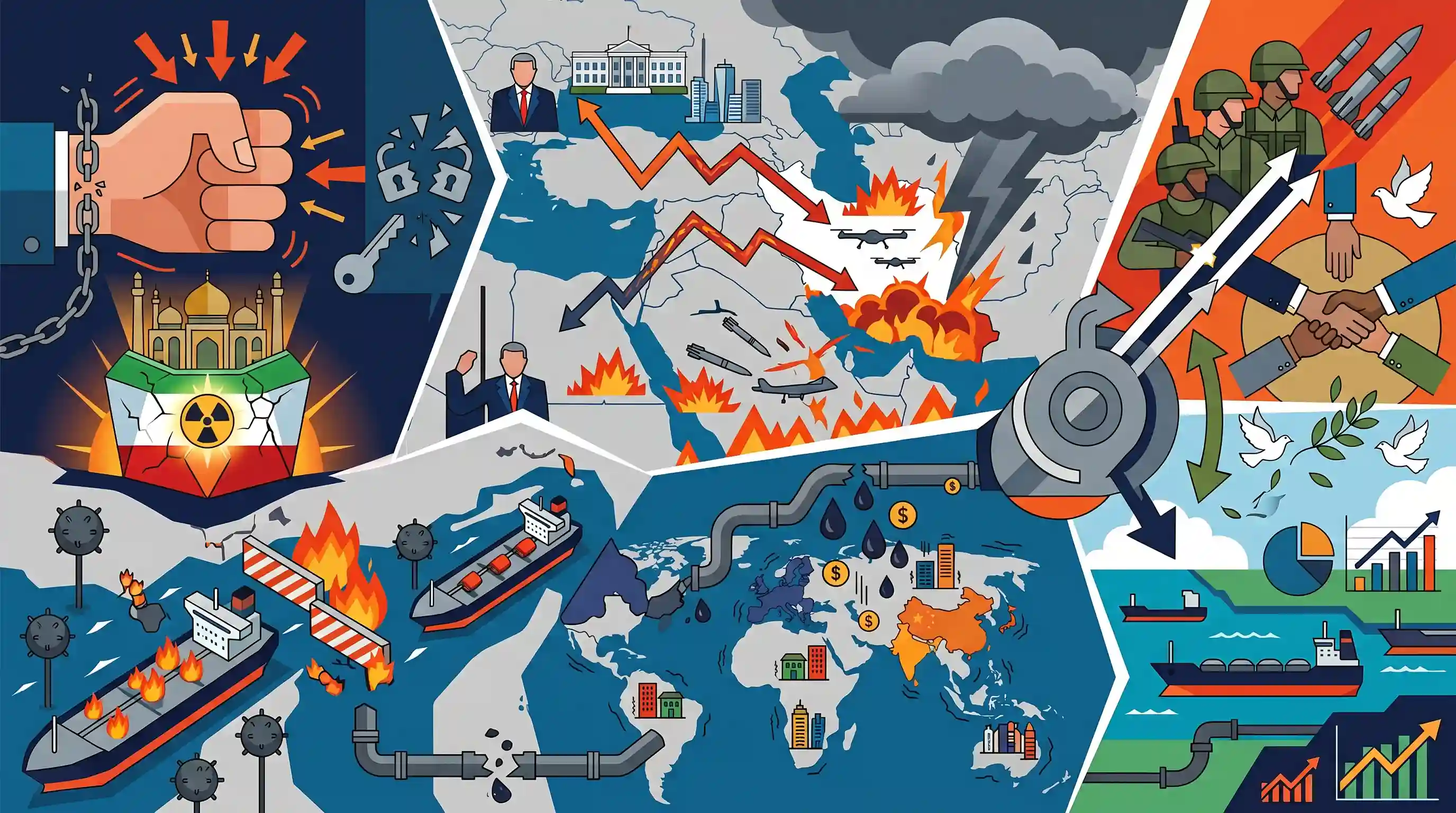
The editorial criticizes the current US strategy towards Iran, arguing that the abandonment of the Joint Comprehensive Plan of Action (JCPOA) and reliance on a 'maximum pressure' sanctions regime have backfired. Instead of containing Iran, these policies have spurred its nuclear program and fueled regional instability. The growing cycle of retaliatory actions involving the US, Israel, and Iran threatens to escalate into a full-scale Middle Eastern war. Such a conflict would have devastating consequences for global energy security, potentially disrupting oil supplies through critical chokepoints like the Strait of Hormuz. The article concludes that the US must pivot from military deterrence back to diplomacy to prevent a catastrophic regional fallout and protect international economic stability.
Key Points
- The US strategy of 'maximum pressure' and sanctions against Iran has failed to curb its nuclear advancements, leading instead to increased uranium enrichment.
- The escalation of military tensions and tit-for-tat strikes between Israel/US and Iran risks igniting a broader regional conflict in the Middle East.
- A full-scale regional war would pose severe threats to global energy security, particularly by endangering critical maritime trade routes like the Strait of Hormuz and the Persian Gulf.
- The editorial suggests that continuous reliance on military posturing and deterrence is counterproductive, urging a swift return to diplomatic negotiations to restore regional stability.
Important Terms
Joint Comprehensive Plan of Action (JCPOA)

A 2015 agreement between Iran and P5+1 powers (US, UK, China, Russia, France, Germany) that restricted Iran’s nuclear program in exchange for lifting international economic sanctions.
UPSC context
GS Paper II (International Relations). Vital for understanding West Asian geopolitics and impact on India's energy and connectivity projects.
International Atomic Energy Agency (IAEA)
An autonomous international organization within the UN system that promotes peaceful nuclear energy use and verifies compliance with non-proliferation treaties through rigorous site inspections.
UPSC context
GS Paper II (International Institutions). Important for exams regarding global nuclear governance and India’s civil nuclear agreements.
Nuclear Non-Proliferation Treaty (NPT)
A 1968 treaty aimed at preventing nuclear weapons spread, promoting peaceful atomic energy, and achieving disarmament. India remains a non-signatory, viewing it as discriminatory.
UPSC context
GS Paper II. Tests knowledge of global non-proliferation regimes and India’s long-standing strategic autonomy and disarmament principles.
Strait of Hormuz
A narrow maritime chokepoint between Iran and Oman connecting the Persian Gulf to the Arabian Sea. It handles approximately 20% of the world's daily oil consumption.
UPSC context
GS Paper I (Geography) & III (Economy). Critical for India’s energy security, as most crude imports transit this volatile region.
Maximum Pressure Policy
A unilateral US diplomatic and economic strategy initiated in 2018 using heavy sanctions to isolate Iran and force renegotiation of its nuclear and missile programs.
UPSC context
GS Paper II. Tests understanding of how major power shifts and unilateral sanctions affect India's regional interests like Chabahar Port.
Prelims Trap
"The Strait of Hormuz is a critical maritime chokepoint connecting the Persian Gulf to the Red Sea."
The Strait of Hormuz connects the Persian Gulf to the Gulf of Oman/Arabian Sea. The Bab el-Mandeb is the strait that connects the Red Sea to the Gulf of Aden.
Static Concepts Connected
What is the IAEA Additional Protocol?
- Voluntary agreement: It is a voluntary agreement granting the IAEA broader rights to access information and nuclear sites.
- Intrusive inspections: Allows unannounced, short-notice inspections of both declared and undeclared nuclear facilities to verify peaceful use.
- India's status: India has signed an India-specific Additional Protocol covering its civilian nuclear facilities, separating them from military ones.
Which key maritime chokepoints control Middle Eastern oil trade?
- Strait of Hormuz: Connects the Persian Gulf to the Gulf of Oman; bordered by Iran, Oman, and the UAE. Handles ~20% of global oil.
- Bab el-Mandeb: Connects the Red Sea to the Gulf of Aden (Arabian Sea); bordered by Yemen, Djibouti, and Eritrea. Crucial for Suez transit.
Cross-Topic Patterns
Chabahar Port & INSTC viability
US sanctions on Iran routinely test India's strategic autonomy, forcing delicate balancing acts to shield the Chabahar port project and the International North-South Transport Corridor (INSTC).
Energy Security & Macroeconomics
Disruptions in the Strait of Hormuz spike global crude oil prices, which directly widens India's Current Account Deficit (CAD) and imports inflation into the domestic economy.

Expect a 2026 geography question mapping Persian Gulf chokepoints, or a multi-statement IR question on IAEA's Additional Protocol.
Linked PYQs · 3
Linked PYQs · 3
- 2018MainsGS2
In what ways would the ongoing US-Iran Nuclear Pact Controversy affect the national interest of India? How should India respond to this situation?
- 2025MainsGS2
"Energy security constitutes the dominant kingpin of India's foreign policy, and is linked with India's overarching influence in Middle Eastern countries.” How would you integrate energy security with India's foreign policy trajectories in the coming years?
- 2024PrelimsGS1
Consider the following statements : Statement-I : Sumed pipeline is a strategic route for Persian Gulf oil and natural gas shipments to Europe. Statement-II : Sumed pipeline connects the Red Sea with the Mediterranean Sea. Which one of the following is correct in respect of the above statements?
