Goa Government Drops Anti Religious Conversion Bill After Pushback
Source:Indian Express ↗
ఇది ఎందుకు ముఖ్యం
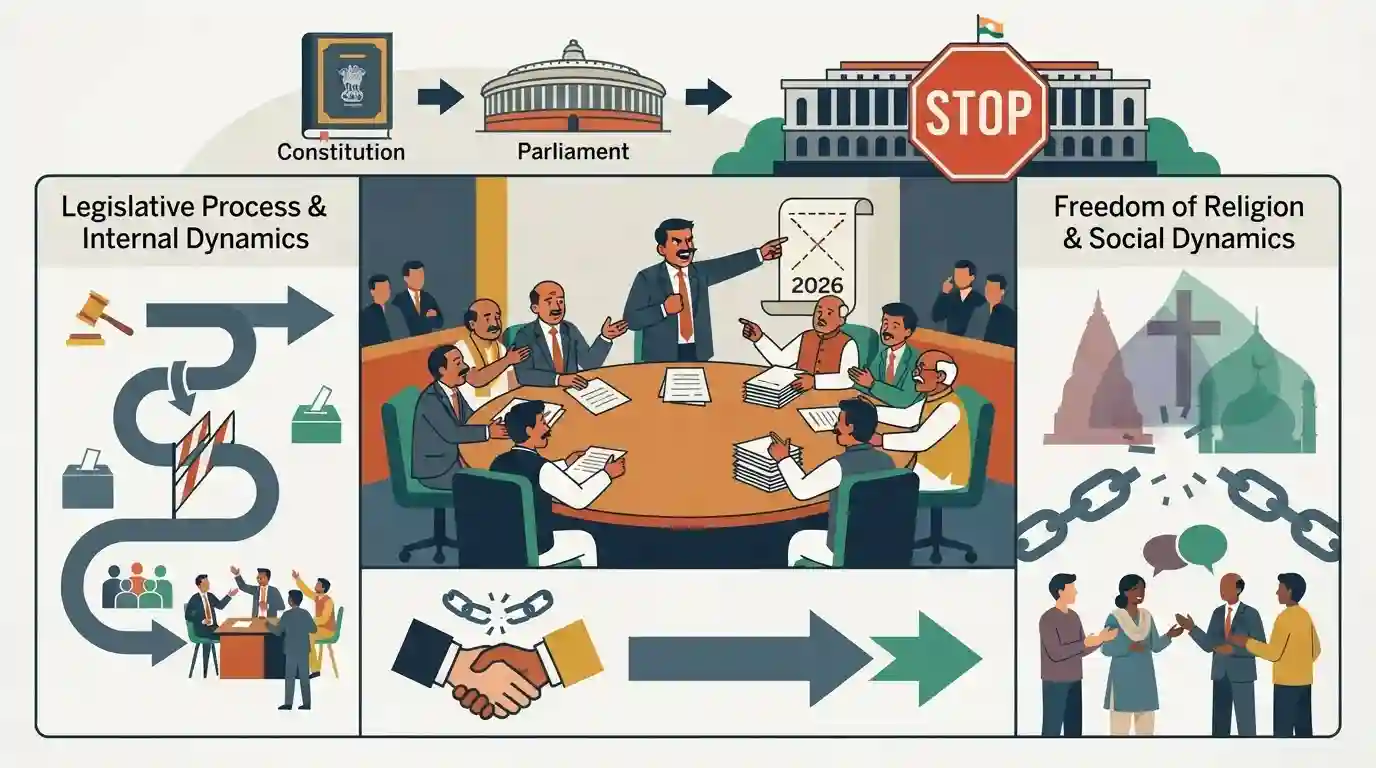
It highlights intra-party dynamics, the executive-legislature interface at the state level, and the contentious policy debates surrounding freedom of religion and anti-conversion laws in India.
సారాంశం
The Goa government decided to drop the proposed Anti-Religious Conversion Bill 2026 after facing considerable internal pushback from BJP MLAs. The move highlights the complex political and social dynamics surrounding freedom of religion and legislation on religious conversions in India.
ముఖ్య అంశాలు
- The Goa government dropped the proposed Anti-Religious Conversion Bill 2026 following strong internal pushback and resistance from BJP MLAs and local community leaders.
- Chief Minister Pramod Sawant had initially indicated legislative action, but concerns over communal harmony and political fallout led to the bill being shelved.
- Anti-conversion legislation remains a sensitive issue across several Indian states, intersecting with constitutional guarantees of freedom of religion under Article 25.
ముఖ్యమైన పదాలు
Anti-Religious Conversion Bill 2026

A proposed legislation intended to penalize forced or fraudulent religious conversions with severe penalties, which was dropped by the Goa government following internal political resistance.
UPSC context
Relevant for GS Paper II (Indian Constitution — Features, Fundamental Rights, Secularism, and State Legislature dynamics).
Goa Government
The governing executive body of Goa, which initially cleared and subsequently shelved a controversial anti-conversion bill due to legislative pushback.
UPSC context
Relevant for GS Paper II under State Legislatures — Structure, Functioning, Conduct of Business, and Legislative Powers.
ప్రిలిమ్స్ ఉచ్చు
State legislatures lack constitutional competence to enact laws regulating religious conversions as it falls under Union List subjects.
Aspirants often assume religious conversion is exclusively in the Union List because it touches on secularism and civil code principles, but state legislatures frequently enact these under 'Public Order'.
అనుసంధానమైన స్థిర భావనలు
What is the constitutional scope of freedom of religion under Article 25 and its judicial limits?
- Scope of Article 25: Article 25(1) guarantees freedom of conscience and the right freely to profess, practise, and propagate religion, subject to public order, morality, and health.
- Judicial Precedent: In Rev. Stainislaus v. State of Madhya Pradesh (1977), the Supreme Court held that 'propagate' does not include a right to convert another person.
- Legislative Competence: State anti-conversion legislation is typically enacted under 'Public Order' (Entry 1, State List of the Seventh Schedule).
అంతర-అంశ నమూనాలు
State Legislation vs. Federal Fundamental Rights
State-level anti-conversion laws intersect with federal dynamics, as police powers over 'Public Order' (State List) meet federal fundamental rights scrutiny under Articles 21 and 25.
Intra-party Dissent and Legislative Governance
Intra-party dissent stalling legislative proposals highlights the checks within party structures independent of judicial review or floor opposition.

Article 25 limits on 'propagate' (Rev. Stainislaus case) and State List competence over public order are prime match-the-column themes.
అనుసంధాన PYQలు · 1
అనుసంధాన PYQలు · 1
- 2024MainsGS2
Discuss India as a secular state and compare with the secular principles of the US constitution.
