GMCH 32 Digital Health Initiative for E Hospital Records
Source:Indian Express ↗
Why It Matters
Demonstrates the practical implementation of e-governance and digital public goods in the health sector. It serves as a tangible example of how digital health missions (like ABDM) can improve the quality, transparency, and efficiency of public health services at the grassroots level.
Summary
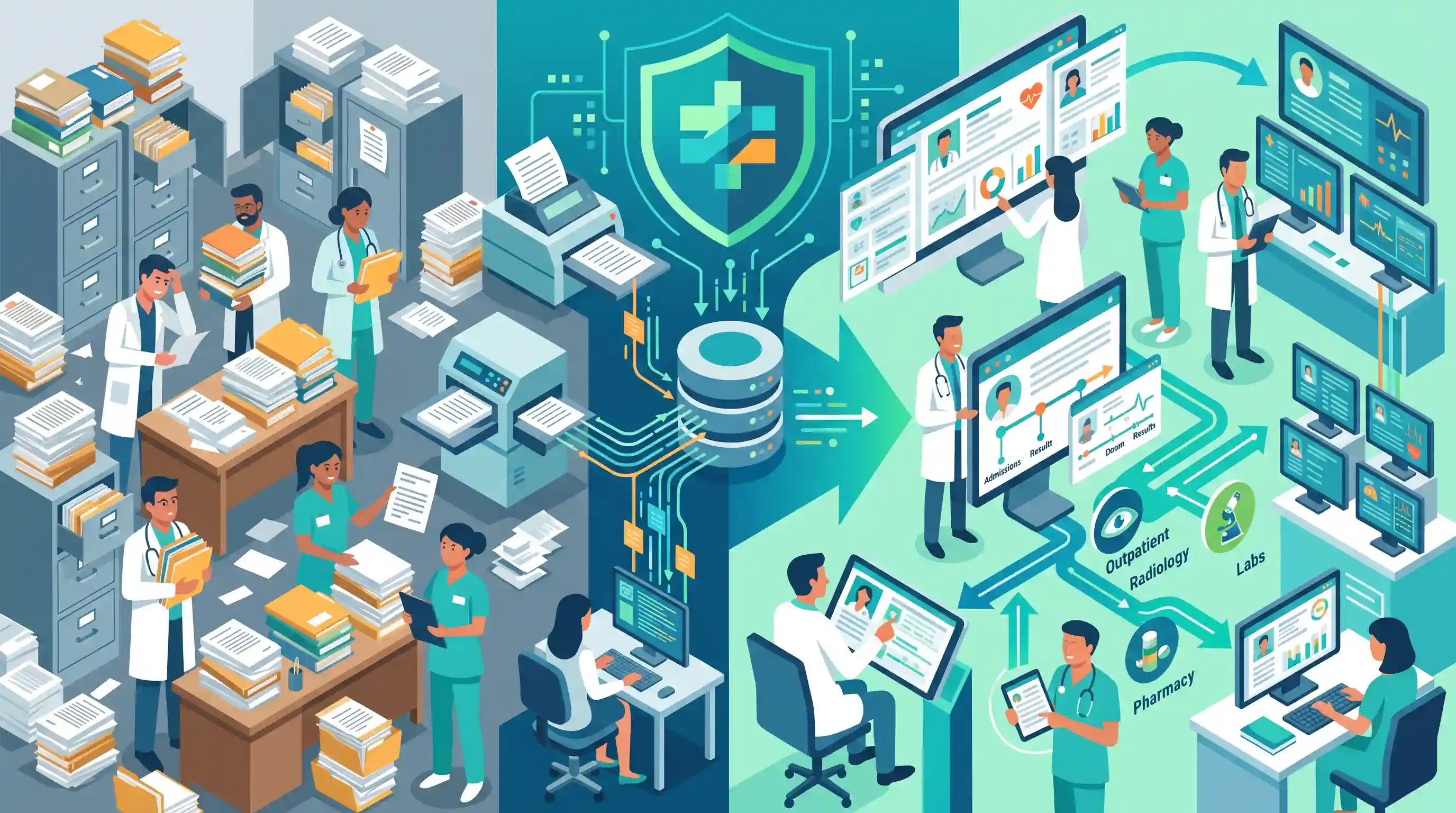
The Government Medical College and Hospital (GMCH-32) in Chandigarh is set to implement a next-generation e-hospital system, aiming to completely digitise all clinical data. This transition to electronic health records (EHR) is designed to streamline hospital operations, reduce reliance on physical paperwork, and enable seamless access to patient medical histories across various departments. The initiative is a significant step towards improving e-governance in public healthcare service delivery, mirroring the broader objectives of the Ayushman Bharat Digital Mission (ABDM) to create an integrated digital health ecosystem.
Key Points
- GMCH-32 in Chandigarh is upgrading to a next-generation e-hospital system to digitise all clinical data comprehensively.
- The implementation of electronic health records (EHR) will allow healthcare professionals to access patient medical histories seamlessly across different departments.
- The digitisation drive aims to enhance hospital administration efficiency, streamline patient care, and significantly reduce physical paperwork.
- This modernization effort aligns with the national push for e-governance in healthcare under the Ayushman Bharat Digital Mission.
Important Terms
Ayushman Bharat Digital Mission (ABDM)

A national mission launched in 2021 to create a unified digital health ecosystem, integrating health IDs and digital records across the country.
UPSC context
GS Paper 2: Social Justice/Health and GS Paper 3: E-governance; crucial for Digital Public Infrastructure topics.
e-Hospital Initiative
A cloud-based Open Source Hospital Management Information System developed by NIC to digitize internal hospital workflows like registration, billing, and lab reports.
UPSC context
GS Paper 2: E-governance and Public Service Delivery; represents the practical application of ICT in public health.
Electronic Health Records (EHR)
A systematized digital version of a patient’s complete medical history, including diagnoses, medications, and laboratory results, designed for secure portability across healthcare providers.
UPSC context
GS Paper 3: Science and Technology/IT; key to data privacy debates and digital healthcare transformation.
Ayushman Bharat Health Account (ABHA)
A unique 14-digit identification number used to link a citizen's health records across various healthcare providers within the ABDM ecosystem.
UPSC context
GS Paper 2: Social Justice; essential for understanding the 'patient-centric' approach in digital health policy.
Hospital Management Information System (HMIS)
An integrated software system designed to manage all aspects of a hospital's operation, including clinical, administrative, financial, and legal data.
UPSC context
GS Paper 2: Governance; relevant for studies on administrative efficiency and public healthcare management.
E-governance in Healthcare
The application of Information and Communication Technology (ICT) to improve health service delivery, patient data management, and public health administration.
UPSC context
GS Paper 2: E-governance; tested as a major pillar of the Digital India program.
Prelims Trap
Creating an Ayushman Bharat Health Account (ABHA) is mandatory for patients to access treatment in e-Hospital facilities.
Participation in the Ayushman Bharat Digital Mission (ABDM) and generating an ABHA ID are strictly voluntary for both citizens and healthcare facilities.
Static Concepts Connected
What are the core digital building blocks of the Ayushman Bharat Digital Mission (ABDM)?
- ABHA Number: A voluntary 14-digit identifier used to link, access, and share citizens' health records securely across different healthcare providers.
- Digital Registries: Health Facility Registry (HFR) and Healthcare Professionals Registry (HPR) act as verified, national single sources of truth for medical infrastructure and personnel.
- Unified Health Interface: An open network designed to enable seamless interoperability in health services, functioning similarly to UPI for digital payments.
How does the Digital Personal Data Protection (DPDP) Act regulate digital health records?
- Data Fiduciary: Hospitals and healthcare facilities act as fiduciaries, making them legally accountable for determining the purpose and means of processing patient data.
- Explicit Consent: Digitized medical records require clear, informed, and withdrawable consent from patients prior to processing or third-party sharing.
Cross-Topic Patterns
DPI framework applied to healthcare
ABDM utilizes India's Digital Public Infrastructure (DPI) model—mirroring UPI in finance—to create interoperable networks linking citizen identity to unified health registries and records.
EHR vs. Data Privacy laws
The push for digitized clinical data tests the enforcement of the DPDP Act 2023, specifically regarding patient consent architecture, data localization, and data fiduciary obligations of public hospitals.

Expect a 2026 prelims question contrasting the voluntary nature of ABDM/ABHA against mandatory enrollments, focusing on NHA's exact role.
Linked PYQs · 3
Linked PYQs · 3
- 2022PrelimsGS1
With reference to Ayushman Bharat Digital Mission, consider the following statements: 1. Private and public hospitals must adopt it. 2. As it aims to achieve universal health coverage, every citizen of India should be part of it ultimately. 3. It has seamless portability across the country. Which of the statements given above is/are correct?
- 2024MainsGS2
e-governance is not just about the routine application of digital technology in service delivery process. It is as much about multifarious interactions for ensuring transparency and accountability. In this context evaluate the role of the 'Interactive Service Model' of e-governance.
- 2024MainsGS2
In a crucial domain like the public healthcare system the Indian State should play a vital role to contain the adverse impact of marketisation of the system. Suggest some measures through which the State can enhance the reach of public healthcare at the grassroots level.
