Climate Change and Pollution Impacts on Ecosystem Pigmentation
Source:The Hindu ↗
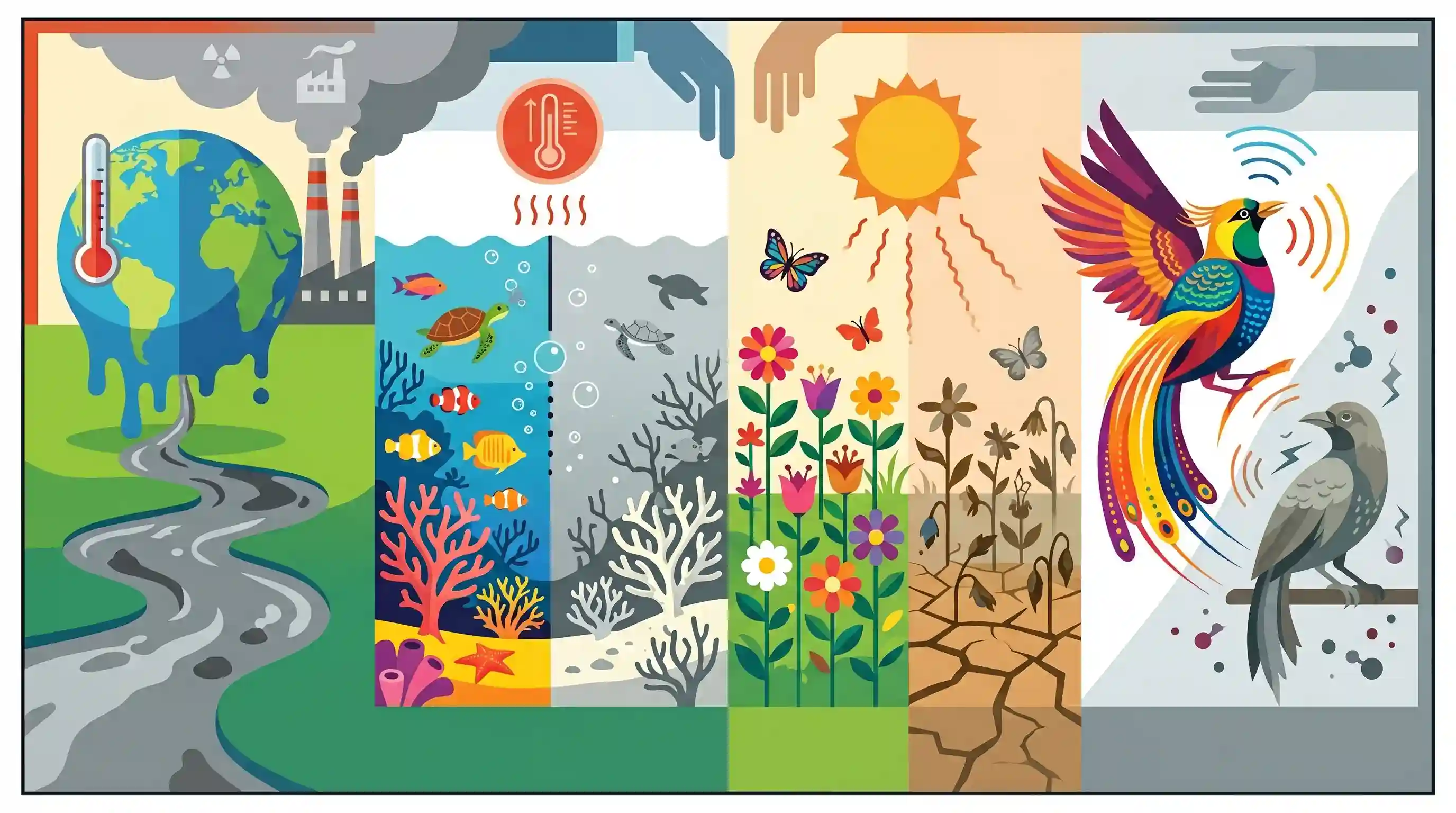
Why It Matters
The visual degradation of natural ecosystems is an important qualitative indicator of the broader impacts of climate change and pollution, relevant to GS3 Environment and Biodiversity topics. It highlights the interconnectedness of abiotic stress (temperature, pollution) and biotic responses (pigmentation, survival mechanisms).
Summary
Global warming and environmental pollution are not only threatening ecosystems but are also visibly stripping nature of its vibrant colors. Rising temperatures are a primary driver of coral bleaching, which turns colorful reefs pale and stark as symbiotic algae are expelled. Additionally, heat stress and changing climates affect the chemical processes in flora and fauna, resulting in duller flower pigmentation and altered animal coloration. Combined with chemical pollutants that impair visual signaling essential for mating and survival, this loss of color serves as a stark warning of the profound, widespread ecological damage being caused by human activities.
Key Points
- Global warming and rising sea temperatures are causing widespread coral bleaching, stripping reefs of their vibrant colors and threatening marine biodiversity.
- Temperature stress and changing climatic conditions alter the chemical pathways responsible for plant pigmentation, leading to duller floral colors that can disrupt natural pollination networks.
- Chemical pollution and habitat degradation obscure visual signaling used by animals, impairing crucial behaviors such as mating displays, camouflage, and predator evasion.
- The collective dulling of nature's colors serves as a visible indicator of broader ecological distress driven by anthropogenic climate change and environmental pollution.
Important Terms
Coral Bleaching

A stress response where corals expel their symbiotic algae (zooxanthellae) due to environmental triggers like rising temperatures, turning the reefs white and making them vulnerable to starvation.
UPSC context
GS Paper III: Environment & Ecology; tests understanding of climate change impacts on marine ecosystems and biodiversity.
Zooxanthellae
Microscopic, photosynthetic algae living symbiotically within coral tissues; they provide corals with up to 90% of their energy and are responsible for their vibrant pigmentation.
UPSC context
GS Paper III: Environment; relevant for questions on marine biology, symbiosis, and coral reef conservation.
Ocean Acidification
The reduction in ocean pH over time, primarily caused by the uptake of atmospheric CO2, which reacts with seawater to form carbonic acid, hindering marine calcification.
UPSC context
GS Paper III: Environmental Pollution/Degradation; tests knowledge of the chemical consequences of carbon emissions.
Bio-indicators
Living organisms (like corals, lichens, or frogs) whose population or physiological status serves as a measurable signal for the health and quality of their environment.
UPSC context
GS Paper III: Biodiversity & Conservation; tests ability to identify ecological signals of environmental degradation.
Intergovernmental Panel on Climate Change (IPCC)
An intergovernmental body (UNEP & WMO) that provides periodic scientific assessments on climate change, its risks, and options for adaptation and mitigation through its Assessment Reports.
UPSC context
GS Paper III: International Institutions/Climate Change; crucial for understanding global climate policy and governance.
Biodiversity
The variety of plant and animal life in a particular habitat or in the world, often serving as a primary measure of ecosystem health and resilience.
UPSC context
GS Paper III: Biodiversity Conservation; central theme for environmental protection and sustainable development.
Prelims Trap
"Selfing syndrome in plants increases their genetic resilience against climate change."
Selfing (self-pollination) ensures reproduction when pollinators decline, but it drastically reduces genetic diversity. This makes the species more vulnerable to climate stress, not more resilient.
Static Concepts Connected
What causes coral bleaching and how does the symbiotic relationship work?
- Symbiotic Algae: Corals host microscopic photosynthetic algae (zooxanthellae) in their tissues, which provide up to 90% of the coral's nutrients and its vibrant color.
- Bleaching Mechanism: Under extreme thermal or pollution stress, corals expel these algae, revealing their stark white calcium carbonate skeleton.
- Survival prospects: Bleached corals are not immediately dead. However, they are highly vulnerable and will starve if conditions do not normalize enough for the algae to return.
What are bioindicators and how do they signal environmental degradation?
- Definition: These are living organisms whose presence, absence, or condition provides early warnings about the health of an ecosystem or the presence of pollution.
- Classic examples: Lichens are classic bioindicators highly sensitive to air pollution (especially sulfur dioxide), while corals indicate ocean temperature anomalies.
- Phenotypic shifts: Changes in flora/fauna pigmentation, early flowering, or altered behaviors serve as qualitative bioindicators of changing micro-climates.
Cross-Topic Patterns
Climate Change & Food Security
The temporal mismatch between plant flowering and pollinator arrival threatens crop yields, directly linking ecological shifts and biodiversity loss to agricultural productivity and food inflation.
Fertilizer runoff & Aquatic behavior
Agricultural runoff causes water turbidity and eutrophication. This doesn't just create hypoxic dead zones, but actively impairs visual mating and predator-evasion signaling in aquatic species.

Expect a multi-statement question testing terms like "phenological mismatch" and "selfing syndrome" in the context of climate adaptation.
Linked PYQs · 3
Linked PYQs · 3
- 2022MainsGS3
Discuss global warming and mention its effects on the global climate. Explain the control measures to bring down the level of greenhouse gases which cause global warming, in the light of the Kyoto Protocol, 1997.
- 2012PrelimsGS1
The acidification of oceans is increasing. Why is this phenomenon a cause of concern? 1. The growth and survival of calcareous phytoplankton will be adversely affected. 2. The growth and survival of coral reefs will be adversely affected. 3. The survival of some animals that have phytoplanktonic larvae will be adversely affected. 4. The cloud seeding and formation of clouds will be adversely affected. Which of the statements given above is/are correct?
- 2018PrelimsGS1
Which of the following statements best describes "carbon fertilization"?
