India has strategic opportunity to build localized AI models
Source:Indian Express ↗
Why It Matters
The push for localized AI highlights the critical next phase of digital sovereignty and inclusion. For UPSC aspirants, understanding the limitations of Western AI models and the strategic necessity of indigenous models over DPIs is crucial for essays and GS3 answers on technology, economy, and governance.
Summary
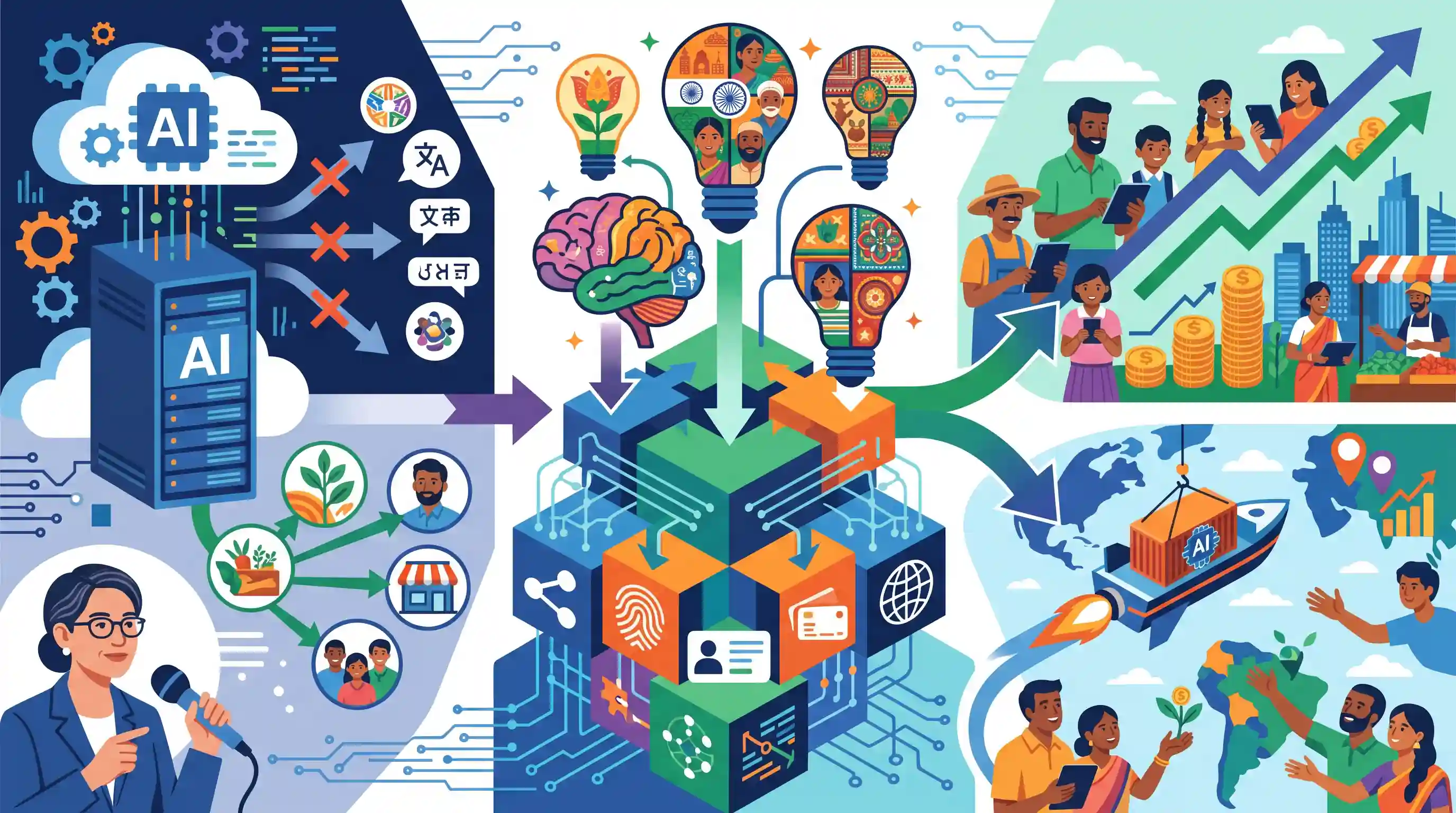
Stanford microeconomist and former Microsoft chief economist Susan Athey emphasizes that current global AI models fail to adequately customize for local contexts and languages. This presents a massive opportunity for India to lead the development of localized AI models that cater to its diverse population. By layering customized AI atop its existing Digital Public Infrastructure (DPI), India can drive inclusive digital and economic growth while potentially creating an AI framework that can be exported to other nations in the Global South.
Key Points
- Global AI architectures largely cater to uniform, Western contexts and lack the fine-grained customisation required for the cultural and linguistic diversity of regions like India.
- Professor Susan Athey highlights a massive opportunity for India to build or adapt localized AI models to serve domestic needs natively.
- India's robust Digital Public Infrastructure (DPI) provides an ideal foundation to layer localized AI, enabling more inclusive governance and economic participation.
- Developing bespoke AI models tailored to local languages and socio-economic realities could position India as a technological blueprint for the broader Global South.
Important Terms
Digital Public Infrastructure (DPI)

Shared digital systems (like Aadhaar, UPI, and DigiLocker) built on open standards to facilitate the population-scale delivery of public and private services.
UPSC context
GS 2 (E-governance) and GS 3 (IT/Economy). Evaluates India’s digital leadership and "India Stack" architecture.
Technology Indigenisation
The development, adaptation, and production of technology within a country using local resources and skills to reduce import dependency and boost self-reliance.
UPSC context
GS 3 (Science & Tech). Tests understanding of Atmanirbhar Bharat and indigenous innovation in critical sectors.
Inclusive Growth
Economic growth that is broad-based across sectors and inclusive of the large part of the country’s labor force, ensuring equitable distribution of benefits.
UPSC context
GS 3 (Economy). A core syllabus topic; tests strategies to reduce inequality and poverty.
Global South
A term representing nations in Asia, Africa, and Latin America characterized by shared colonial histories, development challenges, and a desire for global governance reform.
UPSC context
GS 2 (International Relations). Relates to India’s role as a bridge-builder and leader in South-South cooperation.
IndiaAI Mission
A comprehensive national initiative focused on democratizing compute access, fostering indigenous AI capabilities, and developing localized datasets and models for Indian languages and contexts.
UPSC context
GS 3 (Science & Tech). Relevant for questions on India’s sovereign AI strategy and ethical tech governance.
Artificial Intelligence (AI)
The simulation of human intelligence processes by computer systems, enabling machines to learn, reason, and solve complex problems.
UPSC context
GS 3 (Science & Tech). Tests awareness of emerging technologies and their socio-economic impacts.
Prelims Trap
Bhashini is an AI-driven language initiative but is not considered a part of India's Digital Public Infrastructure (DPI).
Bhashini acts as a National Public Digital Platform and is a core, foundational component of India's evolving DPI stack for linguistic inclusion.
Static Concepts Connected
What constitutes the core layers of India's Digital Public Infrastructure (DPI) stack?
- Identity Layer: Aadhaar provides foundational, verifiable biometric and demographic identity at a population scale.
- Payments Layer: UPI and AEPS enable interoperable, real-time, low-cost financial transactions and direct benefit transfers.
- Data Layer: Data Empowerment and Protection Architecture (DEPA) facilitates secure, consent-based digital data sharing (e.g., Account Aggregators).
What is the distinction between Foundational AI Models and Sovereign AI?
- Foundational Models: Large-scale neural networks trained on vast, unlabelled global datasets that can be adapted for multiple downstream tasks (e.g., GPT-4).
- Sovereign AI: A nation's capability to build AI models aligned with its localized datasets, cultural contexts, linguistic diversity, and domestic data laws.
Cross-Topic Patterns
Sovereign AI + DPDP Act 2023
Localized AI requires vast datasets for training. The DPDP Act 2023’s exemptions for processing publicly available personal data will heavily influence how indigenous models like BharatGen gather training data.
DPI Export + Global South Soft Power
Pitching AI-layered DPI to the Global South aligns with India's geopolitical strategy to counter Western tech monopolies and provide a democratic alternative to China's Digital Silk Road.

Expect a mains question linking India's 'Sovereign AI' mission with existing DPI frameworks to bridge the rural-urban digital divide.
Linked PYQs · 3
Linked PYQs · 3
- 2023MainsGS3
Introduce the concept of Artificial Intelligence (AI). How does Al help clinical diagnosis? Do you perceive any threat to privacy of the individual in the use of Al in healthcare?
- 2023MainsGS3
What is the status of digitalization in the Indian economy? Examine the problems faced in this regard and suggest improvements.
- 2020PrelimsGS1
With the present state of development, Artificial Intelligence can effectively do which of the following? 1. Bring down electricity consumption in industrial units 2. Create meaningful short stories and songs 3. Disease diagnosis 4. Text-to-Speech Conversion 5. Wireless transmission of electrical energy Select the correct answer using the code given below:
