Desert Fox Kills Captive-Bred Great Indian Bustard in Rajasthan
Source:timesofindia-indiatimes ↗
Why It Matters
The Great Indian Bustard is a critically endangered species and Rajasthan's state bird. Understanding the hurdles in captive breeding and rewilding projects is crucial for wildlife management, ecological conservation, and biodiversity questions in RPSC exams.
Summary
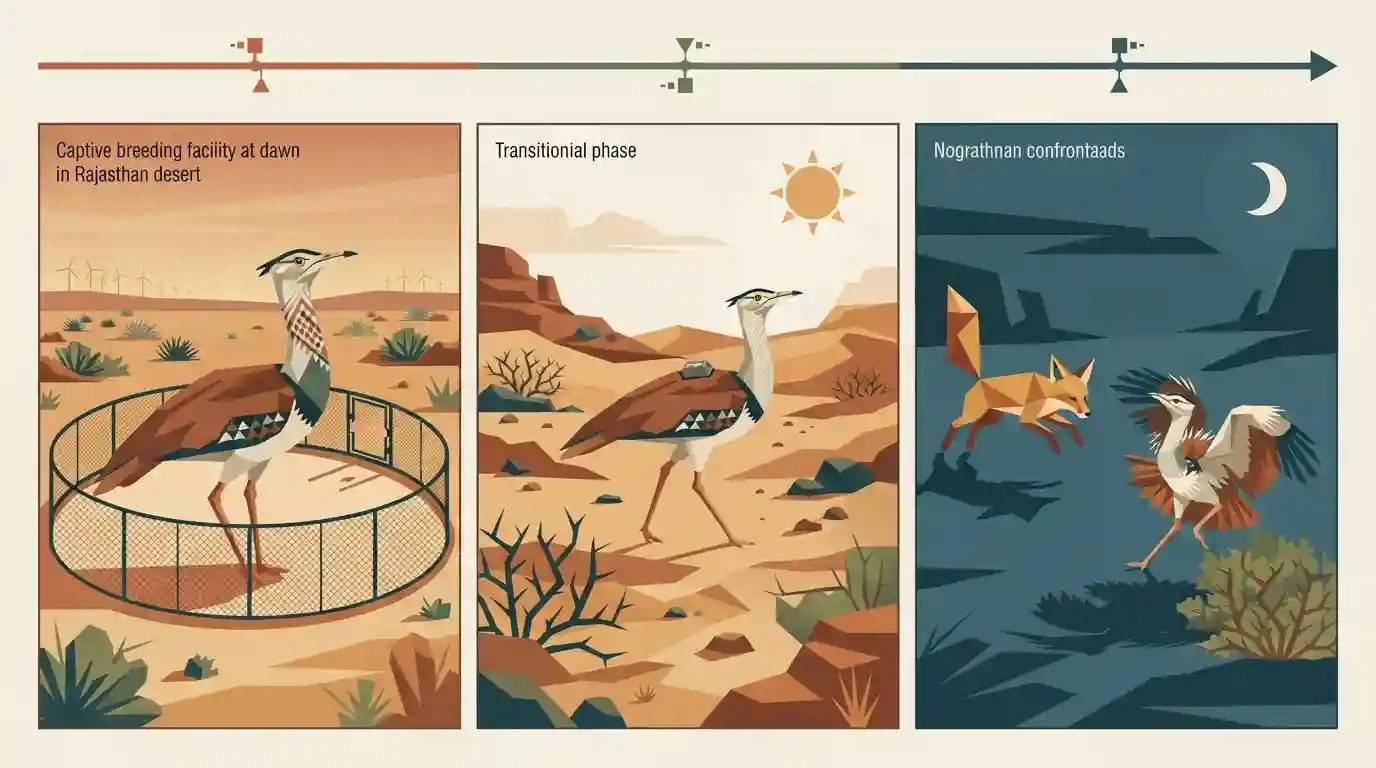
A captive-bred Great Indian Bustard (GIB), released as part of a high-stakes rewilding initiative, suffered a setback after being killed by a desert fox in Jaisalmer, Rajasthan. This highlights the ecological vulnerabilities and management challenges associated with reintroducing captive-bred critically endangered species into harsh wild environments.
Key Points
- A captive-bred Great Indian Bustard (GIB), part of the rewilding project, was killed by a desert fox in Jaisalmer.
- The incident highlights the challenges and risks involved in rewilding endangered species bred in captivity.
- The Great Indian Bustard (Godawan) is Rajasthan's state bird and critically endangered, with its core habitat centered around the Desert National Park in Jaisalmer.
Important Terms
Great Indian Bustard Rewilding Project

A conservation initiative aimed at increasing the wild population of the critically endangered Great Indian Bustard by releasing captive-bred birds into their natural habitat in Rajasthan's Thar Desert.
UPSC context
Important for RPSC Paper III (Environment & Biodiversity) and Rajasthan GK; tests knowledge of state wildlife conservation initiatives and endangered species management.
Desert National Park
A protected sanctuary located in Jaisalmer and Barmer districts, Rajasthan, known as the primary natural habitat and breeding stronghold of the critically endangered Great Indian Bustard.
UPSC context
Crucial for Rajasthan Geography and Environment sections in RPSC exams; tests understanding of state sanctuaries, unique desert ecosystem flora and fauna.
Prelims Trap
The death of the captive-bred GIB by a desert fox indicates a failure of invasive predator management in the park.
The desert fox is a native, protected part of the Thar ecosystem, not an invasive alien species introduced by humans. Predation by native wildlife is a natural ecological risk in rewilding.
Static Concepts Connected
What are the key ecological and conservation features of the Great Indian Bustard (Godawan) in Rajasthan?
- IUCN Status: State bird of Rajasthan, locally known as Godawan, designated as Critically Endangered by the IUCN.
- Natural Habitat: Core wild habitat is centered in Jaisalmer's Desert National Park, part of the Thar Desert ecosystem.
- Primary Threats: Faces severe threats from high-voltage overhead power transmission lines, habitat loss, and low reproductive rates.
Cross-Topic Patterns
GIB Conservation vs Renewable Energy Infrastructure
The GIB conservation battle in the Thar Desert intersects with the Supreme Court's directives on undergrounding high-voltage transmission lines to prevent fatal collisions.
Rewilding Protocols Across Apex Indian Species
Captive breeding and rewilding trials for the Godawan parallel earlier tiger and leopard reintroduction protocols supervised by the WII.

RPSC loves matching protected species to their core habitats and IUCN status; expect a statement-based question on GIB captive breeding.
Linked PYQs · 2
Linked PYQs · 2
- 2025RPSC_PRELIMSGS1
In which district of Rajasthan is the ‘Khadin’ water conservation method prevalent?
- 2023RPSC_PRELIMSGS1
The National Tiger Conservation Authority has conferred the status of the fifth tiger sanctuary in Rajasthan, to which of the following sanctuaries?
