Social Media Regulation for Minors and Child Protection in India
Source:Indian Express ↗
Why It Matters
The intersection of digital technology, youth mental health, and state regulation is a critical governance challenge. Understanding international precedents like Australia's ban helps in formulating child protection policies in India, a highly relevant theme for GS1 (Society), GS2 (Governance), and GS4 (Ethics).
Summary
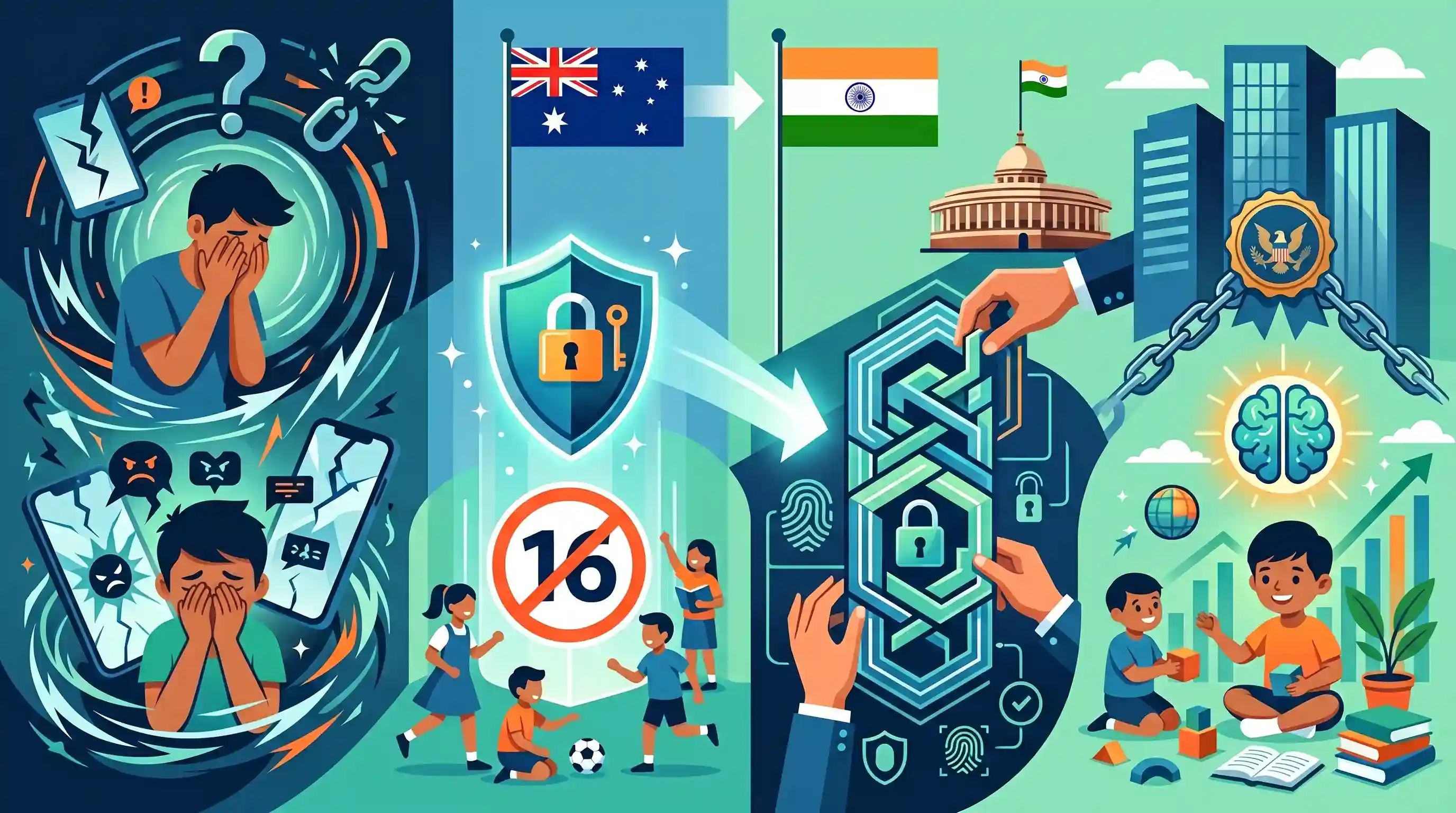
The article highlights the urgent need for India to regulate social media access for minors, citing a recent youth-related tragedy in Ghaziabad. Drawing inspiration from Australia's pioneering legislation that bans social media for children under 16, the author argues that unrestricted digital exposure leads to severe mental health crises, cyberbullying, and hindered socialization. To protect its youth, India must implement stringent age-gating laws, leverage digital protection frameworks, and hold tech companies accountable for the well-being of young users.
Key Points
- Australia's landmark legislation banning social media for children under 16 sets a global precedent for protecting youth from the detrimental effects of unregulated digital platforms.
- The Ghaziabad triple tragedy serves as a grim reminder of the severe mental health consequences, addiction, and behavioral vulnerabilities stemming from unrestricted social media use among minors.
- Unregulated smartphone and social media access hinders healthy childhood socialization, exacerbates psychological distress, and exposes teenagers to cyberbullying and harmful content.
- India urgently needs comprehensive legislation to mandate strict age-verification mechanisms and hold tech corporations ethically and legally accountable for safeguarding children in the digital space.
Important Terms
Online Safety Amendment (Social Media Minimum Age) Act 2024 (Australia)

Australian law passed in 2024 prohibiting minors under 16 from holding social media accounts, shifting the burden of age verification onto tech platforms.
UPSC context
GS Paper II: International Best Practices. Tests understanding of global precedents in digital regulation and child protection.
Digital Personal Data Protection (DPDP) Act, 2023
India's data privacy framework requiring verifiable parental consent for users under 18 and banning tracking or targeted advertising directed at children.
UPSC context
GS Paper II: Government Policies. Tests knowledge of statutory safeguards for minors in the digital economy.
National Commission for Protection of Child Rights (NCPCR)
India’s apex statutory body for child rights that monitors social media platforms for age verification compliance and protection against harmful content.
UPSC context
GS Paper II: Statutory Bodies. Tests the role of executive agencies in enforcing child safety online.
Age-Gating
A digital verification mechanism requiring users to confirm their age before accessing specific platforms or content, often through documentation or biometrics.
UPSC context
GS Paper III: Technology/Cybersecurity. Tests understanding of technical enforcement tools and privacy trade-offs in digital governance.
Protection of Children from Sexual Offences (POCSO) Act, 2012
Indian law protecting minors from sexual exploitation, used online to prosecute grooming and the transmission of child sexual abuse material (CSAM).
UPSC context
GS Paper II: Social Justice. Tests the application of criminal law to digital harassment and online safety.
Information Technology Rules, 2021
Rules mandating social media platforms to perform due diligence, provide grievance redressal, and implement parental locks for age-restricted content.
UPSC context
GS Paper II: Governance. Tests knowledge of the regulatory framework governing social media intermediaries in India.
Prelims Trap
"Under the DPDP Act 2023, platforms can serve targeted ads to minors if verifiable parental consent is obtained."
The DPDP Act strictly prohibits behavioral monitoring and targeted advertising directed at children absolutely. Parental consent only allows for processing general personal data, not targeted ads.
Static Concepts Connected
How does the DPDP Act 2023 protect the data of minors?
- Parental Consent: Mandates verifiable parental or lawful guardian consent before processing any personal data of users under 18.
- Absolute Prohibitions: Strictly bars tracking, behavioral monitoring, and targeted advertising directed at children.
- Government Exemptions: The Central Government can lower the age of consent for specific platforms if their data processing is deemed verifiably safe.
What is the 'Parens Patriae' doctrine in Indian jurisprudence?
- Parent of the Nation: A legal doctrine where the State assumes the role of a "parent" to protect individuals who cannot protect themselves, such as minors or the mentally ill.
- Justification for Intervention: Courts and governments use this to justify protective legislation (like social media age limits) that overrides standard market or corporate freedoms.
Cross-Topic Patterns
Age-gating vs. Right to Privacy
Enforcing strict age-gating for social media (e.g., mandating Aadhaar) risks violating the Puttaswamy judgment's principles of data minimization and proportionality under Article 21.
Mental Health & the Demographic Dividend
'Engineered addiction' from algorithmic infinite scrolling directly threatens India's demographic dividend by exacerbating youth psychological distress, cyberbullying, and long-term unemployability.

Expect a GS-2 Mains question testing the DPDP Act's child protection clauses against the privacy challenges of strict age-verification.
Linked PYQs · 3
Linked PYQs · 3
- 2025MainsGS2
The National Commission for Protection of Child Rights has to address the challenges faced by children in the digital era. Examine the existing policies and suggest measures the Commission can initiate to tackle the issue.
- 2023MainsGS1
Child cuddling is now being replaced by mobile phones. Discuss its impact on the socialization of children.
- 2025MainsGS4
In the present digital age, social media has revolutionised our way of communication and interaction. However, it has raised several ethical issues and challenges. Describe the key ethical dilemmas in this regard.
