Gene Therapy and Its Potential to Treat Hepatitis B Virus
Source:The Hindu ↗
Why It Matters
This article is crucial for UPSC GS3 (Science and Technology - Awareness in the fields of Biotechnology and Health) as it highlights cutting-edge gene therapy applications for chronic viral diseases like Hepatitis B, matching syllabus requirements on applied biotechnology and public health challenges.
Summary
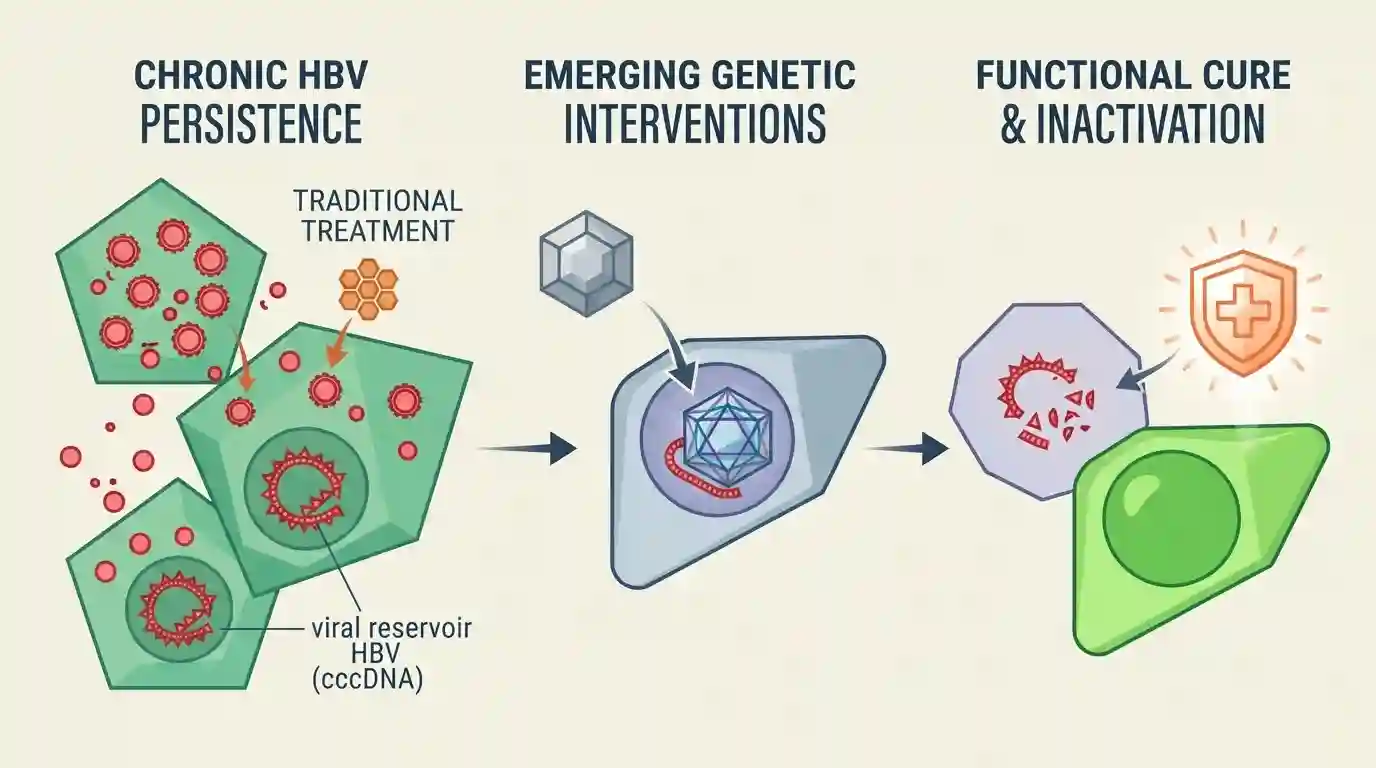
Recent scientific advancements in gene therapy are exploring novel ways to tackle the hepatitis B virus (HBV) by mutating or silencing its viral DNA. Traditional treatments manage viral loads, but chronic infections persist due to viral reservoirs like cccDNA in liver cells. Emerging genetic interventions offer hope for a permanent or functional cure by directly altering or inactivating the viral genetic material, showcasing the expanding clinical utility of biotechnology in global public health.
Key Points
- Researchers are developing innovative gene therapy approaches to combat Hepatitis B virus (HBV) by targeting and silencing its viral DNA rather than just suppressing symptoms.
- Chronic Hepatitis B remains a major global health challenge because existing therapies rarely clear the covalently closed circular DNA (cccDNA) residing in host liver cell nuclei.
- Gene therapy techniques, such as gene editing and silencing tools, offer promising avenues for achieving a functional cure for persistent viral infections.
- Advances in genetic medicines highlight the intersection of biotechnology, viral pathology, and precision medicine in tackling chronic communicable diseases.
Important Terms
World Health Organization

A specialized agency of the United Nations responsible for international public health, setting global health standards, monitoring disease outbreaks, and coordinating emergency responses like vaccination campaigns and pandemic strategies.
UPSC context
Important for GS Paper II (International Relations, Health Governance) and GS Paper III (Public Health, Global Health Targets).
National Institutes of Health
The primary biomedical research agency of the United States government, conducting and funding extensive scientific studies on human diseases, genetics, and emerging therapeutic interventions.
UPSC context
Relevant for GS Paper III (Science and Technology, Biotechnology) and international research collaborations in healthcare.
U.S. Food and Drug Administration
A federal regulatory agency of the U.S. government responsible for protecting public health by regulating human drugs, biological products, medical devices, and approving innovative clinical treatments.
UPSC context
Useful for GS Paper III (S&T, Drug Approval Systems, Intellectual Property) and comparative regulatory frameworks in biotechnology.
Static Concepts Connected
What is cccDNA in Hepatitis B virus infection and why is it difficult to clear?
- Persistent Template: Viral template: cccDNA (covalently closed circular DNA) acts as the persistent template for viral transcription inside host liver cell nuclei.
- Mechanism Gap: Drug resistance: Nucleos(t)ide analogues suppress viral replication but do not degrade existing cccDNA reservoirs.
- Functional Cure: Functional cure: Eliminating or permanently silencing cccDNA is the primary hurdle for achieving a permanent cure.
Cross-Topic Patterns
HBV gene silencing vs HIV latency
While HBV spreads via blood and sexual contact, HIV integrates into host chromosomes. Both test the limits of antiviral pharmacology and public health surveillance systems under National Health Programmes.

Gene therapy for viral persistence (cccDNA) will likely be tested via a statement-based question contrasting HBV with HIV/RNA viruses.
Linked PYQs · 3
Linked PYQs · 3
- 2026PrelimsGS1
Which of the following statements with regard to genetic medicine is/are correct ? 1. Genetic medicines correct/compensate for the faulty genes responsible for disease. 2. Engineered viruses and lipid nanoparticles are used as carriers of the genetic medicine. 3. Genetic medicines alter the entire DNA sequence. Select the answer using the code given below :
- 2019PrelimsGS1
Which one of the following statements is not correct?
- 2021MainsGS3
What are the research and developmental achievements in applied biotechnology? How will these achievements help to uplift the poorer sections of the society?
