Gender Identity Discourse and Healthcare Access Challenges
Source:The Hindu ↗
Why It Matters
The topic aligns with UPSC GS2 (Social Justice and Health) and GS1 (Society). Understanding the intersection of gender identity, healthcare, and societal acceptance is crucial for analyzing policies related to vulnerable sections, such as the Transgender Persons (Protection of Rights) Act, and the broader constitutional framework of Gender Justice.
Summary
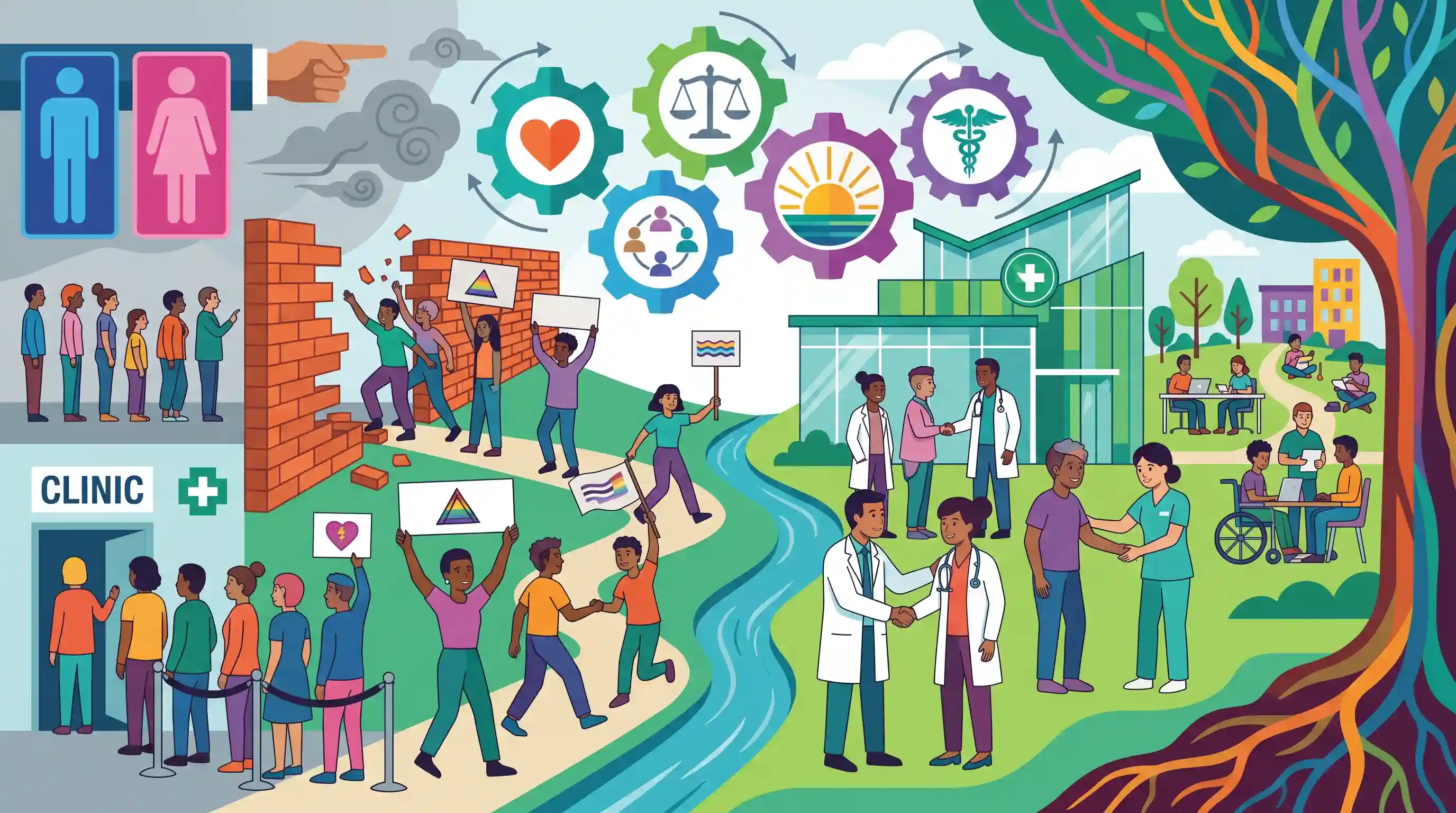
The evolving discourse around gender and identity is prompting fresh questions within both society and the healthcare sector. Moving beyond traditional binary understandings of gender necessitates a critical re-evaluation of medical practices, ethical guidelines, and social norms to better serve individuals with diverse gender identities. For the transgender and LGBTQIA+ communities, accessing stigma-free, specialized, and equitable healthcare remains a significant challenge. Addressing these challenges is integral to ensuring gender justice and inclusivity. The narrative calls for comprehensive policy shifts, socially inclusive programme designs, and an empathetic approach from healthcare providers to integrate marginalized gender groups into mainstream social development.
Key Points
- The conceptualization of gender and identity has evolved beyond strict binary frameworks, raising new societal and health-related questions.
- Individuals exploring diverse gender identities, including the transgender and LGBTQIA+ community, often face unique physical and mental health challenges requiring specialized, inclusive healthcare.
- There is an ongoing debate within society and the medical fraternity on the ethical, legal, and social implications of gender transition therapies and related interventions.
- Formulating adequate and sound health care policies is necessary to foster broader social development and ensure the constitutional promise of Gender Justice for all identities.
- Addressing societal stigma and promoting gender equity through robust programme design are critical steps toward meaningful inclusion of marginalized gender groups.
Important Terms
Transgender Persons (Protection of Rights) Act, 2019

A 2019 law providing legal recognition to transgender persons, prohibiting discrimination in education, employment, and healthcare, and establishing the National Council for Transgender Persons.
UPSC context
GS Paper 2: Social Justice; tests knowledge of legislative protections for vulnerable sections.
NALSA vs. Union of India (2014)
Landmark 2014 judgment recognizing 'third gender' identity and affirming fundamental rights like self-identification, equality, and dignity under Articles 14, 15, and 21.
UPSC context
GS Paper 2: Judiciary and Fundamental Rights; essential for gender justice questions.
National Medical Commission (NMC)
India's apex medical regulator that recently banned 'conversion therapy' as professional misconduct and directed updates to medical curricula for gender-inclusive healthcare.
UPSC context
GS Paper 2: Health/Governance; GS Paper 4: Medical Ethics and Professional Conduct.
Ministry of Social Justice and Empowerment (MSJE)
The nodal central ministry responsible for the welfare of marginalized groups, including transgender persons, and implementing the SMILE and Garima Greh initiatives.
UPSC context
GS Paper 2: Governance/Welfare Schemes; tests institutional frameworks for social inclusion.
SMILE Scheme
Support for Marginalized Individuals for Livelihood and Enterprise; a central scheme providing medical facilities, skill development, and comprehensive rehabilitation for transgender persons.
UPSC context
GS Paper 2: Welfare Schemes; tests performance of social justice programmes.
Conversion Therapy
Discredited practices attempting to change an individual's sexual orientation or gender identity, officially declared 'professional misconduct' by the NMC in 2022.
UPSC context
GS Paper 4: Ethics; GS Paper 2: Social Justice and Healthcare Rights.
Prelims Trap
A medical screening certificate is mandatory for initial recognition as a transgender person under the 2019 Act.
The 2019 Act allows self-perceived identity for basic recognition via a District Magistrate. A medical certificate is only needed to change gender to male/female post-surgery.
Static Concepts Connected
Which Fundamental Rights form the basis of the NALSA (2014) judgement?
- Articles 14 & 15: Equality before the law and prohibition of discrimination. The Court ruled that discrimination on the grounds of 'sex' includes gender identity.
- Article 19(1)(a): Freedom of speech and expression intrinsically encompasses a person's right to express their self-identified gender through dress, words, and action.
- Article 21: The right to life includes the right to live with dignity and the right to privacy, which protects personal autonomy over gender identity.
What are the four core principles of biomedical ethics applicable to gender healthcare?
- Autonomy: Respecting the patient's right to make informed decisions about their own body, medical treatments, and self-identification.
- Beneficence & Non-maleficence: Acting in the best interest of the patient (Beneficence) while ensuring no harm is done (Non-maleficence), a balance critical in transition therapies.
- Justice: Ensuring fair, equitable, and stigma-free access to healthcare resources for marginalized communities, shifting from mere equality to targeted equity.
Cross-Topic Patterns
Mental Healthcare Act 2017 synergies
The MHCA 2017 explicitly prohibits discrimination in psychiatric care based on gender identity or sexual orientation, legally reinforcing the need for inclusive LGBTQIA+ health equity.
Horizontal vs. Vertical Reservation debates
While the NALSA judgement directed treating transgender persons as OBCs (vertical), ongoing legal battles demand horizontal reservation (like PwD) to recognize intersectional caste and gender vulnerabilities.

Expect a GS2 Mains question evaluating Transgender Persons Act 2019 implementation gaps, focusing on healthcare equity and medical ethics.
Linked PYQs · 3
Linked PYQs · 3
- 2023MainsGS2
Explain the constitutional perspectives of Gender Justice with the help of relevant Constitutional Provisions and case laws.
- 2024MainsGS1
Distinguish between gender equality, gender equity and women's empowerment. Why is it important to take gender concerns into account in programme design and implementation?
- 2020MainsGS2
In order to enhance the prospects of social development, sound and adequate health care policies are needed particularly in the fields of geriatric and maternal health care. Discuss.
