Assam forms SIT to probe MP Gaurav Gogoi over national security
Source:The Hindu ↗
Why It Matters
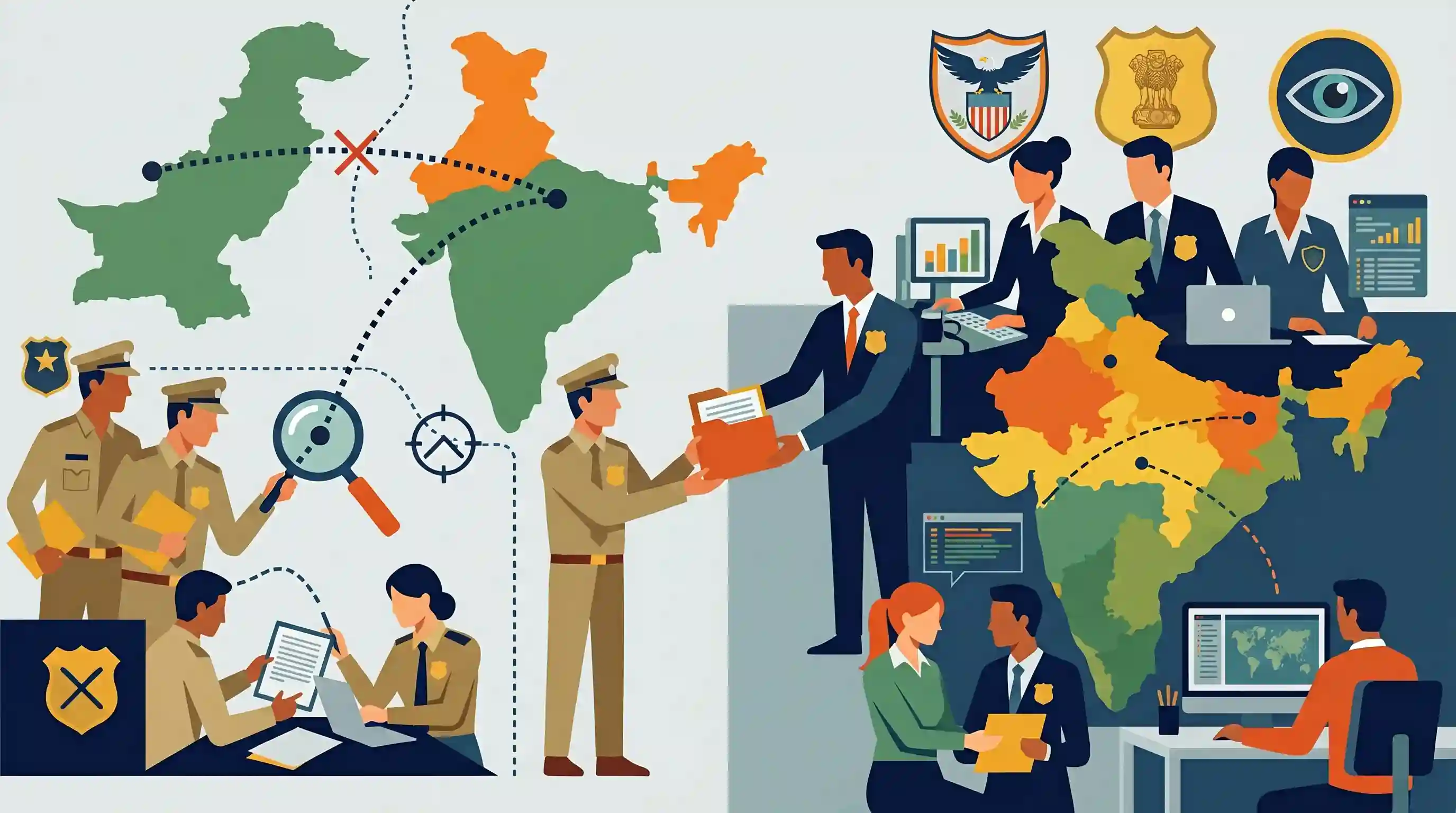
This case practically illustrates the jurisdictional boundaries between state police forces and central agencies (NIA, CBI, IB) when dealing with matters of national security and foreign interference. It highlights how cases expanding beyond state capacities require central intervention, which is highly relevant for GS3 (Internal Security) and GS2 (Federalism).
Summary
The Assam government is investigating alleged 'Pakistan links' involving Congress MP Gaurav Gogoi for the sake of national security. A state-appointed Special Investigation Team (SIT) is probing claims of interference by a Pakistani national, allegedly connected to Gogoi's British wife, in India's internal affairs. Assam Chief Minister Himanta Biswa Sarma noted that the state cabinet will review the SIT's findings. However, acknowledging the jurisdictional and resource limitations of state agencies in handling transnational security threats, the Chief Minister stated that the case will eventually be transferred to central agencies like the NIA, IB, or CBI for a comprehensive investigation. Gogoi has firmly denied all allegations.
Key Points
- Assam Chief Minister Himanta Biswa Sarma announced that a Special Investigation Team (SIT) report regarding Congress MP Gaurav Gogoi's alleged 'Pakistan links' will be discussed by the state cabinet.
- The probe revolves around the alleged interference of a Pakistani national, who is claimed to have ties to Gogoi's British wife, in India's internal affairs.
- Sarma emphasized that the state government faces limitations in investigating transnational national security issues, indicating that only 10% of the facts have been uncovered.
- The Assam government plans to eventually hand over the investigation to central intelligence and investigative agencies such as the NIA, CBI, or IB to take the case forward.
- Gaurav Gogoi has completely dismissed the allegations, calling them baseless and nonsense.
Important Terms
National Investigation Agency (NIA)

A statutory body under the NIA Act 2008, it is India’s federal counter-terrorism agency investigating offenses affecting national sovereignty, security, and integrity across state boundaries.
UPSC context
GS Paper III (Internal Security); tests knowledge of counter-terrorism frameworks and central-state jurisdictional dynamics in law enforcement.
Intelligence Bureau (IB)
India’s premier internal intelligence agency under the Ministry of Home Affairs, responsible for gathering domestic intelligence, counter-intelligence, and neutralizing internal security threats.
UPSC context
GS Paper III (Internal Security); tests understanding of the mandate and functioning of central intelligence agencies.
Central Bureau of Investigation (CBI)
India's premier investigating agency, deriving powers from the DSPE Act 1946; it probes corruption, economic crimes, and special cases, usually requiring state consent for state-level operations.
UPSC context
GS Paper II (Governance); tests knowledge of quasi-judicial bodies and federalism challenges like mandatory state consent for central agencies.
Special Investigation Team (SIT)
A specialized, temporary team of officers or experts appointed by the government or judiciary to conduct impartial investigations into specific high-profile or complex criminal cases.
UPSC context
GS Paper II/III (Governance/Security); tests understanding of ad-hoc investigative mechanisms used for sensitive cases involving influential individuals.
Prelims Trap
The Intelligence Bureau (IB) takes over investigations and arrests individuals in transnational security cases.
The IB is strictly an intelligence-gathering body under the Ministry of Home Affairs. It lacks formal police powers to file FIRs, conduct criminal investigations, or make arrests.
Static Concepts Connected
How do the jurisdictions of NIA and CBI differ regarding state consent and territorial reach?
- CBI State Consent: CBI derives powers from the DSPE Act, 1946, and requires 'general' or 'specific' consent from a state to investigate crimes there, unless ordered by constitutional courts.
- NIA Jurisdiction: Created under the NIA Act 2008, the NIA has concurrent, pan-India jurisdiction over 'Scheduled Offences' (like terrorism) and does not require prior state consent.
- Extraterritorial Reach: The NIA (Amendment) Act, 2019 empowers the agency to investigate scheduled offenses committed outside India, subject to international treaties and domestic laws of other countries.
Cross-Topic Patterns
Federal friction in law enforcement
The Seventh Schedule designates 'Police' as a State subject. However, transnational crimes and terrorism necessitate intervention by central agencies (Union List), often sparking debates over federalism and state consent.
Intelligence gathering vs. investigation
Unlike the CBI or NIA, the IB's mandate is preemptive intelligence collection. It relies on state police or central investigative agencies to execute arrests and formal investigations based on its intel.

A 2026 prelims question could mix statements about the DSPE Act (CBI) and NIA Act (2019 amendment), testing the exact requirement of state consent.
Linked PYQs · 3
Linked PYQs · 3
- 2023MainsGS3
What are the internal security challenges being faced by India? Give out the role of Central Intelligence and Investigative Agencies tasked to counter such threats.
- 2021MainsGS3
Analyse the multidimensional challenges posed by external state and non-state actors, to the internal security of India. Also discuss measures required to be taken to combat these threats.
- 2021MainsGS2
The jurisdiction of the Central Bureau of Investigation (CBI) regarding lodging an FIR and conducting probe within a particular State is being questioned by various States. However, the power of the States to withhold consent to the CBI is not absolute. Explain with special reference to the federal character of India.
