Gates Foundation Pedge on AI Inequality and Digital Access
Source:The Hindu ↗
ఇది ఎందుకు ముఖ్యం
This article highlights the socio-economic risks of emerging technologies like AI, specifically the widening inequality and digital divide between the Global North and Global South, aligning with UPSC GS3 syllabus requirements on technology adoption, inclusive growth, and ethical governance of AI.
సారాంశం
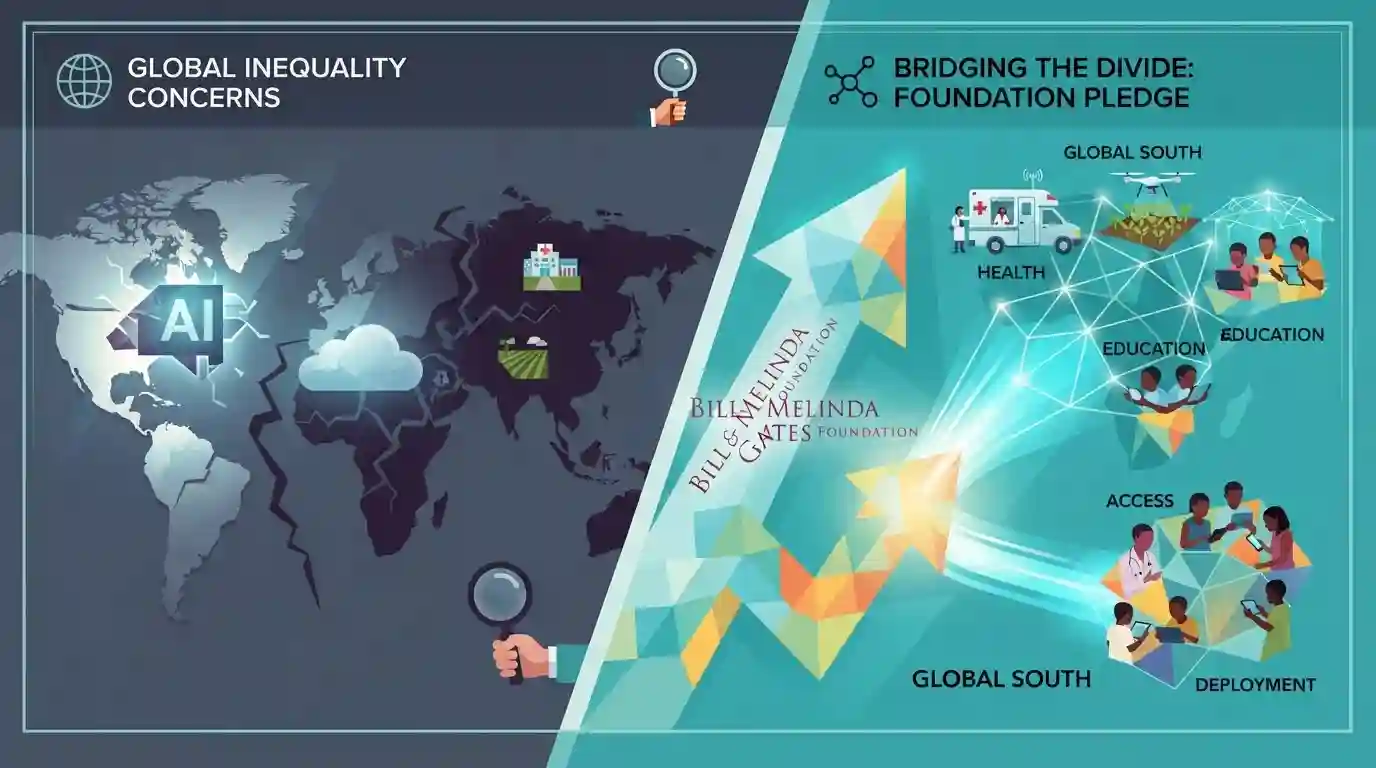
The Bill & Melinda Gates Foundation has raised concerns that artificial intelligence could exacerbate global inequality if left unchecked. To counter this, the foundation has pledged $1 billion to expand AI access and deployment in areas such as health, agriculture, and education in the Global South, bridging the growing digital divide.
ముఖ్య అంశాలు
- The Gates Foundation has warned that the rapid advancement of Artificial Intelligence (AI) risks widening global inequalities unless deliberate steps are taken to democratise access.
- The foundation pledged $1 billion to expand access to AI tools and technologies for underserved communities and developing nations, particularly in critical sectors like health and agriculture.
- Concerns were highlighted regarding the digital divide, data bias, and the concentration of AI power in a few wealthy nations and corporations, leaving the Global South behind.
ముఖ్యమైన పదాలు
Bill & Melinda Gates Foundation

A private philanthropic organization established by Bill and Melinda Gates to tackle global challenges in health, education, and poverty reduction, particularly in developing nations.
UPSC context
UPSC GS Paper II (International Relations & NGOs) and GS Paper III (Inclusive Growth, Social Sector). Tests knowledge of international philanthropic contributions to development.
ప్రిలిమ్స్ ఉచ్చు
pledged $1 billion to expand AI access...
Aspirants may confuse the source of funding or assume it is a UN or G20 multilateral initiative, whereas it is a private philanthropic pledge by the Gates Foundation.
అనుసంధానమైన స్థిర భావనలు
What are the primary dimensions of the digital divide in developing economies like India?
- Infrastructure gap:: Disparities in internet connectivity, broadband penetration, and smartphone ownership across urban-rural and gender lines.
- Digital literacy:: Uneven ability to understand, evaluate, and critically use digital technologies for economic gains.
- Linguistic divide:: Language barriers in digital content creation and service delivery, disadvantaging regional language speakers.
అంతర-అంశ నమూనాలు
AI Inequality and International Trade Regimes
The concentration of AI power in Western/Chinese tech giants mirrors historical dependency patterns in global trade and technology transfer (TRIPS agreement debates).
Agritech AI and Sustainable Food Security
Using AI for smallholder agriculture (weather, pest control) directly intersects with sustainable agriculture and climate resilience missions under national food security policies.

AI governance in the Global South + digital divide + SDG alignment are prime targets for Mains GS-3 science & technology questions.
అనుసంధాన PYQలు · 2
అనుసంధాన PYQలు · 2
- 2023MainsGS3
Introduce the concept of Artificial Intelligence (AI). How does Al help clinical diagnosis? Do you perceive any threat to privacy of the individual in the use of Al in healthcare?
- 2020MainsGS3
Explain intra-generational and inter-generational issues of equity from the perspective of inclusive growth and sustainable development.
