FSSAI Proposes Ban on Added Sugars in Infant Foods
Source:The Hindu ↗
આ શા માટે મહત્વનું છે
Crucial for understanding food safety regulations, regulatory bodies like FSSAI, and public health interventions addressing early childhood nutrition and non-communicable diseases.
સારાંશ
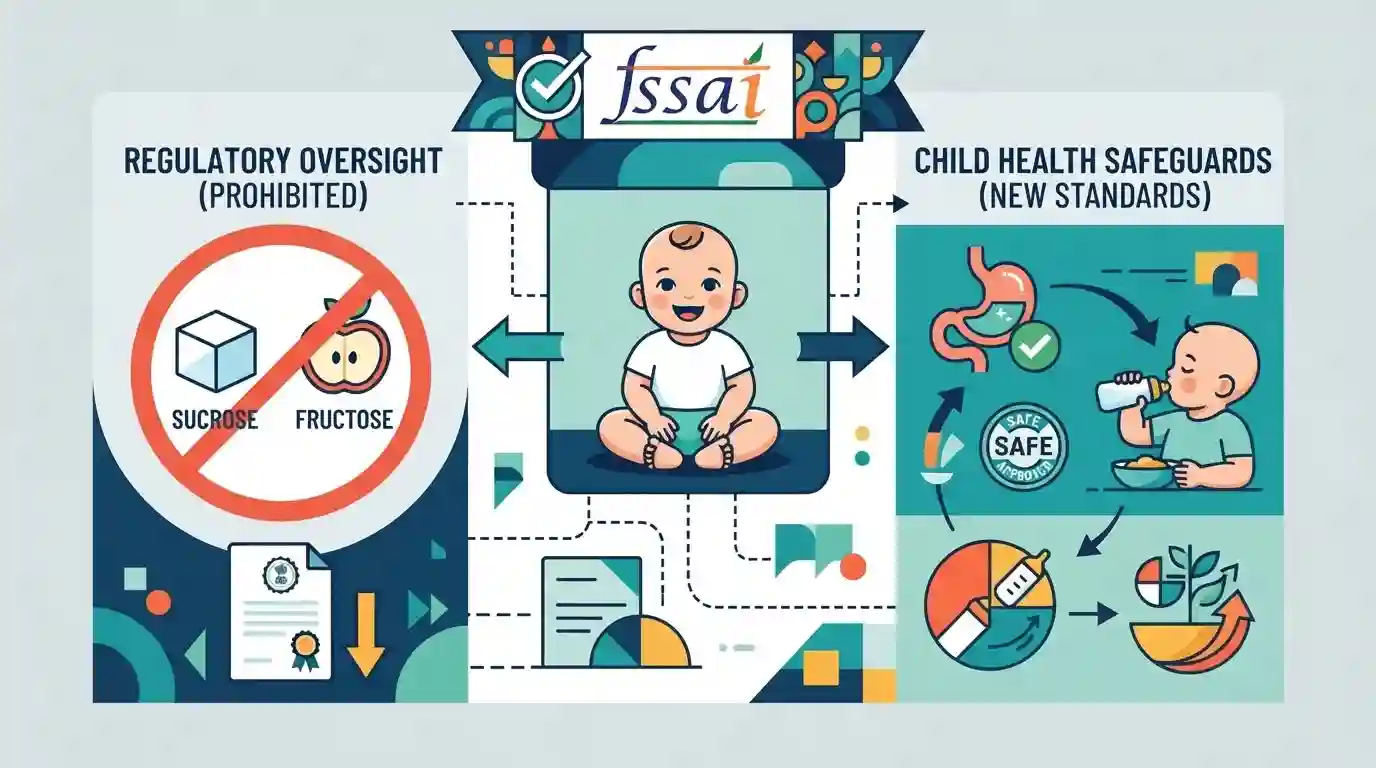
The Food Safety and Standards Authority of India (FSSAI) has proposed amendments to prohibit the addition of sucrose and fructose in food products formulated for infants up to six months of age, reinforcing child health safeguards and regulatory oversight.
મુખ્ય મુદ્દા
- The FSSAI has proposed a ban on added sucrose and fructose in foods meant for infants up to six months old.
- The move aims to protect infant health, prevent early exposure to added sugars, and curb lifestyle diseases like childhood obesity and diabetes.
- It highlights the regulatory role of FSSAI in setting strict food safety and nutritional standards for vulnerable populations.
મહત્વપૂર્ણ શબ્દો
Food Safety and Standards Authority of India (FSSAI)

The apex statutory regulatory body established under the Food Safety and Standards Act, 2006, to lay down science-based standards for food items and regulate their manufacture, storage, distribution, sale, and import to ensure public health safety across India.
UPSC context
UPSC Prelims/Mains (GS Paper II/III) - Tests knowledge of regulatory bodies, consumer protection, public health, and food security governance.
Food Safety and Standards Act, 2006
Comprehensive legislation enacted in 2006 that consolidated multiple legacy food laws into a single framework, creating the FSSAI and laying down statutory standards for food safety, hygiene, licensing, and penalties for adulteration in India.
UPSC context
UPSC Prelims/Mains (GS Paper II/III) - Important for questions on statutory bodies, social sector legislation, health, and regulatory frameworks.
પ્રિલિમ્સ ટ્રેપ
FSSAI prohibits added sugars in all processed food products across all age groups without exception.
Aspirants often assume FSSAI regulations apply uniformly to all processed foods without distinction, ignoring age-specific and vulnerable-population classifications like infant formulations.
સંલગ્ન સ્થિર ખ્યાલો
What are the statutory powers and composition of the Food Safety and Standards Authority of India (FSSAI)?
- Statutory Origin: Established under the Food Safety and Standards Act, 2006, consolidating various acts and orders handling food safety.
- Nodal Ministry: Functions under the administrative control of the Ministry of Health and Family Welfare.
- Composition: Consists of a Chairperson and 22 members, with one-third of members being women.
આંતર-વિષય પેટર્ન
Food Safety vs. Public Health NCD Burden
FSSAI regulatory interventions intersect directly with public health burdens like childhood obesity and non-communicable diseases (NCDs), a core focus under GS Paper II health governance.
Infant Nutrition & Global Health Standards
Aligns with India's international commitments under UNICEF/WHO global strategy for infant and young child feeding.

FSSAI mandate, statutory backing under FSS Act 2006, and infant nutrition regulations are prime candidates for a conceptual Prelims statement.
સંલગ્ન PYQ · 2
સંલગ્ન PYQ · 2
- 2025MainsGS3
Examine the scope of the food processing industries in India. Elaborate the measures taken by the government in the food processing industries for generating employment opportunities.
- 2018PrelimsGS1
Consider the following statements: 1. The Food Safety and Standards Act, 2006 replaced the Prevention of Food Adulteration Act, 1954. 2. The Food Safety and Standards Authority of India (FSSAI) is under the charge of Director General of Health Services in the Union Ministry of Health and Family Welfare. Which of the statements given above is/are correct?
