Rajasthan Releases Captive-Bred Great Indian Bustards into Wild
Source:hindustantimes ↗
Why It Matters
The Great Indian Bustard is a critically endangered species and the state bird of Rajasthan; successful captive breeding and release into the wild represent a major milestone for regional biodiversity conservation and state environmental policy.
Summary
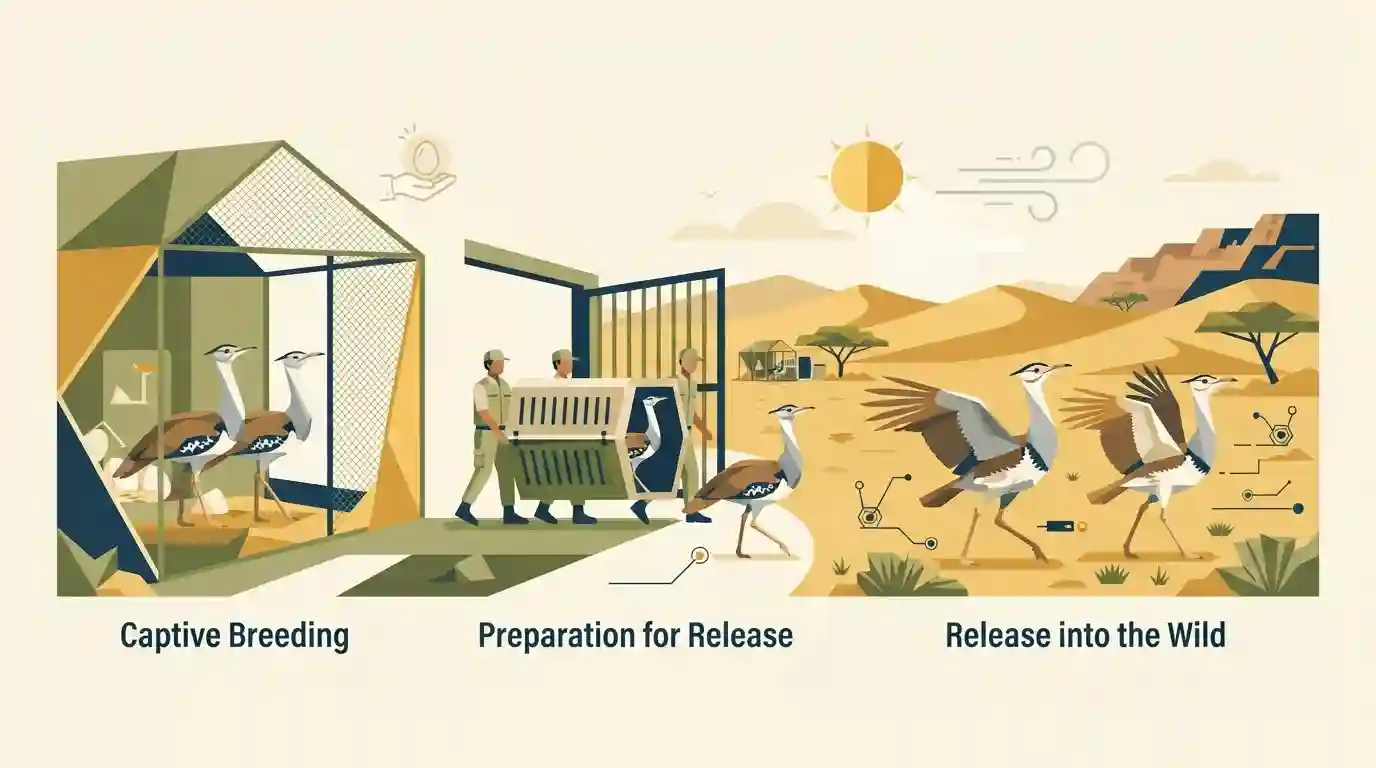
Two captive-bred Great Indian Bustards, Rajasthan's critically endangered state bird, were released into the wild in Rajasthan, representing a vital breakthrough in conservation efforts against extinction.
Key Points
- Two captive-bred Great Indian Bustards (GIBs) have been successfully released into the wild in Rajasthan.
- This milestone marks a significant step forward in the conservation of the state bird of Rajasthan from the brink of extinction.
- The captive-breeding program aims to revive the dwindling population of GIBs, which face severe threats from habitat loss and high-tension power lines.
Prelims Trap
captive-bred Great Indian Bustards released into the wild represent a self-sustaining wild population revival without ongoing habitat interventions.
Aspirants often assume GIBs are successfully breeding in the wild without intervention, whereas the wild population is actually declining rapidly and requires intensive ex-situ captive breeding programs.
Static Concepts Connected
What are the key ecological characteristics and conservation status of the Great Indian Bustard (Godawan)?
- Endemic Habitat: State bird of Rajasthan, locally known as Godawan, primarily found in the arid grasslands of the Thar Desert (Desert National Park, Jaisalmer).
- IUCN Status: Listed as Critically Endangered on the IUCN Red List, with fewer than 150 individuals remaining globally.
- Legal Protection: Protected under Schedule I of the Wildlife (Protection) Act, 1972, offering the highest level of legal protection in India.
- Primary Threats: Major threats include collision with high-tension overhead power lines, agricultural expansion, and habitat fragmentation.
Cross-Topic Patterns
GIB Conservation vs Renewable Energy Transmission
The Supreme Court's directive on undergrounding power lines in GIB habitats connects wildlife protection directly with infrastructure bottlenecks and renewable energy transmission in western Rajasthan.

GIB captive breeding milestones, IUCN status, and habitat threats in the Thar Desert are high-yield for RPSC RAS wildlife questions.
Linked PYQs · 3
Linked PYQs · 3
- 2025RPSC_PRELIMSGS1
In which district of Rajasthan is the ‘Khadin’ water conservation method prevalent?
- 2024RPSC_PRELIMSGS1
In which district of Rajasthan 'Khadin' is a popular method of water conservation?
- 2023RPSC_PRELIMSGS1
The National Tiger Conservation Authority has conferred the status of the fifth tiger sanctuary in Rajasthan, to which of the following sanctuaries?
