AI startups transform healthcare access through smart diagnostics
Source:Indian Express ↗
Why It Matters
The integration of AI in healthcare provides a practical solution to India's vast healthcare accessibility issues. It highlights how cutting-edge technology (GS3) intertwines with public health service delivery (GS2), a frequent theme in UPSC examinations.
Summary
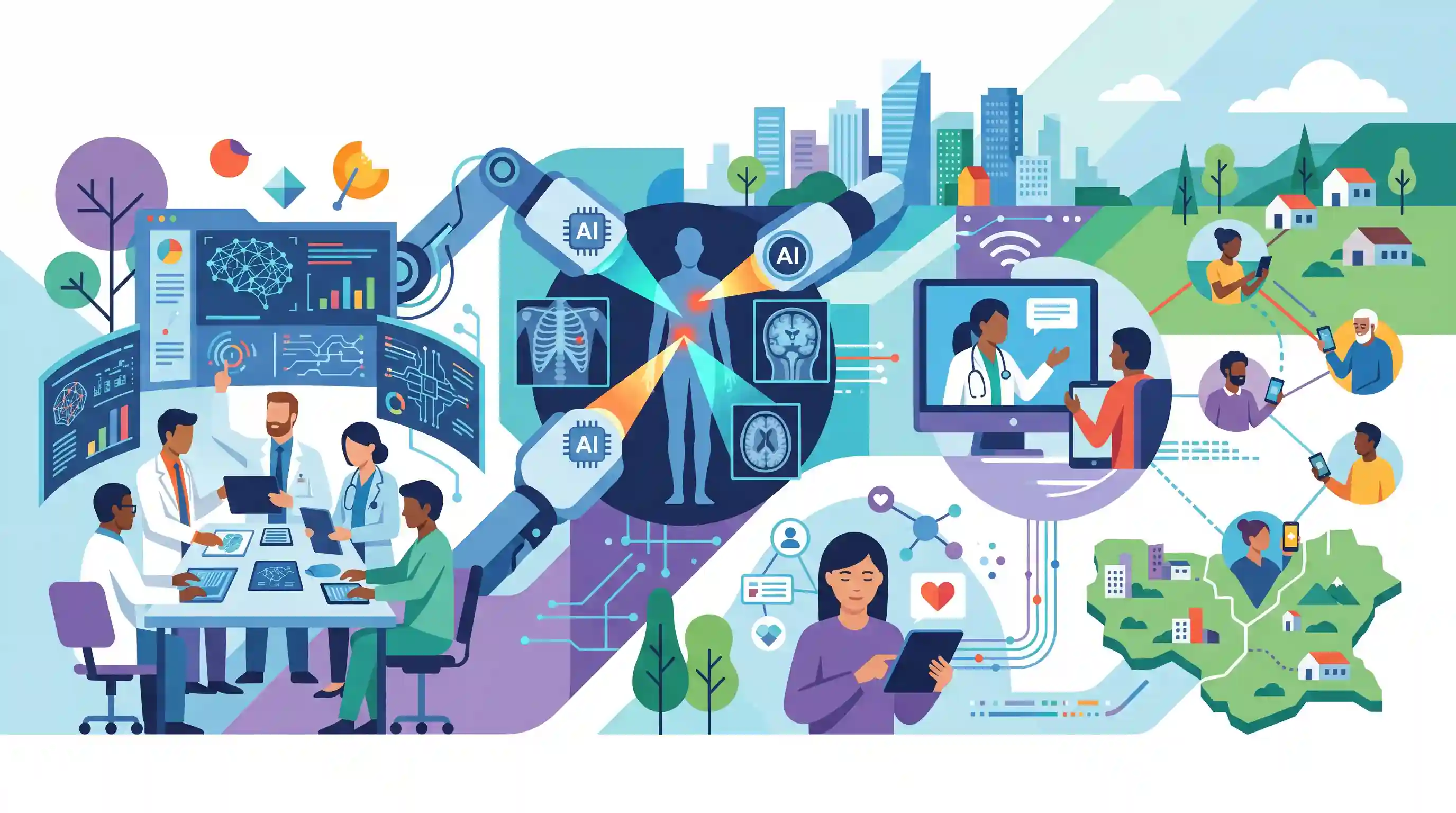
The article highlights how artificial intelligence startups are revolutionizing healthcare delivery by improving access and diagnostics. By developing AI-driven smart diagnostics for critical conditions like cancer, digital tools for mental health management, and tele-medicine platforms for remote consultations, these innovations aim to bridge the gap between patients and quality healthcare, especially addressing the scarcity of medical professionals and infrastructure.
Key Points
- Artificial Intelligence is increasingly being leveraged by startups to democratize healthcare access and improve medical outcomes.
- AI-powered 'smart diagnostics' are enabling early and accurate detection of complex diseases, including various forms of cancer.
- Digital tools and AI chatbots are emerging as accessible avenues for initial mental health support and counseling.
- Tele-doctor platforms enhanced by AI are extending the reach of healthcare services to remote areas, addressing the skewed doctor-patient ratio.
Important Terms
Ayushman Bharat Digital Mission (ABDM)

A national initiative aiming to develop the backbone for integrated digital health infrastructure, connecting various stakeholders via digital highways for seamless healthcare delivery.
UPSC context
GS Paper II/III: Tests understanding of digital governance, health sector reforms, and strategies for achieving Universal Health Coverage (UHC).
Tele-medicine
The remote delivery of healthcare services, including consultations and diagnostics, using telecommunications technology to overcome geographical barriers.
UPSC context
GS Paper II/III: Crucial for discussing rural-urban healthcare parity and the role of technology in public health management.
Artificial Intelligence (AI) in Healthcare
The application of machine learning and cognitive computing to medical data for disease detection, treatment planning, and health management.
UPSC context
GS Paper III: Science & Technology developments; focuses on addressing the scarcity of medical professionals and enhancing diagnostic accuracy.
ABHA (Ayushman Bharat Health Account)
A unique 14-digit identification number that enables citizens to link and access their digital health records across multiple healthcare providers with informed consent.
UPSC context
GS Paper II/III: Central to e-governance and data privacy discussions in the health sector.
eSanjeevani
India's national telemedicine service that facilitates both doctor-to-doctor and patient-to-doctor consultations, particularly bridging the gap in rural areas.
UPSC context
GS Paper II: Government schemes for the vulnerable sections; a prime example of a successful digital health intervention.
Smart Diagnostics
Advanced medical testing tools integrated with AI and IoT that provide rapid, data-driven analysis for early detection of critical conditions like cancer.
UPSC context
GS Paper III: Relevant for questions on high-tech innovations and their impact on the accessibility of specialized healthcare.
Indian Healthcare Startups
Private-sector enterprises leveraging technology to provide scalable medical solutions, ranging from digital mental health support to AI-based imaging for cancer care.
UPSC context
GS Paper III: Discussed under Indian Economy and Science & Tech for their role in bridging infrastructural deficits.
Prelims Trap
ABHA ID is mandatory for patients to access AI-driven tele-medicine and public health services.
ABHA ID creation is strictly voluntary. UPSC often traps aspirants by claiming digital public infrastructure registrations are mandatory for basic services.
Static Concepts Connected
What are the core building blocks of the Ayushman Bharat Digital Mission (ABDM)?
- ABHA ID: A voluntary 14-digit number used to uniquely identify persons and authenticate their digital health records across systems.
- HPR and HFR: Comprehensive repositories containing verified details of all healthcare professionals and clinical establishments across both modern and traditional medicine.
- UHI Network: An open network designed to enable interoperable digital health service delivery, functioning similarly to UPI for healthcare.
How do National Telemedicine Services operate in India?
- eSanjeevani AB-HWC: A doctor-to-doctor telemedicine system under Ayushman Bharat designed to connect rural health centers (HWCs) with specialists at hubs.
- eSanjeevani OPD: A patient-to-doctor telemedicine system enabling citizens to access outpatient department (OPD) services from the confines of their homes.
- Tele-MANAS: A dedicated 24/7 tele-mental health service organized in a two-tier system for basic counseling and specialized clinical care.
Cross-Topic Patterns
Health tech meets DPDPA 2023
AI healthcare models rely heavily on sensitive biometric and clinical data. The Digital Personal Data Protection (DPDP) Act 2023 frameworks for verifiable consent are critical for governing these startups.
Demographic dividend and NCDs
As India's disease burden shifts towards Non-Communicable Diseases (NCDs) like cancer, AI diagnostics offer a scalable solution to bypass the acute urban-rural divide and shortage of specialist oncologists.

Expect a multi-statement Prelims question linking ABDM’s Unified Health Interface (UHI), AI diagnostics, and DPDP Act consent mandates.
Linked PYQs · 3
Linked PYQs · 3
- 2023MainsGS3
Introduce the concept of Artificial Intelligence (AI). How does Al help clinical diagnosis? Do you perceive any threat to privacy of the individual in the use of Al in healthcare?
- 2020PrelimsGS1
With the present state of development, Artificial Intelligence can effectively do which of the following? 1. Bring down electricity consumption in industrial units 2. Create meaningful short stories and songs 3. Disease diagnosis 4. Text-to-Speech Conversion 5. Wireless transmission of electrical energy Select the correct answer using the code given below:
- 2024MainsGS2
In a crucial domain like the public healthcare system the Indian State should play a vital role to contain the adverse impact of marketisation of the system. Suggest some measures through which the State can enhance the reach of public healthcare at the grassroots level.
