India's Regulatory Evolution in Genome Editing and Biotechnology
Source:Indian Express ↗
Why It Matters
Crucial for understanding India's evolving policy landscape in biotechnology, striking a balance between agricultural innovation/precision medicine and rigorous biosafety governance.
Summary
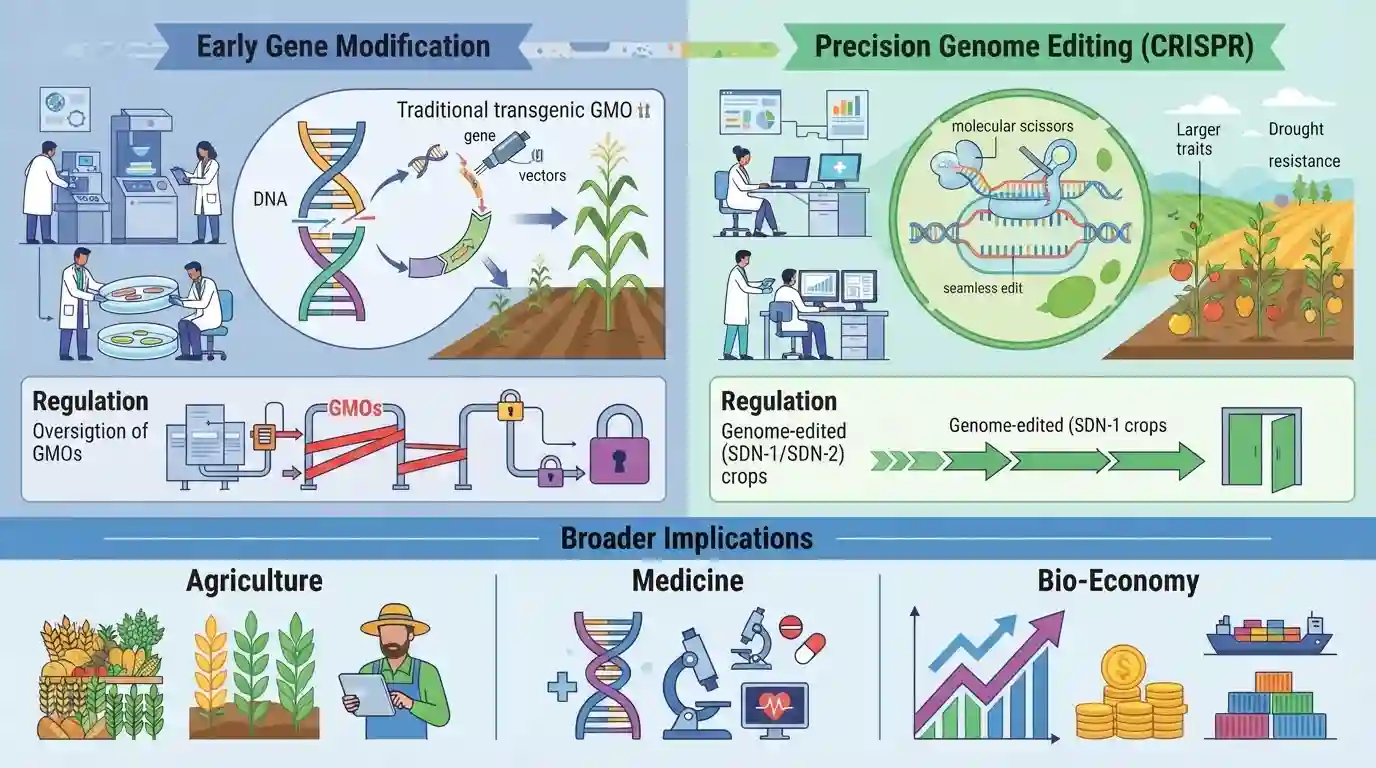
The article explores India's scientific and regulatory journey from early gene modification techniques (such as transgenic GMO development) to contemporary precision genome editing technologies like CRISPR. It highlights the distinct scientific mechanisms, shifts in regulatory policies for genome-edited crops in India, and the broader implications for agriculture, medicine, and bio-economy.
Key Points
- The evolution of biotechnology in India spans from traditional gene modification involving foreign DNA insertion (GM) to precise genome editing techniques like CRISPR-Cas9.
- Genome editing allows targeted changes without necessarily introducing foreign genes, distinguishing it from conventional Genetically Modified Organisms (GMOs).
- India has updated regulatory pathways to streamline biosafety approvals for certain categories of genome-edited crops (such as SDN-1 and SDN-2) to boost agricultural innovation.
- Challenges remain in public perception, biosafety governance, intellectual property rights, and ethical frameworks surrounding human and agricultural gene editing.
Prelims Trap
Genome-edited crops are completely exempted from the Environment (Protection) Act and GEAC oversight in India.
All genome-edited crops are NOT exempt from GEAC approvals; only SDN-1 and SDN-2 categories lacking foreign DNA integration are exempted under specific guidelines.
Static Concepts Connected
What is the difference between transgenic GMOs and precision genome editing (SDN-1, SDN-2, and SDN-3)?
- Foreign DNA: Transgenic GM crops involve inserting foreign DNA from an unrelated species into the host genome.
- Genome Editing: SDN-1 and SDN-2 induce targeted mutations or small edits within the host's native genome without introducing foreign DNA.
- SDN-3 Category: SDN-3 involves the insertion of large foreign DNA segments or specific genes, falling under stricter transgenic regulations.
Cross-Topic Patterns
Genome Editing vs Intellectual Property and Seed Laws
While the GEAC oversees GM crops under the Environment Protection Act, genome editing exemptions touch upon patent laws and agricultural seed acts, creating jurisdictional overlaps.
Biotech Regulation and Indigenous Innovation Frameworks
The shift from foreign DNA insertion to native gene editing reflects India's evolving self-reliance in cutting-edge biotechnologies under Atmanirbhar Bharat initiatives.

Expect a statement-based prelims question distinguishing SDN-1/SDN-2 regulatory exemptions from traditional transgenic GM crop approval processes.
Linked PYQs · 2
Linked PYQs · 2
- 2026PrelimsGS1
Which of the following statements with regard to GenomeIndia Project is/are correct ? 1. It is a part of the Human Genome Project. 2. The project is funded by the Department of Biotechnology (DBT), Government of India. 3. Its primary aim is to build a catalogue of genetic diversity of the Indian population. Select the answer using the code given below :
- 2021PrelimsGS1
Bollgard I and Bollgard II technologies are mentioned in the context of
