OpenAI Report Details ChatGPT Misuse in Cybercrimes
Source:The Hindu ↗
Why It Matters
The weaponization of generative AI for cybercrimes, state-sponsored espionage, and covert influence operations poses severe threats to national and global security. Understanding these vulnerabilities is critical for policymakers and security agencies to develop resilient defensive frameworks and ethical AI regulations.
Summary
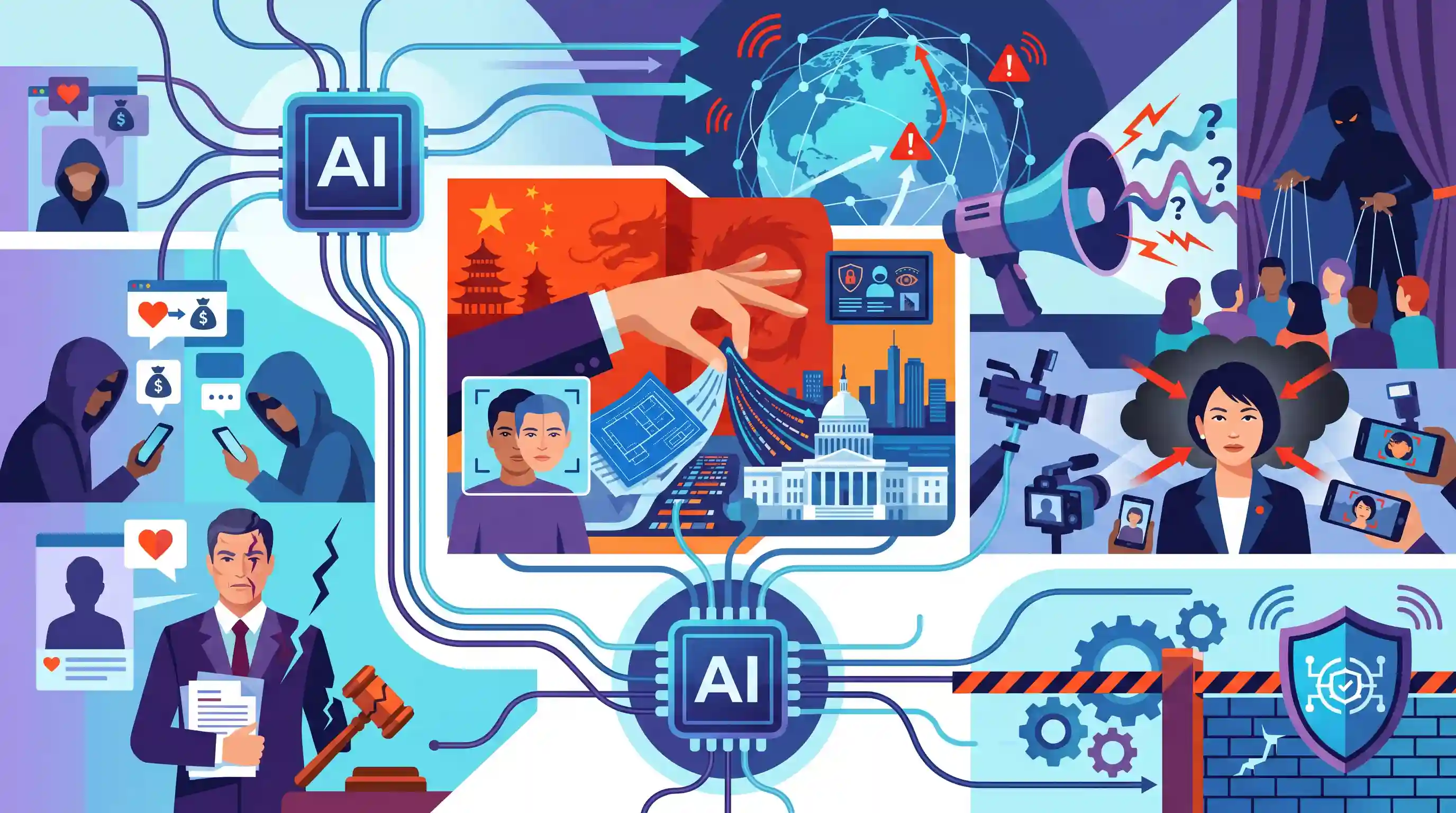
OpenAI's new threat report reveals significant misuse of its ChatGPT model for cybercrimes and state-sponsored espionage. Malicious actors have exploited the AI for dating scams, posing as fake lawyers, and generating deceptive communications. Notably, state-linked accounts originating from China used the platform to gather sensitive intelligence on US citizens and federal facilities, and to seek face-swapping technologies. Additionally, the AI was leveraged in covert influence operations, such as a smear campaign against Japanese politician Sanae Takaichi. The report highlights the escalating global security risks posed by generative AI, including cross-border cyber espionage, disinformation, and the pressing need for enhanced AI governance and cybersecurity frameworks.
Key Points
- OpenAI's latest threat report highlights the misuse of ChatGPT for orchestrating dating scams and posing as fake lawyers to target fraud victims.
- State-linked actors, primarily originating from China, utilized the AI model to gather sensitive intelligence on US citizens, online forums, and federal building locations.
- The report exposes covert influence operations, including a smear campaign against Japanese politician Sanae Takaichi, linked to Chinese law enforcement entities.
- Malicious applications of the AI also involved generating deceptive emails to US state-level officials for paid consultations and seeking face-swapping software.
- The findings underscore the evolving nature of cybercrimes and the urgent need for robust frameworks to counter AI-facilitated state espionage and disinformation.
Important Terms
Generative AI (GenAI)

Artificial intelligence systems, like ChatGPT, capable of creating hyper-realistic content including text, images, and audio based on user prompts.
UPSC context
GS-III: Science & Tech and Internal Security. Tests 'dual-use' technological risks and their impact on national security architecture.
State-sponsored Espionage
Cyber-intelligence activities conducted or funded by governments to infiltrate foreign systems, steal intellectual property, or gather sensitive federal data.
UPSC context
GS-III: Internal Security. Evaluates the role of state actors in hybrid warfare and cross-border cyber threats.
Covert Influence Operations (IO)
Strategic, deceptive campaigns using digital tools to manipulate public opinion or influence political outcomes while concealing the true identity of the actors.
UPSC context
GS-III: Internal Security. Tests awareness of disinformation and psychological warfare as challenges to democratic stability and social cohesion.
AI Governance
The legal and ethical framework comprising regulations, standards, and institutional mechanisms designed to ensure the safe and responsible development of AI.
UPSC context
GS-II/III: Governance and S&T. Focuses on policy implementation, ethics in technology, and the adequacy of frameworks like India's DPDP Act.
OpenAI
An American AI research organization and company that developed ChatGPT; its security reports are critical for understanding global AI threat landscapes.
UPSC context
GS-III: Science & Tech. Relevant for tracking the influence of global technology giants on international security norms and standards.
Cybersecurity
The practice of protecting internet-connected systems, including hardware, software, and data, from cyberattacks, unauthorized access, and digital disruption.
UPSC context
GS-III: Internal Security. A core syllabus topic testing knowledge of evolving digital threats and national defense strategies.
Prelims Trap
Generative AI platforms operate autonomously to execute zero-day cyber-attacks on critical infrastructure.
Current LLMs act as force multipliers for human actors (reconnaissance, phishing) rather than autonomous attack vectors executing breaches independently. Human-in-the-loop is still required.
Static Concepts Connected
How does the Indian legal framework regulate deepfakes and AI disinformation?
- IT Act 2000: Sections 66D (cheating by personation) and 67 (transmitting obscene material) are invoked against malicious digital manipulation.
- IT Rules 2021: Mandates social media intermediaries to take down reported deepfakes and impersonation content within 24 hours.
- BNS 2023: Broader provisions regarding forgery, defamation, and identity theft apply to AI-generated fraudulent communications.
What are the primary modes of state-sponsored cyber warfare?
- Advanced Persistent Threats: Prolonged, stealthy network breaches targeting foreign governments and critical infrastructure for sustained intelligence gathering.
- Cognitive Warfare: Weaponizing information platforms and AI to manipulate public opinion, undermine institutions, and influence foreign political processes.
- Digital Reconnaissance: Automated scanning and surveillance of global federal networks to identify vulnerabilities and map personnel locations.
Cross-Topic Patterns
GenAI and Electoral Security
Smear campaigns (like against Sanae Takaichi) reflect global concerns over deepfakes influencing elections, linking GS-3 AI threats to GS-2 electoral reforms and the Representation of the People Act.
Global AI Governance Deficit
State-sponsored espionage using US-based LLMs highlights the lack of a universal AI treaty, pushing nations like India toward sovereign AI infrastructure (e.g., AIRAWAT) to secure data.

Expect a GS-3 Mains question on 'cognitive warfare' via GenAI, or a Prelims MSQ linking LLM threats to CERT-In cybersecurity directives.
Linked PYQs · 5
Linked PYQs · 5
- 2020MainsGS3
Discuss different types of cyber crimes and measures required to be taken to fight the menace.
- 2021MainsGS3
Keeping in view India's internal security, analyse the impact of cross-border cyber attacks. Also discuss defensive measures against these sophisticated attacks.
- 2023MainsGS3
Introduce the concept of Artificial Intelligence (AI). How does Al help clinical diagnosis? Do you perceive any threat to privacy of the individual in the use of Al in healthcare?
- 2016MainsGS3
Use of Internet and social media by non-state actors for subversive activities is a major security concern. How have these been misused in the recent past? Suggest effective guidelines to curb the above threat.
- 2017MainsGS3
Discuss the potential threats of Cyber attack and the security framework to prevent it.
