Wangala Festival and Cultural Heritage of Meghalaya Garo Tribe
Source:The Hindu ↗
Why It Matters
Important for UPSC GS1 under Indian culture, tribal traditions, folk art forms, and the preservation of indigenous heritage in Northeast India.
Summary
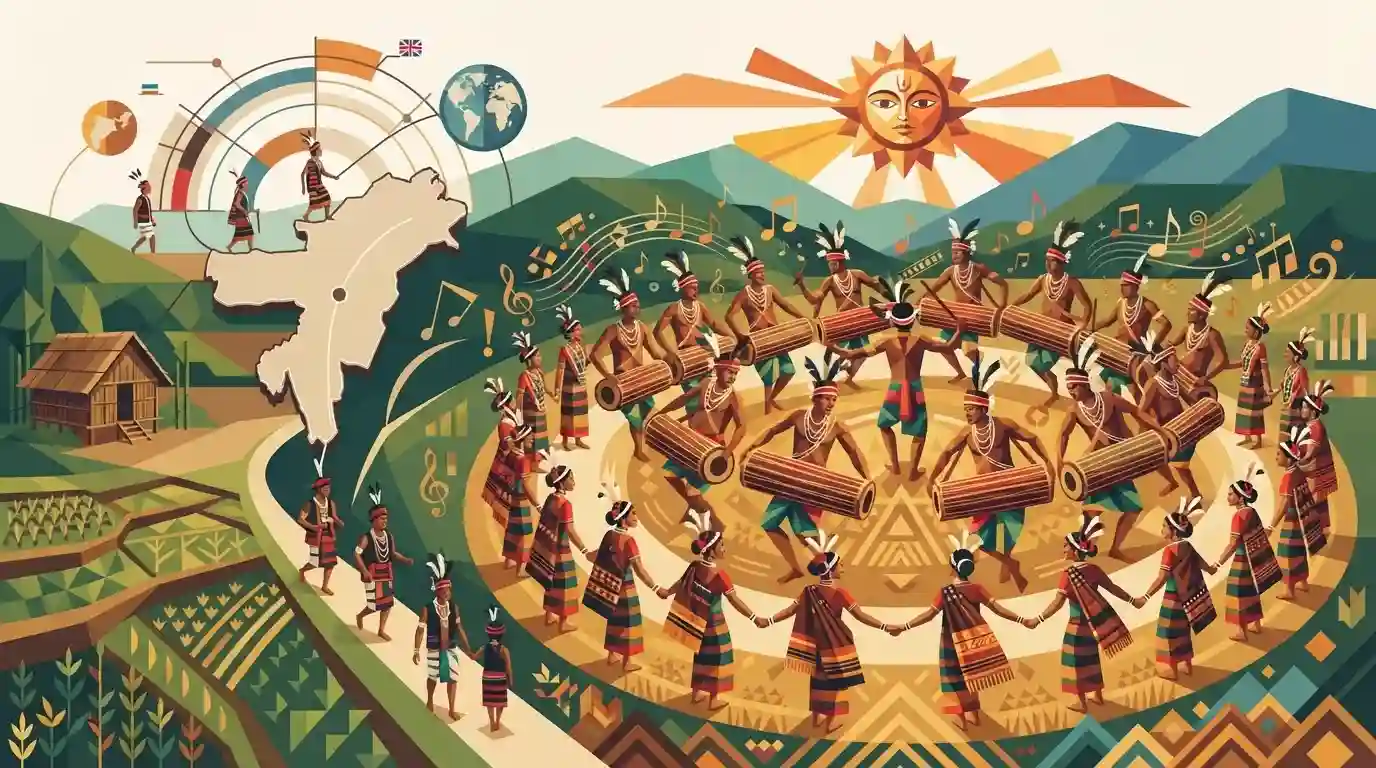
The Wangala festival, a major post-harvest celebration of the Garo tribe in Meghalaya, marks a transition from a local rustic tradition to wider national and global recognition. Dedicated to the sun god Saljong, the festival features the iconic 100-drum dance, indigenous music, and rituals that showcase the vibrant intangible cultural heritage of Northeast India.
Key Points
- The Wangala festival is a traditional post-harvest thanksgiving celebration of the Garo tribe in Meghalaya, dedicated to the sun god Saljong.
- The festival features traditional drumming with 100 drums, rhythmic folk dances, and indigenous rituals symbolising agricultural prosperity and fertility.
- Over time, the festival has transitioned from a rustic community custom to achieving wider cultural recognition and tourism significance, promoting indigenous heritage preservation in Northeast India.
Important Terms
Wangala Festival

A major post-harvest festival of the Garo tribe in Meghalaya, dedicated to the sun god Saljong and famously known as the 100 Drums Festival.
UPSC context
UPSC Prelims/Mains (GS Paper I): Important festivals, tribal communities, and intangible cultural heritage of Northeast India.
Garo Tribe
A major matrilineal Scheduled Tribe inhabiting Meghalaya and parts of neighboring northeastern states and Bangladesh, known for unique traditions like Wangala.
UPSC context
UPSC Prelims/Mains (GS Paper I): Indian society, tribal communities, indigenous culture, and social empowerment.
Saljong
The principal sun god worshipped by the Garo tribe during agricultural and thanksgiving rituals such as the Wangala festival.
UPSC context
UPSC Prelims: Indigenous tribal belief systems, folk deities, and cultural practices of Northeast India.
Prelims Trap
Wangala is a spring festival celebrated exclusively by the Khasi and Jaintia tribes of Meghalaya.
Aspirants often confuse Wangala as a spring festival or attribute it to the Khasi or Jaintia tribes instead of the Garo tribe.
Static Concepts Connected
What are the key cultural and social institutions of the Garo tribe of Meghalaya?
- Matrilineal System: Matrilinear society where lineage and inheritance are traced through the mother, with the youngest daughter (Kaikjong) inheriting ancestral property.
- Nokma Institution: Traditional village governance system headed by an elected or hereditary village chief known as the Nokma.
- Jhum Cultivation: Practitioners of traditional shifting cultivation known locally as 'Jhum', deeply tied to their seasonal thanksgiving rituals.
Cross-Topic Patterns
Tribal Harvest Festivals & Agrarian Calendars
Tribal thanksgiving rituals like Wangala highlight indigenous agrarian calendars, paralleling harvest festivals across India such as Pongal, Bihu, and Makar Sankranti.
Cultural Tourism & Intangible Heritage Protection
Institutionalizing festivals like the Hundred Drums event demonstrates state-led cultural tourism initiatives under the Ministry of Tourism’s Dekho Apna Desh framework.

Expect matching-column or statement-based questions pairing Northeast tribes with their specific harvest festivals and sacred deities.
Linked PYQs · 3
Linked PYQs · 3
- 2024PrelimsGS1
Which one of the following was the latest inclusion in the Intangible Cultural Heritage List of UNESCO?
- 2021MainsGS1
Examine the uniqueness of tribal knowledge system when compared with mainstream knowledge and cultural systems.
- 2022MainsGS1
Given the diversities among tribal communities in India, in which specific contexts should they be considered as a single category ?
