WTO talks expose deep faultlines between rich and developing nations
Source:Indian Express ↗
Why It Matters
The ongoing WTO disputes directly affect India's core socio-economic priorities, including its food security programs (like the MSP), its tariff revenues from the burgeoning digital economy, and its broader strategic leverage in international trade negotiations.
Summary
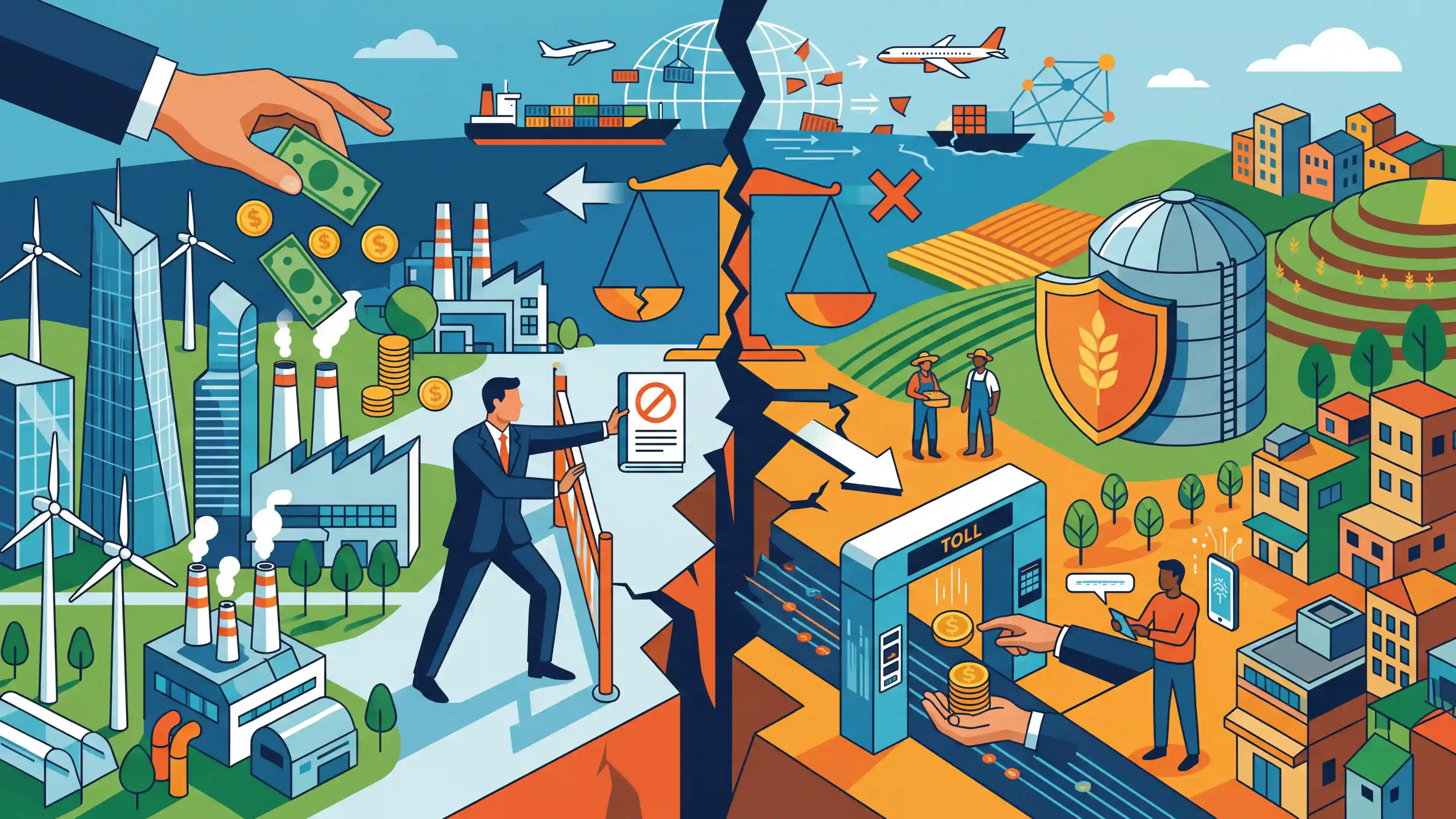
Recent WTO negotiations have laid bare the widening rift between developed and developing nations across various domains, from agriculture to digital trade. While developing countries like India advocate for a permanent solution to public stockholding for food security and demand an end to the e-commerce moratorium to protect tariff revenues, developed nations continue to oppose these measures, citing trade distortion. Furthermore, the aggressive use of industrial subsidies by wealthy nations to boost their domestic green and tech sectors has exposed a double standard, further straining the multilateral trading system and underscoring the need for equitable WTO reforms.
Key Points
- The debate on agricultural subsidies highlights a major divide; developing nations demand a permanent solution for public stockholding (like India's MSP) to ensure food security, while developed nations argue these distort global trade.
- Developing countries like India and South Africa are opposing the extension of the WTO moratorium on customs duties on electronic transmissions (software/e-commerce) to protect domestic tech industries and preserve tariff revenues.
- A critical double standard is emerging as developed nations heavily subsidize their own green and high-tech industries (industrial subsidies) while pushing for strict curbs on the agricultural and fisheries subsidies of developing nations.
- The growing faultlines threaten the multilateral rules-based trading system, necessitating urgent reforms to accommodate the development needs (Special and Differential Treatment) of emerging economies.
Important Terms
World Trade Organization (WTO)

The only global international organization dealing with the rules of trade between nations, established in 1995 to ensure trade flows smoothly, predictably, and freely.
UPSC context
GS Paper II/III: Important International institutions; tests understanding of multilateralism and global trade governance.
Agreement on Agriculture (AoA)
A 1995 WTO treaty aimed at reforming agricultural trade by reducing subsidies and trade-distorting barriers through three pillars: market access, domestic support, and export competition.
UPSC context
GS Paper III: Issues related to direct and indirect farm subsidies; critical for understanding India's MSP challenges.
Peace Clause
A 2013 Bali Ministerial mechanism shielding developing nations from legal challenges if they breach WTO subsidy limits (10% of production value) for public food security programs.
UPSC context
GS Paper III: Food security and buffer stocks; tests knowledge of India's stance on agricultural sovereignty.
Public Stockholding (PSH)
The practice of governments purchasing, storing, and managing food grain stocks to ensure availability and stabilize prices, a central point of contention in WTO negotiations.
UPSC context
GS Paper III: Public Distribution System (PDS) and food security; vital for mains answers on trade vs. welfare.
Moratorium on E-commerce Duties
A WTO agreement since 1998 prohibiting customs duties on digital transmissions (e.g., software, streaming), which developing nations like India oppose to protect tariff revenues.
UPSC context
GS Paper III: Digital economy and mobilization of resources; tests impact of global trade on domestic revenue.
Doha Development Agenda
The latest round of WTO trade negotiations, launched in 2001, aimed at lowering trade barriers with a fundamental focus on the development needs of poorer countries.
UPSC context
GS Paper III: Effects of liberalization on the economy; tests historical context of North-South trade divides.
Prelims Trap
The WTO Peace Clause provides a permanent exemption for India's public stockholding programs.
The Peace Clause is merely an interim shield agreed upon at Bali (2013). India is actively negotiating for a permanent solution, which is not yet finalized.
Static Concepts Connected
What are the three main 'Boxes' of agricultural subsidies under the WTO AoA?
- Amber Box: Trade-distorting subsidies linked to production quantities (e.g., MSP). Capped at a de minimis limit of 10% of production value for developing nations.
- Blue Box: Amber box subsidies with conditions designed to limit production (e.g., quotas). These are currently not subject to spending limits.
- Green Box: Non-trade distorting support decoupled from production levels, such as R&D, environmental protection, or direct income support (PM-KISAN). Allowed without limits.
What is the WTO Moratorium on E-commerce?
- The Agreement: A temporary 1998 agreement prohibiting member nations from imposing customs duties on electronic transmissions, including software, digital media, and e-commerce.
- The Conflict: Developing nations like India and South Africa oppose its continuous extension, citing massive tariff revenue losses and the need to protect domestic tech industries.
Cross-Topic Patterns
Green Protectionism & CBAM
Developed nations heavily subsidize their own green sectors while using Carbon Border Adjustment Mechanisms (CBAM) to penalize developing nations' exports, creating a double standard in climate-trade policies.
NFSA 2013 vs WTO Limits
India's statutory mandate under the National Food Security Act necessitates massive grain procurement via MSP, structurally forcing India to clash with the WTO's 10% Amber Box limits.

Expect a multi-statement Prelims question linking the WTO Peace Clause, Amber Box limits, and the e-commerce moratorium's revenue impact.
Linked PYQs · 3
Linked PYQs · 3
- 2023MainsGS3
What are the direct and indirect subsidies provided to farm sector in India? Discuss the issues raised by the World Trade Organization (WTO) in relation to agricultural subsidies.
- 2016MainsGS2
The broader aims and objectives of WTO are to manage and promote international trade in the era of globalization. But the Doha round of negotiations seem doomed due to differences between the developed and the developing countries." Discuss in the Indian perspective.
- 2018MainsGS2
What are the key areas of reform if the WTO has to survive in the present context of "Trade War', especially keeping in mind the interest of India?
