Mayotte Extreme Weather Disasters and Island Territory Vulnerability
Source:Indian Express ↗
Why It Matters
The back-to-back extreme weather events striking Mayotte serve as a critical case study for GS3 Disaster Management and Climate Change. It highlights the growing challenges of mitigating and managing cascading disasters in vulnerable island territories.
Summary
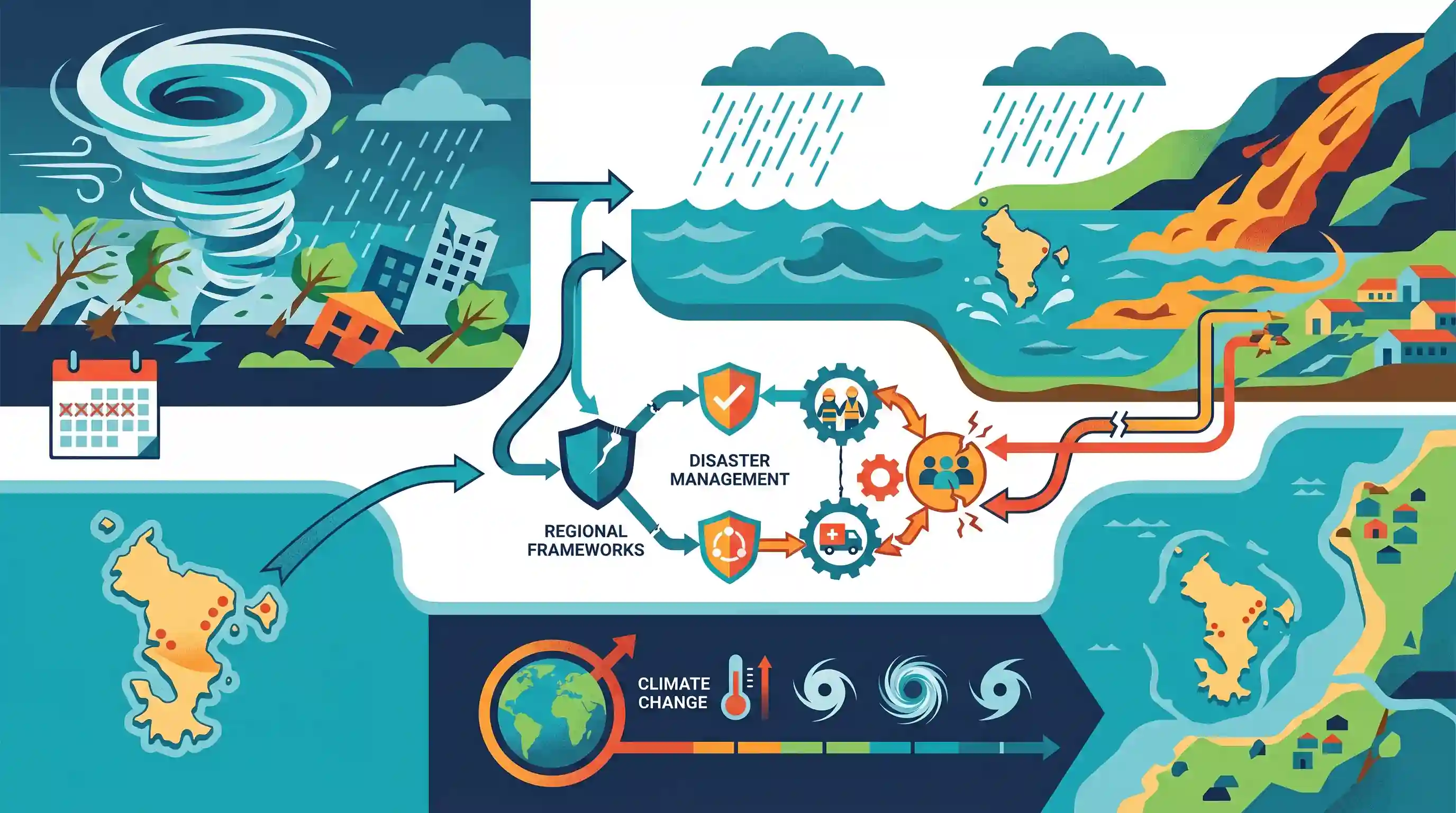
France’s overseas territory of Mayotte in the Indian Ocean has been struck by severe floods and mudslides caused by Storm Dikeledi. This comes only a month after the island was battered by Cyclone Chido, severely complicating recovery efforts. The back-to-back extreme weather events highlight the increasing vulnerability of Indian Ocean island territories to climate change and test the limits of regional disaster management frameworks.
Key Points
- Mayotte, a French overseas territory in the Indian Ocean, was hit by severe floods and mudslides due to Storm Dikeledi.
- The disaster occurred just a month after the region was devastated by Cyclone Chido, highlighting the increased frequency of extreme weather events.
- Back-to-back storms point to the growing vulnerability of island territories to climate change-induced disasters.
- The events severely strained local disaster management and recovery efforts, which were already dealing with the aftermath of the previous cyclone.
Prelims Trap
Mayotte is a sovereign island nation located in the Comoros archipelago.
While geographically part of the Comoros archipelago, Mayotte is legally a French overseas department. It is not sovereign, though Comoros claims it.
Static Concepts Connected
What is a 'cascading disaster' in disaster risk management?
- Primary Trigger: A primary hazard (e.g., severe cyclone) creates cascading vulnerabilities, altering the landscape or destroying infrastructure.
- Secondary Hazards: Subsequent events like extreme rainfall quickly trigger secondary hazards like mudslides on highly saturated soil.
- Compounding Impact: The compound effect overwhelms standard disaster preparedness, requiring systemic, multi-hazard risk modeling rather than isolated protocols.
Where is the Mozambique Channel and what are its key geographic features?
- Location: An arm of the Indian Ocean situated between the island nation of Madagascar and southeast Africa (Mozambique).
- Key Islands: Houses the Comoros archipelago at its northern entrance, the French department of Mayotte, and several scattered French islands (Îles Éparses).
- Strategic Importance: An essential maritime choke point and major route for global shipping traversing the Cape of Good Hope.
Cross-Topic Patterns
Indian Ocean Sovereignty Disputes
Mayotte’s status (governed by France, claimed by Comoros) mirrors the Chagos Archipelago dispute (UK vs. Mauritius), highlighting unresolved post-colonial Indian Ocean geopolitics.
Marine Heatwaves & Consecutive Cyclones
Back-to-back storms like Chido and Dikeledi reflect increasing Indian Ocean sea surface temperatures, which rapidly intensify tropical cyclones and reduce recovery windows.

Expect a 'Places in News' match-the-following pairing Indian Ocean islands like Mayotte, Chagos, and Agalega with their political status.
Linked PYQs · 4
Linked PYQs · 4
- 2019MainsGS3
Disaster preparedness is the first step in any disaster management process. Explain how hazard zonation mapping will help disaster mitigation in the case of landslides.
- 2024MainsGS3
Flooding in urban areas is an emerging climate-induced disaster. Discuss the causes of this disaster. Mention the features of two such major floods in the last two decades in India. Describe the policies and frameworks in India that aim at tackling such floods.
- 2021MainsGS3
Describe the various causes and the effects of landslides. Mention the important components of the National Landslide Risk Management Strategy.
- 2017PrelimsGS1
With reference to 'Indian Ocean Dipole (IOD)' sometimes mentioned in the news while forecasting Indian monsoon, which of the following statements is/are correct? 1. IOD phenomenon is characterised by a difference in sea surface temperature between tropical Western Indian Ocean and tropical Eastern Pacific Ocean. 2. An IOD phenomenon can influence an El Nino's impact on the monsoon. Select the correct answer using the code given below:
