केंद्र और राज्य के राजकोषीय घाटे से समष्टि आर्थिक स्थिरता को खतरा
स्रोत:इंडियन एक्सप्रेस ↗
क्यों मायने रखता है
This article effectively connects foundational macroeconomic concepts (fiscal deficit, primary deficit, repo rates, crowding out) with contemporary policy debates (the shift from capital expenditure to welfare freebies), making it highly relevant for both GS3 Economy and GS2 Governance answers.
सारांश
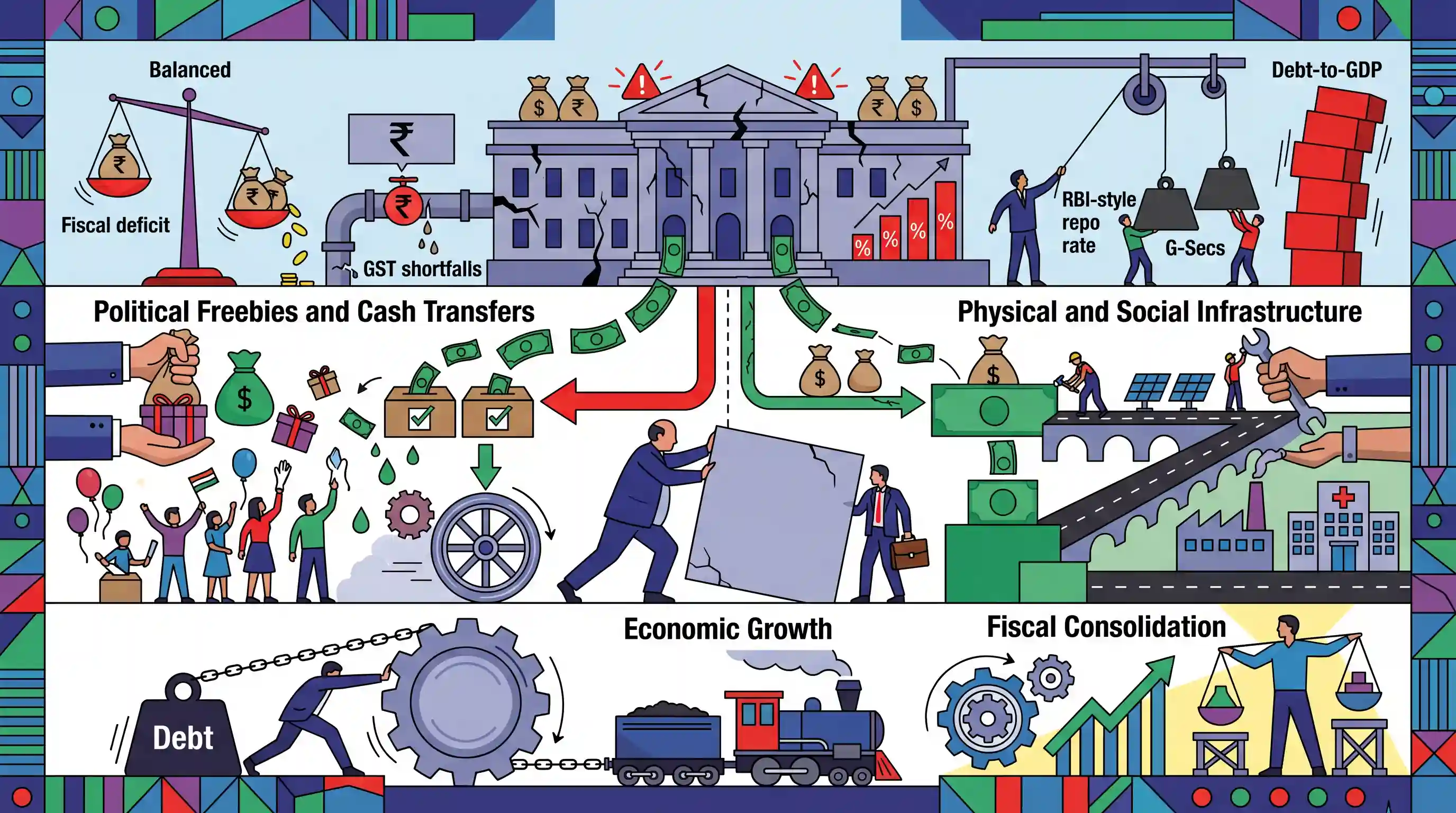
यह लेख भारत में केंद्र और राज्य दोनों सरकारों की बिगड़ती राजकोषीय स्थिति पर चिंता जताता है। केंद्र सरकार कर राजस्व में कमी, विशेष रूप से GST दरों में कटौती के कारण, उच्च राजकोषीय और प्राथमिक घाटे से जूझ रही है। साथ ही, RBI द्वारा रेपो रेट में कटौती के बावजूद, सरकारी प्रतिभूतियों (government securities) के लिए राज्यों की उधारी लागत बढ़ रही है, साथ ही उनका संयुक्त राजकोषीय घाटा और ऋण-से-GDP अनुपात अस्थिर होता जा रहा है। लेखक भौतिक और सामाजिक बुनियादी ढांचे में महत्वपूर्ण निवेश की कीमत पर चुनावी "मुफ्त उपहारों" (freebies) और नकद हस्तांतरण की ओर बढ़ते राजनीतिक झुकाव की आलोचना करते हैं। यह प्रवृत्ति निजी निवेश को हतोत्साहित (crowding out) करने और भारत की आर्थिक वृद्धि को धीमा करने का जोखिम पैदा करती है, जिससे राजकोषीय सुदृढ़ीकरण (fiscal consolidation) एक तत्काल आवश्यकता बन गया है।
मुख्य बिंदु
- The Centre's fiscal and primary deficits have surged to high proportions of full-year estimates, exacerbated by lower tax collections following GST rate cuts.
- RBI द्वारा रेपो रेट में कटौती किए जाने के बावजूद, राज्य अपनी बाजार उधारी (सरकारी प्रतिभूतियों) पर उच्च ब्याज दरों का सामना कर रहे हैं, जो राजकोषीय विवेक (fiscal prudence) को लेकर बाजार की चिंता का संकेत है।
- The combined fiscal deficit of states has increased significantly, with several states carrying outstanding liabilities well above 30-35% of their GDP.
- State and Central governments are increasingly substituting capital expenditure on physical and social infrastructure with short-term electoral freebies and cash transfers.
- Deteriorating government balance sheets threaten to act as a drag on economic growth by crowding out private sector borrowing.
महत्वपूर्ण शब्द
Fiscal Deficit

सरकार के कुल व्यय और उसकी कुल गैर-उधार प्राप्तियों के बीच का अंतर। यह उस कुल राशि को दर्शाता है जिसे सरकार को अपने परिचालन के वित्तपोषण के लिए उधार लेने की आवश्यकता होती है।
UPSC context
GS Paper III: Indian Economy; crucial for understanding fiscal policy, budgetary gaps, and the FRBM Act targets.
Primary Deficit
The fiscal deficit of the current year minus the interest payments on previous borrowings. It reflects the government's borrowing needs for current expenditures without the burden of past debt.
UPSC context
GS पेपर III: भारतीय अर्थव्यवस्था; वर्तमान राजकोषीय अनुशासन और ऐतिहासिक ऋण से स्वतंत्र सरकारी खर्च की स्थिरता को मापता है।
Debt-to-GDP Ratio
The ratio of a country's total government debt to its Gross Domestic Product. It measures a nation's ability to pay back its debt and is a key indicator of fiscal sustainability.
UPSC context
GS Paper III: Economy; vital for analyzing long-term economic stability, credit ratings, and fiscal consolidation strategies.
Crowding Out Effect
An economic theory where increased government borrowing raises interest rates, making it more expensive for the private sector to borrow and invest, thereby "crowding out" private investment.
UPSC context
GS Paper III: Indian Economy; tests understanding of the interplay between public spending, interest rates, and private sector growth.
पूंजीगत व्यय (CapEx)
Government spending used to create long-term assets like infrastructure (roads, schools) or reduce liabilities. It is considered productive as it boosts future economic growth.
UPSC context
GS Paper III: Indian Economy; essential for distinguishing between welfare spending (Revenue) and growth-oriented investment (Capital).
Government Securities (G-Secs)
Tradeable debt instruments issued by the Central or State Governments to borrow money from the public, acknowledging the government's debt obligation with a promise of repayment.
UPSC context
GS Paper III: Economy; key to understanding government borrowing, the debt market, and RBI's monetary policy tools.
प्रारंभिक ट्रैप
"A reduction in the RBI repo rate automatically guarantees lower borrowing costs (yields) for State Development Loans."
SDL यील्ड में राज्य की राजकोषीय स्थिति के आधार पर एक रिस्क स्प्रेड शामिल होता है। भले ही RBI रेपो रेट में कटौती करे, राज्यों की खराब वित्तीय स्थिति उधारी की लागत को बढ़ा सकती है।
संबंधित अवधारणाएँ
What is the "Crowding Out" effect in macroeconomics?
- Core Meaning: High government borrowing absorbs available market liquidity, leaving fewer funds for the private sector.
- Direct Impact: यह निजी फर्मों के लिए बाजार ब्याज दरों को बढ़ा देता है, जिससे कॉर्पोरेट निवेश और आर्थिक विकास बाधित होता है।
- Fiscal Linkage: It is a direct consequence of unchecked fiscal deficits when financed largely through market borrowing.
How are State Development Loans (SDLs) managed and priced compared to G-Secs?
- Issue & Management: राजकोषीय घाटे के वित्तपोषण के लिए राज्यों द्वारा जारी किए जाते हैं; RBI इनकी नीलामी की सुविधा प्रदान करता है और राज्य के ऋण का प्रबंधन करता है।
- Yield Spreads: SDLs typically trade at higher interest rates (yield spreads) than Central G-Secs due to state-specific fiscal risks.
- SLR पात्रता: Like Central G-Secs, SDLs are recognized as eligible government securities for maintaining Statutory Liquidity Ratio (SLR).
अंतर-विषय पैटर्न
16th Finance Commission and State Debt
Rising state debt and the revenue-over-capex tilt (freebies) will heavily influence the 16th Finance Commission’s criteria for horizontal tax devolution and fiscal consolidation grants.
Revenue Expenditure vs Capital Budgeting
GS3 frequently tests the macroeconomic drag of high revenue expenditure (cash transfers/freebies) against the multiplier effect of capital expenditure on physical and social infrastructure.

FRBM limits, SDL yield spreads vs repo rates, and mechanics of 'crowding out' will likely combine into a 2026 Prelims Economy question.
संबद्ध PYQ · 5
संबद्ध PYQ · 5
- 2025MainsGS3
Explain how the Fiscal Health Index (FHI) can be used as a tool for assessing the fiscal performance of states in India. In what way would it encourage the states to adopt prudent and sustainable fiscal policies?
- 2019MainsGS3
The public expenditure management is a challenge to the Government of India in the context of budget making during the post-liberalization period. Clarify it.
- 2021MainsGS3
Distinguish between Capital Budget and Revenue Budget. Explain the components of both these Budgets.
- 2022PrelimsGS1
With reference to the Indian economy, consider the following statements: 1. A share of the household financial savings goes towards government borrowings. 2. Dated securities issued at market-related rates in auctions form a large component of internal debt. Which of the above statements is/are correct?
- 2022MainsGS2
Besides the welfare schemes, India needs deft management of inflation and unemployment to serve the poor and the underprivileged sections of the society. Discuss.
